Restoration and Identity: Reflections from Ezra 2:57
“The children of Shephatiah, the children of Hattil, the children of Pochereth of Zebaim, the children of Ami.” — Ezra 2:57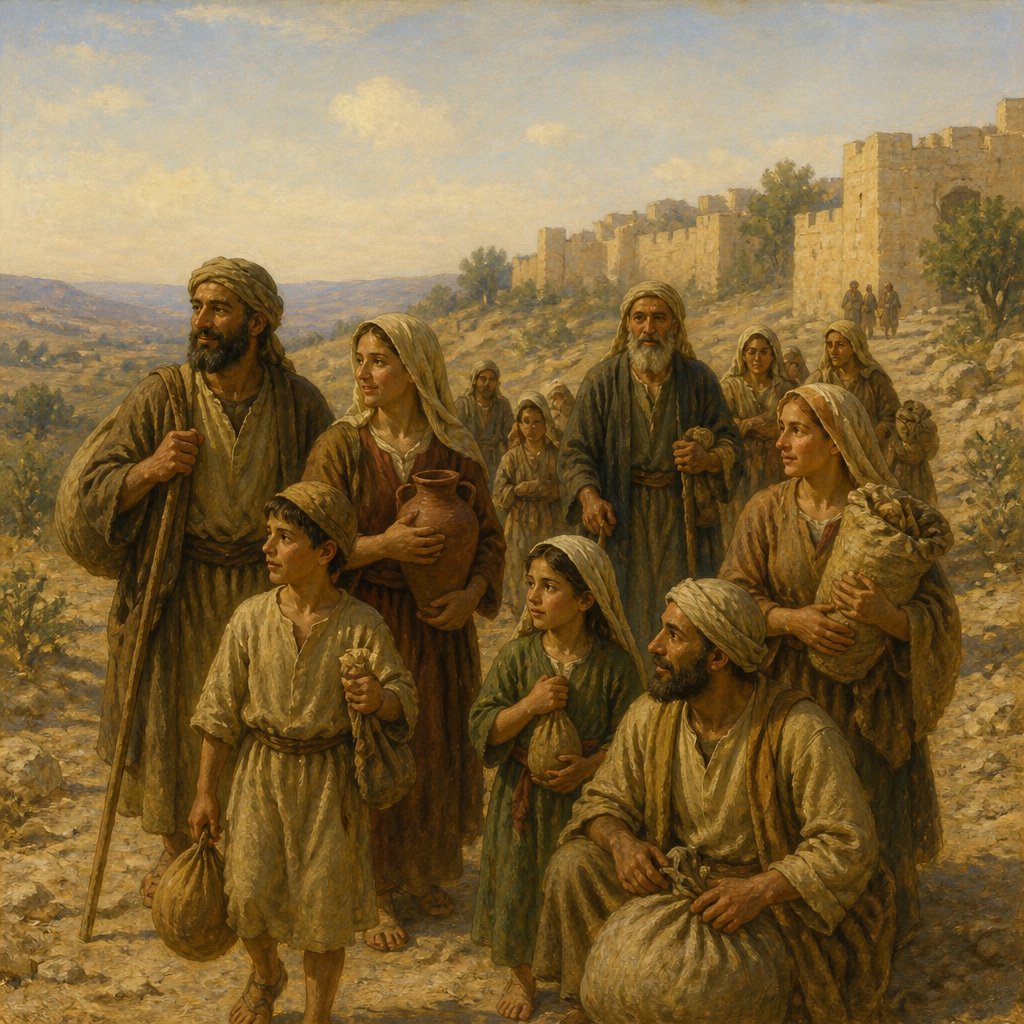
When reading the historical accounts of the returning exiles in the book of Ezra, it’s easy to overlook seemingly trivial details such as lists of names. Ezra 2:57 presents us with a brief record of families, saying: "The children of Shephatiah, the children of Hattil, the children of Pochereth of Zebaim, the children of Ami." While this scripture may appear dull or purely transactional at first glance, it invites us to explore themes of identity, community, and God's restoring work among His people.
The names listed in this verse are more than mere genealogies; they represent real people with stories, struggles, and hopes. In the context of their exile, each name holds significance. The exiles returned after years of displacement, yearning not only for their homeland but also for their identity as God’s chosen people. When God restored Jerusalem, He was, in many ways, restoring the souls of those people—their memories, their culture, and their relationships.
Names in the Bible are often indicative of destiny or character. Shephatiah, Hattil, Pochereth, and Ami symbolize resilience and a deep-rooted hope in God’s promises. These names remind us that every individual has an important role to play in God’s plan. Even in the diaspora, where their very identities were challenged, these families clung to what it meant to be a part of God’s covenant community.
Coming back from exile reflects a dual restoration: a physical return to the land and a spiritual reclamation of their identity. It speaks to the deep desire that resonates within all of us—a desire for home, belonging, and purpose. In Christ, we find our true identity. As Paul reminds us in Galatians 3:26-28, we are all children of God, heirs to His promises. Just as the returning exiles were reestablishing their identities within their community, we too are called to remember that our lives are interwoven with the greater narrative of God's kingdom.
As we reflect on this verse, consider the importance of community in our spiritual lives. The families mentioned were part of a greater assembly returning to rebuild their lives and their city. They were not alone in their journey of restoration, and neither are we. God designed humanity for community. In our quests for identity, belonging, and purpose, we find strength when we engage with fellow believers, share our burdens, and celebrate each other’s victories. We can look to the assembly of believers as a reflection of the body of Christ, where each member has unique gifts and roles to play in buoying one another’s faith.
Furthermore, this passage still calls out to us today, urging us to consider those who may feel displaced or lost in our midst. We have a collective mission to reach out to those who may feel like they are in exile, welcoming them into the fold of our community. Our actions echo God’s compassion and His desire to bring every individual into the fullness of His love and grace.
Ultimately, as we meditate on Ezra 2:57, let us also be reminded of our place in God’s story. Our identities are not confined to worldly definitions but are rooted in being children of the King, united by faith. Together, like the children of Shephatiah, Hattil, Pochereth of Zebaim, and Ami, we can build one another up and reclaim the identity we have in Christ. Embrace the journey of restoration, knowing that every name, including your own, has significant value in the eyes of God and plays an essential role in the tapestry of His divine narrative.
Get our apps


Artwork for Ezra 2:57

Ezra 2:57 - "The children of Shephatiah, the children of Hattil, the children of Pochereth of Zebaim, the children of Ami."
"The children of Shephatiah, the children of Hattil, the children of Pochereth of Zebaim, the children of Ami." - Ezra 2:57

Isaiah 57:1-2

Psalms 57:2 - "I will cry unto God most high; unto God that performeth all things for me."

Isaiah 57:2 - "He shall enter into peace: they shall rest in their beds, each one walking in his uprightness."

Ezra 3:2

Ezra 3:2

Ezra 3:2

Ezra 3:2

Ezra 3:2

Ezra 9:1-2

Zerubbabel in Ezra chapter 2

Ezra 2:22 - "The men of Netophah, fifty and six."
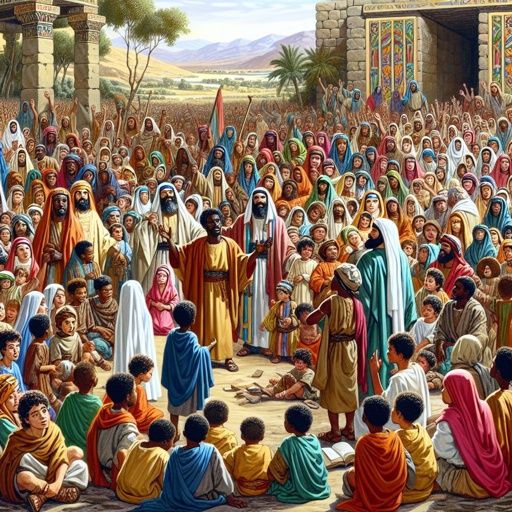
Ezra 2:18 - "The children of Jorah, an hundred and twelve."

Ezra 2:54 - "The children of Neziah, the children of Hatipha."

Ezra 2:20 - "The children of Gibbar, ninety and five."

Ezra 2:24 - "The children of Azmaveth, forty and two."

Ezra 2:39 - "The children of Harim, a thousand and seventeen."

Ezra 9:1-2

Ezra 2:9 - "The children of Zaccai, seven hundred and threescore."

Ezra 2:27 - "The men of Michmas, an hundred twenty and two."

Ezra 2:29 - "The children of Nebo, fifty and two."

Ezra 2:56 - "The children of Jaalah, the children of Darkon, the children of Giddel,"

Ezra 2:11 - "The children of Bebai, six hundred twenty and three."

Ezra 2:53 - "The children of Barkos, the children of Sisera, the children of Thamah,"

Ezra 2:45 - "The children of Lebanah, the children of Hagabah, the children of Akkub,"

Ezra 2:48 - "The children of Rezin, the children of Nekoda, the children of Gazzam,"

Ezra 2:15 - "The children of Adin, four hundred fifty and four."

Ezra 2:21 - "The children of Beth-lehem, an hundred twenty and three."

Ezra 2:51 - "The children of Bakbuk, the children of Hakupha, the children of Harhur,"