Restoration of Identity: Finding Home in God’s Purpose
“So the priests, and the Levites, and some of the people, and the singers, and the porters, and the Nethinims, dwelt in their cities, and all Israel in their cities.” — Ezra 2:70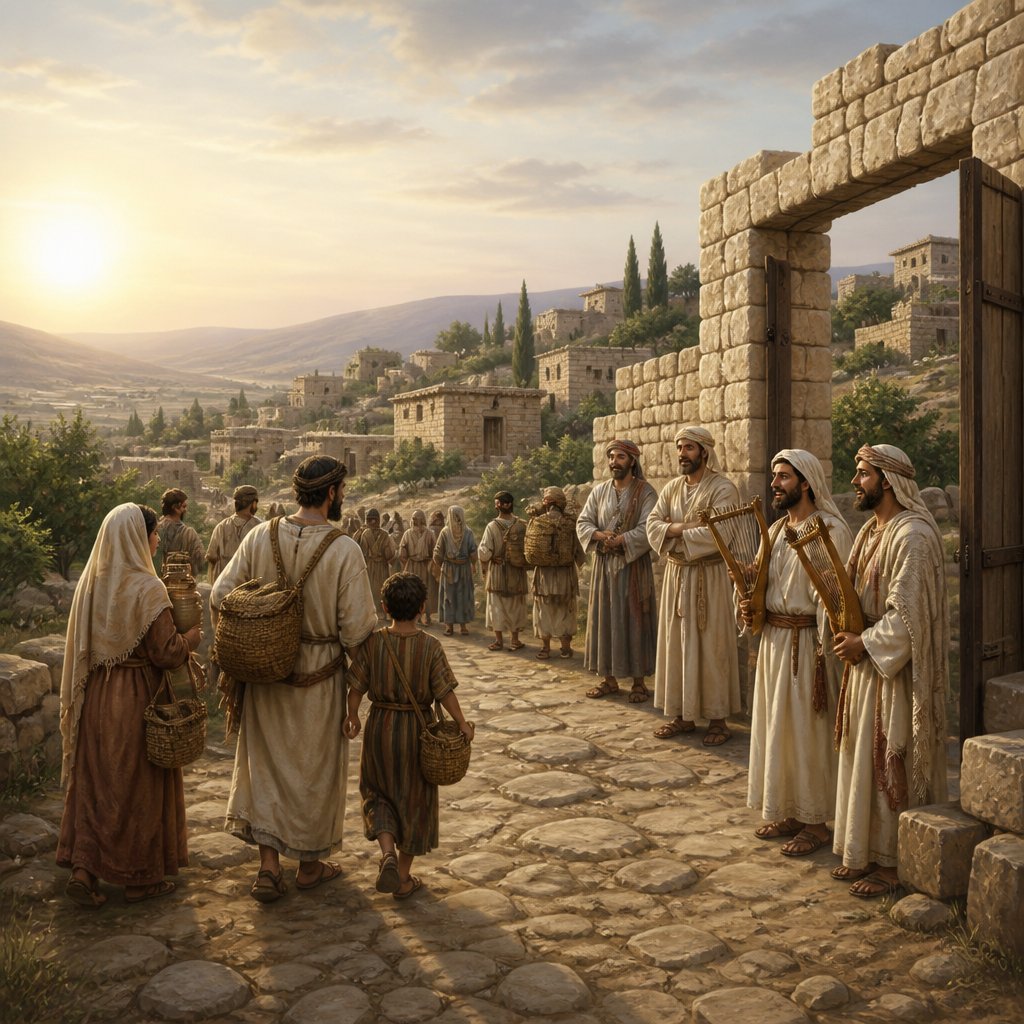
As we ponder the verse Ezra 2:70 from the King James Version, we are struck by the organizational follow-through of a community returning to their homeland. It illustrates a moment of poignant significance in Jewish history—the return from exile and the restoration of identity. "So the priests, and the Levites, and some of the people, and the singers, and the porters, and the Nethinims, dwelt in their cities, and all Israel in their cities." This verse encapsulates the essence of identity, community, and God’s faithfulness.
The return of the exiles signifies not just a physical relocation but a profound spiritual revival. After years in Babylon, they rediscovered their heritage, their roles, and ultimately, their place in God’s plan. This leads us to reflect on several key themes in our own lives.
**1. The Importance of Roles:**
Each group mentioned in this verse—the priests, Levites, singers, porters, Nethinims—represented specific roles within the community. God had assigned them tasks that were crucial for the worship and daily life of Israel. The priests served in the temple, symbolizing the direct connection between the people and God. The Levites assisted, while the singers brought joy and praise; the porters provided protection, and the Nethinims were the helpers who ensured that everything was in order.
This myriad of roles reminds us that in the Body of Christ, we all have different callings. No role is insignificant. Just as each group in Ezra’s time contributed to the reestablishment of Jerusalem, our contributions—no matter how small—are pivotal in the tapestry of the Christian community. Have you embraced your role? Are you using your gifts to serve where God has planted you?
**2. Dwell and Flourish:**
The act of dwelling in their cities signifies stability and the ability to flourish. The returning exiles moved from a place of uncertainty and longing to a space of belonging and promise. The very act of setting up their homes in their cities was an act of faith in God’s promise to them. God called them to reclaim their identity, and in return, they responded by putting down roots.
In our spiritual journeys, how often do we dwell in places of insecurity or struggle? Often, we can feel displaced, wondering how we fit into God's larger narrative. But God desires us to flourish where He has placed us. Whether in our homes, workplaces, or communities, we are invited to dwell. In doing so, we create spaces that honor Him. Just as the Israelites returned to a place of worship, we must cultivate our hearts as places where God's spirit dwells.
**3. Community in Faith:**
The clustering of various groups emphasizes the significance of community. Every individual played a vital role in the collective identity of Israel. They had endured hardships together, now they rejoiced together. In our modern context, it’s easy to view our faith as a personal journey. However, we are called to do life in community— to support, encourage, and uplift one another amid trials and triumphs.
Hebrews 10:24-25 reminds us, "And let us consider one another to provoke unto love and to good works: Not forsaking the assembling of ourselves together, as the manner of some is; but exhorting one another: and so much the more, as ye see the day approaching." Community is essential in nurturing faith and supporting one another in our God-given purposes.
**4. God’s Faithfulness:**
At the heart of this verse is the profound realization of God’s faithfulness. After years of captivity, God brought them back to their land. They were no longer exiles; they were home. This calls us to remember that God is faithful despite our circumstances. His promises ring true—He is a God who restores. In a time where discouragement can linger, take heart in knowing you are never forgotten or forsaken.
As we meditate on Ezra 2:70, let us remember we belong to a greater narrative. We are not just existing in our cities; we are called to thrive, embrace our roles, foster community, and above all, trust in God’s unwavering faithfulness. Allow this scripture to resonate within your heart. Pray for clarity in your calling, strength to flourish in your circumstances, and a desire to build and nurture community in Christ.
Get our apps


Artwork for Ezra 2:70
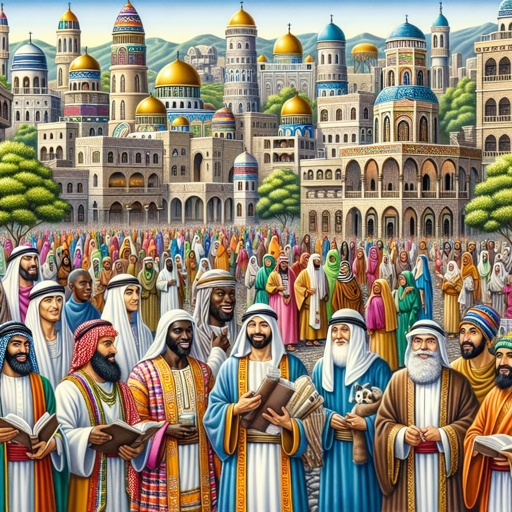
Ezra 2:70 - "So the priests, and the Levites, and some of the people, and the singers, and the porters, and the Nethinims, dwelt in their cities, and all Israel in their cities."
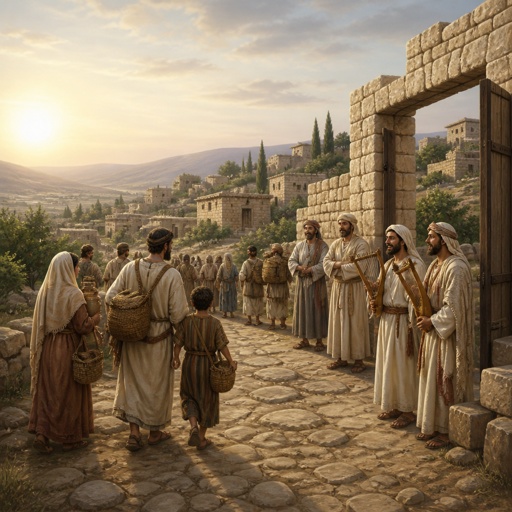
"So the priests, and the Levites, and some of the people, and the singers, and the porters, and the Nethinims, dwelt in their cities, and all Israel in their cities." - Ezra 2:70

Psalms 70:2 - "Let them be ashamed and confounded that seek after my soul: let them be turned backward, and put to confusion, that desire my hurt."

Ezra 3:2

Ezra 3:2

Ezra 3:2

Ezra 3:2

Ezra 3:2

Ezra 9:1-2

Zerubbabel in Ezra chapter 2

Ezra 2:22 - "The men of Netophah, fifty and six."
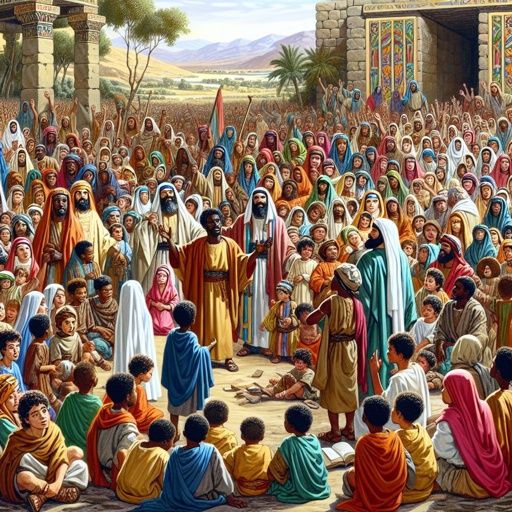
Ezra 2:18 - "The children of Jorah, an hundred and twelve."

Ezra 2:54 - "The children of Neziah, the children of Hatipha."

Ezra 2:20 - "The children of Gibbar, ninety and five."

Ezra 2:24 - "The children of Azmaveth, forty and two."

Ezra 2:39 - "The children of Harim, a thousand and seventeen."

Ezra 9:1-2

Ezra 2:9 - "The children of Zaccai, seven hundred and threescore."

Ezra 2:27 - "The men of Michmas, an hundred twenty and two."

Ezra 2:29 - "The children of Nebo, fifty and two."

Ezra 2:56 - "The children of Jaalah, the children of Darkon, the children of Giddel,"

Ezra 2:11 - "The children of Bebai, six hundred twenty and three."

Ezra 2:53 - "The children of Barkos, the children of Sisera, the children of Thamah,"

Ezra 2:45 - "The children of Lebanah, the children of Hagabah, the children of Akkub,"

Ezra 2:48 - "The children of Rezin, the children of Nekoda, the children of Gazzam,"

Ezra 2:15 - "The children of Adin, four hundred fifty and four."

Ezra 2:21 - "The children of Beth-lehem, an hundred twenty and three."

Ezra 2:51 - "The children of Bakbuk, the children of Hakupha, the children of Harhur,"

Ezra 2:49 - "The children of Uzza, the children of Paseah, the children of Besai,"

Ezra 7:2 - "The son of Shallum, the son of Zadok, the son of Ahitub,"