The Dual Echoes of Celebration and Sorrow
“So that the people could not discern the noise of the shout of joy from the noise of the weeping of the people: for the people shouted with a loud shout, and the noise was heard afar off.” — Ezra 3:13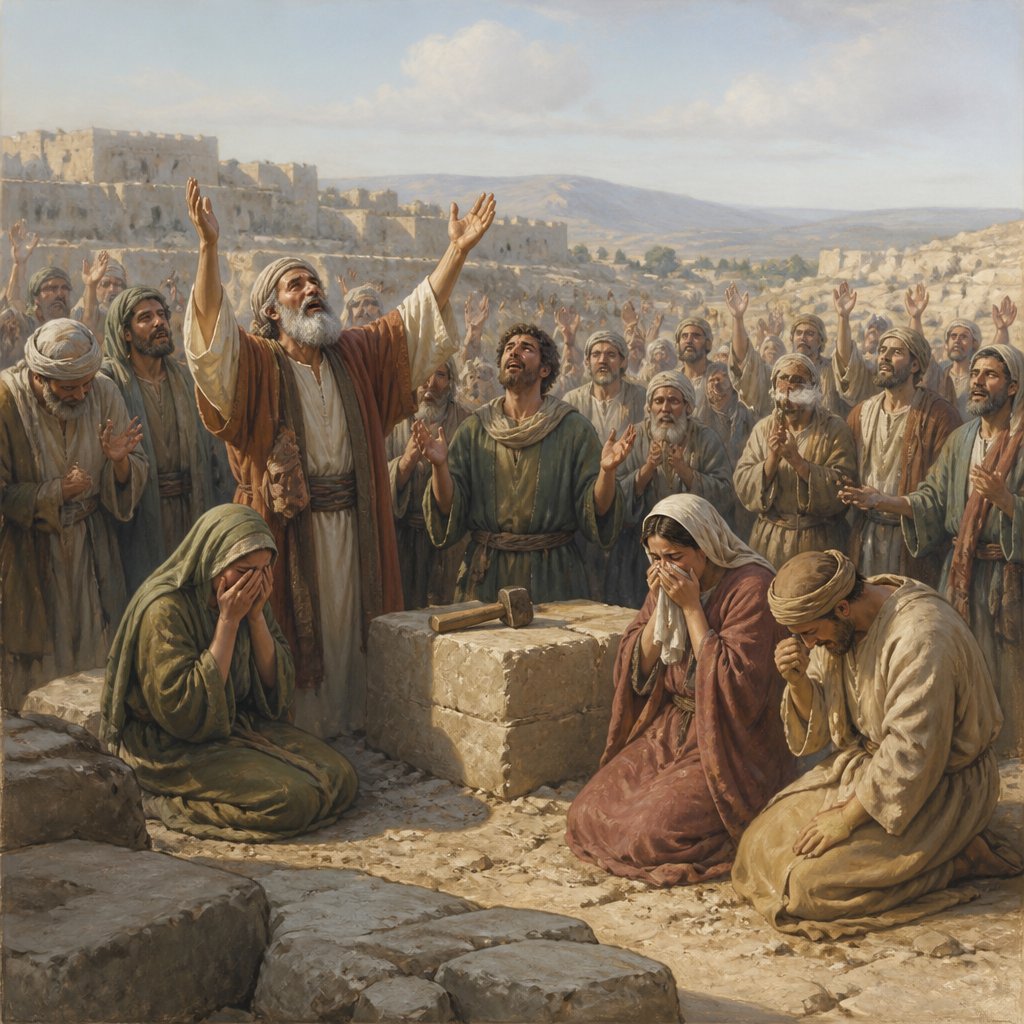
In the book of Ezra, specifically in Ezra 3:13 (KJV), we find a poignant moment encapsulating the complex human experience of joy and sorrow intertwined. The verse states, "So that the people could not discern the noise of the shout of joy from the noise of the weeping of the people: for the people shouted with a loud shout, and the noise was heard afar off." This scene is not merely historical but resonates deeply with our own spiritual journey.
As the exiles returned to Jerusalem after years of captivity, they gathered to lay the foundations of the temple, a profound symbol of their restoration and identity. The noise created was so overwhelming that it was impossible for anyone present to distinguish between the sounds of exultation and those of grief. Why would joy and sorrow coexist in such a striking manner?
The answer lies in the rich tapestry of human emotions shaped by our experiences and spiritual journeys. While the people were rejoicing in the reconstruction of the temple and the restoration of their national and spiritual life, there were also those in their midst who remembered the former glory of the temple—the one that had stood before their exile. Their memories brought sadness as they compared what once was with what is now being built anew.
This duality of emotion is not foreign to us. Consider how often in our lives we experience contradictions. I think of times when one might celebrate personal milestones—like a wedding or the birth of a child—while concurrently mourning the loss of loved ones or grappling with deep-seated fears and uncertainties. Life is a complex journey comprising peaks of joy tinged with valleys of sorrow. These oscillating emotions are part of our human experience, yet they are also an essential part of our spiritual growth.
In examining this passage, we can draw several important reflections:
### 1. Recognition of Human Complexity
We must recognize that joy and sorrow can coexist. The people of Jerusalem experienced a moment where their hearts echoed both the joy of new beginnings and the sadness of what they left behind. As followers of Christ, we are invited into a space of honesty about our feelings. It's okay to express joy over blessings even when we are carrying the weight of grief. God understands our multifaceted emotions and desires that we bring all of ourselves—both laughter and tears—before Him.
### 2. The Sound of Shared Community
The noise that was heard from afar signifies the collective experience of a community undergoing transformation. Our sorrows are eased when shared, and our joys are amplified. In the body of Christ, we are called to support one another through both celebrations and hardships. We must be attentive to the 'shouts' and 'weeps' of those around us, reaching out in solidarity and love. This communal aspect is vital for healing and encourages a deeper connection among believers.
### 3. God’s Presence Amidst Our Noise
In our noisy lives, filled with contrasts of joy and sorrow, the Lord is present. In moments of despair, we often find ourselves reaching for God, and in moments of exuberance, we typically offer thanks. The message of Ezra is a reminder that whether we shout for joy or weep in sorrow, God’s ear is attentive to all our cries. He hears our joyful praise, and He’s there to comfort us in our mourning.
In conclusion, let us embrace the full spectrum of our emotions, honoring both our joys and sorrows. As we shout in celebration and weep in our grief, let the world hear both—together creating a glorious sound that resonates with God’s providence throughout our lives. May our lives reflect this complex symphony of experiences, forever drawing us closer to our Savior who knows our hearts intimately.
Get our apps


Artwork for Ezra 3:13

Ezra 3:13 - "So that the people could not discern the noise of the shout of joy from the noise of the weeping of the people: for the people shouted with a loud shout, and the noise was heard afar off."
"So that the people could not discern the noise of the shout of joy from the noise of the weeping of the people: for the people shouted with a loud shout, and the noise was heard afar off." - Ezra 3:13

Altar rebuilt in Jerusalem. Ezra 3:1-3

Ezra 9:13-15

Ezra 3:2

Ezra 10:3

Ezra 3:2

Ezra 3:10

Ezra 3:9

Ezra 3:2

Nehemiah 12:13 - "Of Ezra, Meshullam; of Amariah, Jehohanan;"

Ezra 9:3

Ezra 3:2

Ezra 3:2

Ezra 10:3

Zerubbabel in Ezra chapter 3
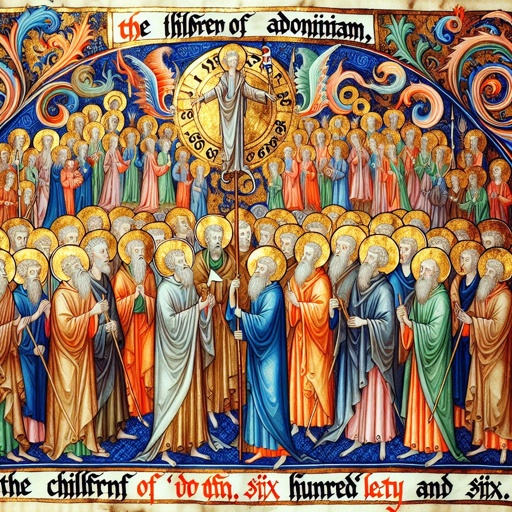
Ezra 2:13 - "The children of Adonikam, six hundred sixty and six."

"Of Ezra, Meshullam; of Amariah, Jehohanan;" - Nehemiah 12:13

Ezra 7:3 - "The son of Amariah, the son of Azariah, the son of Meraioth,"

Ezra 8:13 - "And of the last sons of Adonikam, whose names are these, Eliphelet, Jeiel, and Shemaiah, and with them threescore males."

Ezra 2:3 - "The children of Parosh, two thousand an hundred seventy and two."

Ezra 5:13 - "But in the first year of Cyrus the king of Babylon the same king Cyrus made a decree to build this house of God."

Pagan women leave with their children ezra 10:3

Pagan women leave with their children ezra 10:3
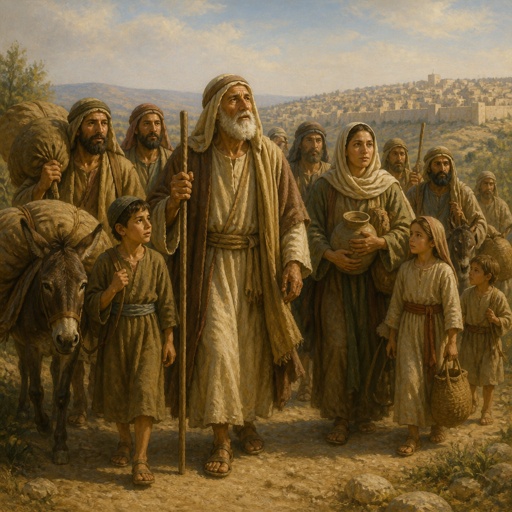
"The children of Adonikam, six hundred sixty and six." - Ezra 2:13

Ezra 8:3 - "Of the sons of Shechaniah, of the sons of Pharosh; Zechariah: and with him were reckoned by genealogy of the males an hundred and fifty."

Ezra 3:11 – "With praise and thanksgiving they sang to the Lord: 'He is good; his love toward Israel endures forever.'"

Ezra 6:13 - "¶ Then Tatnai, governor on this side the river, Shethar-boznai, and their companions, according to that which Darius the king had sent, so they did speedily."

"The son of Amariah, the son of Azariah, the son of Meraioth," - Ezra 7:3

Ezra 3:3 - "And they set the altar upon his bases; for fear was upon them because of the people of those countries: and they offered burnt offerings thereon unto the LORD, even burnt offerings morning and evening."