Restoration and Remembrance: The Feast of Tabernacles in Our Lives
“They kept also the feast of tabernacles, as it is written, and offered the daily burnt offerings by number, according to the custom, as the duty of every day required;” — Ezra 3:4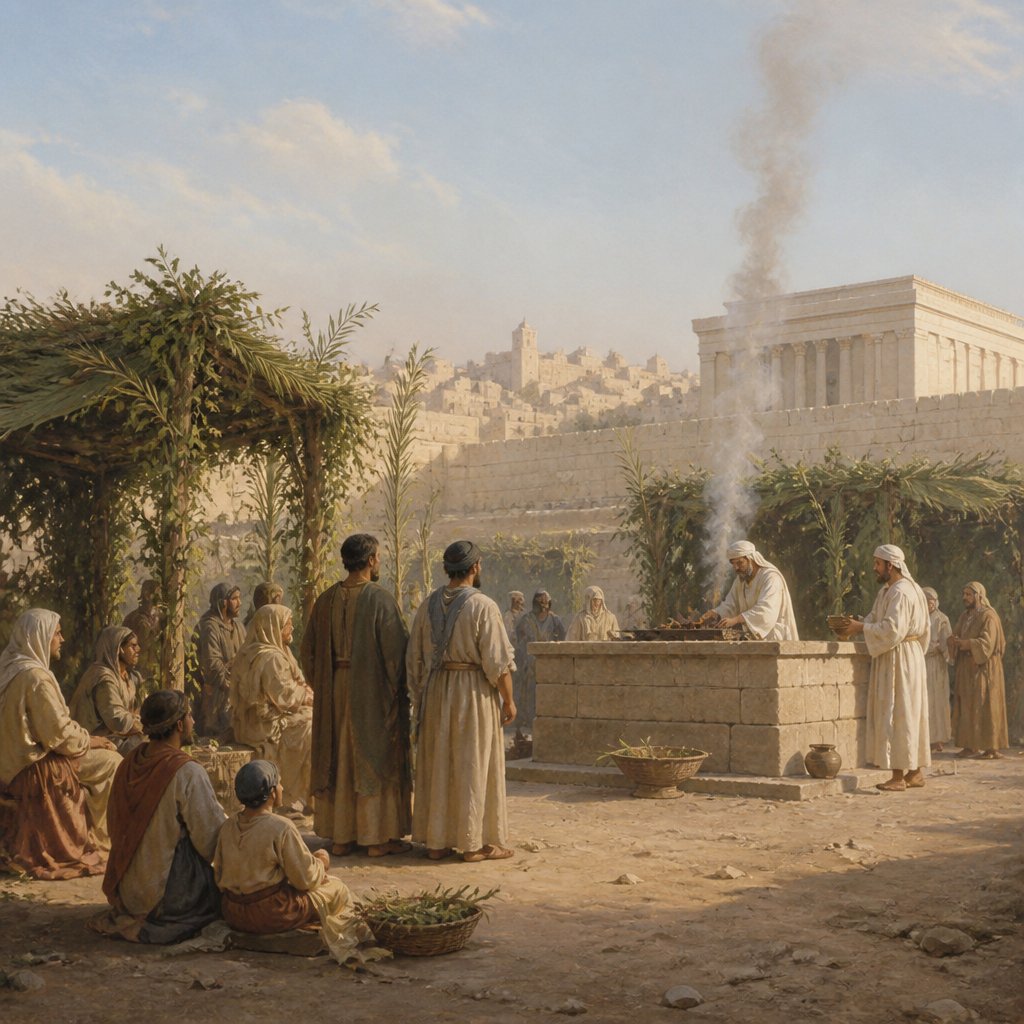
In the book of Ezra 3:4, we come upon a pivotal moment in the history of God’s people following their return from Babylonian exile. The Scripture states, "They kept also the feast of tabernacles, as it is written, and offered the daily burnt offerings by number, according to the custom, as the duty of every day required." This verse invites us to reflect on the act of remembering, the importance of worship, and the commitment to religious obligations as pillars of restoration.
At this juncture, the Israelites are confronting the daunting task of rebuilding their lives and their temple after having endured destruction and captivity. The mention of the Feast of Tabernacles, also known as Sukkot, serves as a divine reminder of God’s faithfulness during their journey through the wilderness. It was during this time that the Israelites were called to live in temporary shelters to remember how God provided for them. They were to gather together, celebrate, and show gratitude for the blessings they received after such a long period of suffering and hardship.
This celebration is not just a mere tradition; it reflects obedience to God’s command as articulated in Leviticus 23:42-43, where the Lord decrees, "Ye shall dwell in booths seven days; all that are Israelites born shall dwell in booths: That your generations may know that I made the children of Israel to dwell in booths, when I brought them out of the land of Egypt: I am the Lord your God." There is profound purpose in the act of celebrating—the Feast of Tabernacles was a season to remember the past, acknowledge God’s providence, and reinforce communal bonds among the people.
What strikes me deeply is how the returnees prioritized this feast amid their reconstruction efforts. Revival often requires reflection, and recognizing where we come from informs where we are headed. They understood that material restoration without spiritual renewal would lead to a hollow victory. So they kept the feast, affirming their identity and covenant with God, and offered daily burnt offerings—an act rich in symbolism, signifying surrender, devotion, and communion with their Creator. Their returning hearts were filled with a renewed sense of duty to worship freely as they acknowledged God’s hand in their history and His unwavering presence in their lives.
For us today, the ritual of the Feast of Tabernacles mirrors our own cycles of life in a rapidly changing world. How often do we allow the busyness of life to strip away the essential act of remembering God's faithfulness? Just as these Israelites were called to celebrate God’s provision, we too are invited to pause, reflect, and celebrate the moments where God has been ever-present, guiding and sustaining us through challenges.
Moreover, Ezra 3:4 highlights the phrase, "according to the custom, as the duty of every day required." This serves as gentle admonition about the unchanging nature of our worship practices. Whichever religious customs or daily practices you engage in, consider them not merely as ceremonial obligations, but as vital expressions of love and reverence towards God. Each act of worship, whether it be prayer, scripture reading, community service, or partaking in sacraments, is crucial in your relationship and ongoing discipleship of Jesus.
As we engage with this passage, we are challenged to embrace a life of remembrance and gratitude, to dedicate ourselves to worship with intention and spirit. Let us be spurred on to create spaces—literal or figurative—where we can gather with others, share stories of divine intervention, and cultivate an ambiance of praise that echoes that ancient celebration found in Ezra. May we find ways to honor our commitment to worship, not only in Jerusalem like those exiles but in the temples of our hearts—actively fostering gratitude for God’s continual faithfulness in our lives.
Get our apps


Artwork for Ezra 3:4

Ezra 3:4 - "¶ They kept also the feast of tabernacles, as it is written, and offered the daily burnt offerings by number, according to the custom, as the duty of every day required;"
"¶ They kept also the feast of tabernacles, as it is written, and offered the daily burnt offerings by number, according to the custom, as the duty of every day required;" - Ezra 3:4

Ezra 4:4

Ezra 4:4

Ezra 3:2

Ezra 10:3

Ezra 3:2

Ezra 3:10

Ezra 3:9

Ezra 3:2

Ezra 9:3

Ezra 3:2

Ezra 3:2

Ezra 10:3

Zerubbabel in Ezra chapter 4

Zerubbabel in Ezra chapter 4

Zerubbabel in Ezra chapter 3

Ezra 4:4 - "Then the people of the land weakened the hands of the people of Judah, and troubled them in building,"

Altar rebuilt in Jerusalem. Ezra 3:1-3

Letter to the king in Ezra chapter 4

Ezra 7:4 - "The son of Zerahiah, the son of Uzzi, the son of Bukki,"

Ezra 7:3 - "The son of Amariah, the son of Azariah, the son of Meraioth,"

Ezra 2:4 - "The children of Shephatiah, three hundred seventy and two."

Ezra 2:3 - "The children of Parosh, two thousand an hundred seventy and two."

Ezra 4:3 - "But Zerubbabel, and Jeshua, and the rest of the chief of the fathers of Israel, said unto them, Ye have nothing to do with us to build an house unto our God; but we ourselves together will build unto the LORD God of Israel, as king Cyrus the king of Persia hath commanded us."

Pagan women leave with their children ezra 10:3

Ezra 8:4 - "Of the sons of Pahath-moab; Elihoenai the son of Zerahiah, and with him two hundred males."

Pagan women leave with their children ezra 10:3

Ezra 4:22 - "Take heed now that ye fail not to do this: why should damage grow to the hurt of the kings?"

Ezra 5:4 - "Then said we unto them after this manner, What are the names of the men that make this building?"