Building with Purpose: A Devotional on Ezra 3:7
“They gave money also unto the masons, and to the carpenters; and meat, and drink, and oil, unto them of Zidon, and to them of Tyre, to bring cedar trees from Lebanon to the sea of Joppa, according to the grant that they had of Cyrus king of Persia.” — Ezra 3:7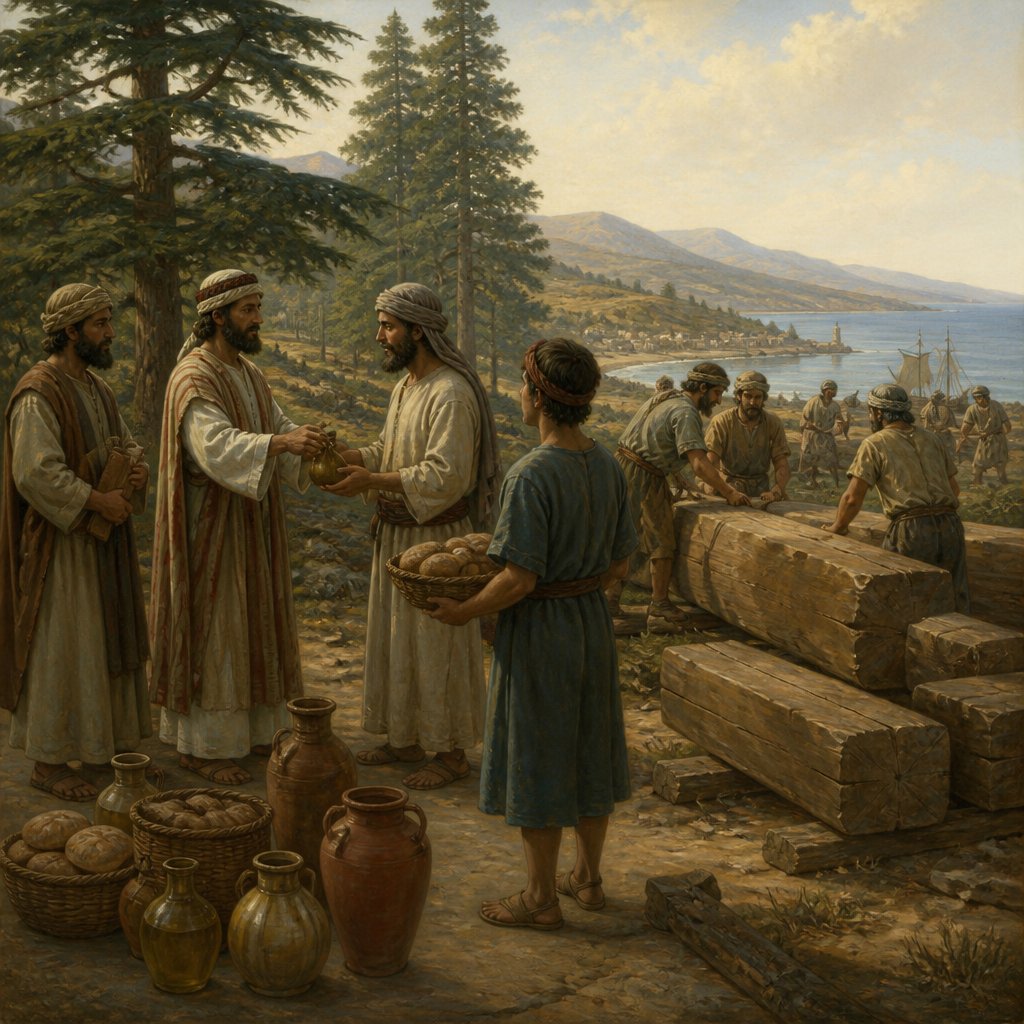
In Ezra 3:7, we read, "They gave money also unto the masons, and to the carpenters; and meat, and drink, and oil, unto them of Zidon, and to them of Tyre, to bring cedar trees from Lebanon to the sea of Joppa, according to the grant that they had of Cyrus king of Persia." This verse is a profound reflection on the spirit of rebuilding and restoration, echoing themes of community, provision, and divine favor that resonate throughout Scripture.
The context of this verse is essential to understanding its richness. After years of exile in Babylon, the people of Israel were finally returning to their homeland, yearning to restore not just their physical surroundings but also their relationship with God. The rebuilding of the temple was more than just a construction project; it represented hope, faith, and a fresh start for a broken people. The verse emphasizes the cooperative effort involved in this grand endeavor, highlighting how various trades and resources were brought together.
As we examine the different facets of Ezra 3:7, let’s first consider the role of the masons and carpenters. These skilled laborers were not merely performing jobs; they were engaging in a divine mission, crafting a cornerstone of their community’s spirituality and identity. Their work was vital in establishing a physical space where they could reconnect with God, worship, and restore the sacred practices that had defined them.
This sentiment echoes in our lives today. We too are called to build—not just physically, but spiritually and relationally. Are we, like the masons and carpenters, using our God-given talents to contribute to God’s kingdom? Every gift we possess, whether in art, teaching, service, or encouragement, has a place in the divine design of our communities and the church. We must ask ourselves, how are we using our abilities for His glory?
Next, let’s reflect on the provision mentioned in the verse. The Israelites gave meat, drink, and oil to the craftsmen brought in from Tyre and Zidon, representing the abundant resources needed for this work. This act of generosity illustrates an essential principle: when God calls us to a task, He also provides the means to fulfill that calling. Just as Cyrus granted the resources needed for the temple’s rebuilding, God often supplies more than enough for our own assignments in life—be it through people, finances, or opportunities.
What does this mean for us? Are we ready to be vessels of provision in the lives of others? As the Israelites received help from neighboring communities, how can we cultivate generosity in our hearts and extend our hands to support those who are working on their own God-given missions? When we commit to being a blessing, we become part of God’s intricate tapestry of love and support.
Furthermore, the reference to cedar trees from Lebanon signifies strength and durability. In a world often characterized by transient values and fleeting commitments, God calls us to build with materials that will endure. Our spiritual lives should be rooted deeply in His Word and supported by fellow believers. Is the foundation of our lives built on the solid ground of Scripture? Are we erecting our spiritual structures using materials that will withstand the storms of life?
Finally, we must reflect on the sovereignty of God in this process. The grant from Cyrus, a pagan king, symbolizes God’s ability to move the hearts of even the unwitting to accomplish His purposes. We are reminded that nothing is beyond God’s control. Whatever challenges we face in our lives or ministries, we must cling to the assurance that God is at work behind the scenes, fulfilling His promises, rallying the necessary resources, and orchestrating the perfect timing for our own rebuilding efforts.
In conclusion, Ezra 3:7 is more than just a historical account of construction; it serves as a clarion call to us to actively participate in the edification of our spiritual lives and communities. As we engage in God’s work, may we be inspired to give generously, build faithfully, and trust steadfastly in His unending provision and guidance. Let us rise up like the Israelites, ready to build with purpose, for the glory of God.
Get our apps


Artwork for Ezra 3:7

Ezra 3:7 - "They gave money also unto the masons, and to the carpenters; and meat, and drink, and oil, unto them of Zidon, and to them of Tyre, to bring cedar trees from Lebanon to the sea of Joppa, according to the grant that they had of Cyrus king of Persia."
"They gave money also unto the masons, and to the carpenters; and meat, and drink, and oil, unto them of Zidon, and to them of Tyre, to bring cedar trees from Lebanon to the sea of Joppa, according to the grant that they had of Cyrus king of Persia." - Ezra 3:7

Ezra 7:3 - "The son of Amariah, the son of Azariah, the son of Meraioth,"

"The son of Amariah, the son of Azariah, the son of Meraioth," - Ezra 7:3

Ezra 7:12 - "Artaxerxes, king of kings, unto Ezra the priest, a scribe of the law of the God of heaven, perfect peace, and at such a time."

Ezra 7:10 - "For Ezra had prepared his heart to seek the law of the LORD, and to do it, and to teach in Israel statutes and judgments."

Ezra 3:2

Ezra 10:3

Ezra 3:2

Ezra 3:10

Ezra 3:9

Ezra 3:2

Ezra 7:1 - "Now after these things, in the reign of Artaxerxes king of Persia, Ezra the son of Seraiah, the son of Azariah, the son of Hilkiah,"

Ezra 9:3

Ezra 3:2

Ezra 3:2

Ezra 10:3

Zerubbabel in Ezra chapter 3

Altar rebuilt in Jerusalem. Ezra 3:1-3

Ezra 7:11 - "¶ Now this is the copy of the letter that the king Artaxerxes gave unto Ezra the priest, the scribe, even a scribe of the words of the commandments of the LORD, and of his statutes to Israel."

Ezra 7:2 - "The son of Shallum, the son of Zadok, the son of Ahitub,"

Ezra 7:4 - "The son of Zerahiah, the son of Uzzi, the son of Bukki,"

Ezra 2:7 - "The children of Elam, a thousand two hundred fifty and four."
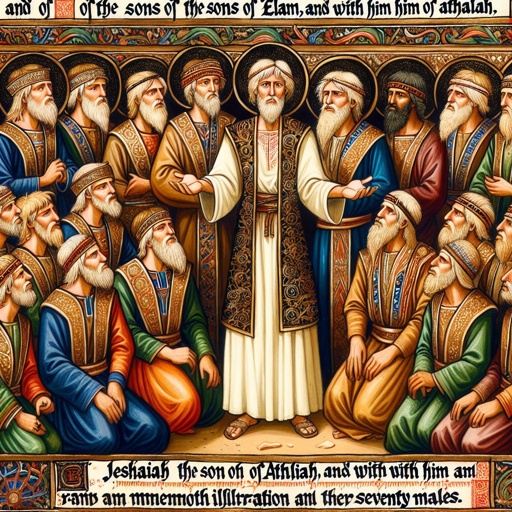
Ezra 8:7 - "And of the sons of Elam; Jeshaiah the son of Athaliah, and with him seventy males."

Ezra 7:8 - "And he came to Jerusalem in the fifth month, which was in the seventh year of the king."

Ezra 7:21 - "And I, even I Artaxerxes the king, do make a decree to all the treasurers which are beyond the river, that whatsoever Ezra the priest, the scribe of the law of the God of heaven, shall require of you, it be done speedily,"

Ezra 7:7 - "And there went up some of the children of Israel, and of the priests, and the Levites, and the singers, and the porters, and the Nethinims, unto Jerusalem, in the seventh year of Artaxerxes the king."

Ezra 2:3 - "The children of Parosh, two thousand an hundred seventy and two."

Ezra 7:5 - "The son of Abishua, the son of Phinehas, the son of Eleazar, the son of Aaron the chief priest:"

Pagan women leave with their children ezra 10:3