Honoring Authority in Our Lives
“Now because we have maintenance from the king’s palace, and it was not meet for us to see the king’s dishonour, therefore have we sent and certified the king;” — Ezra 4:14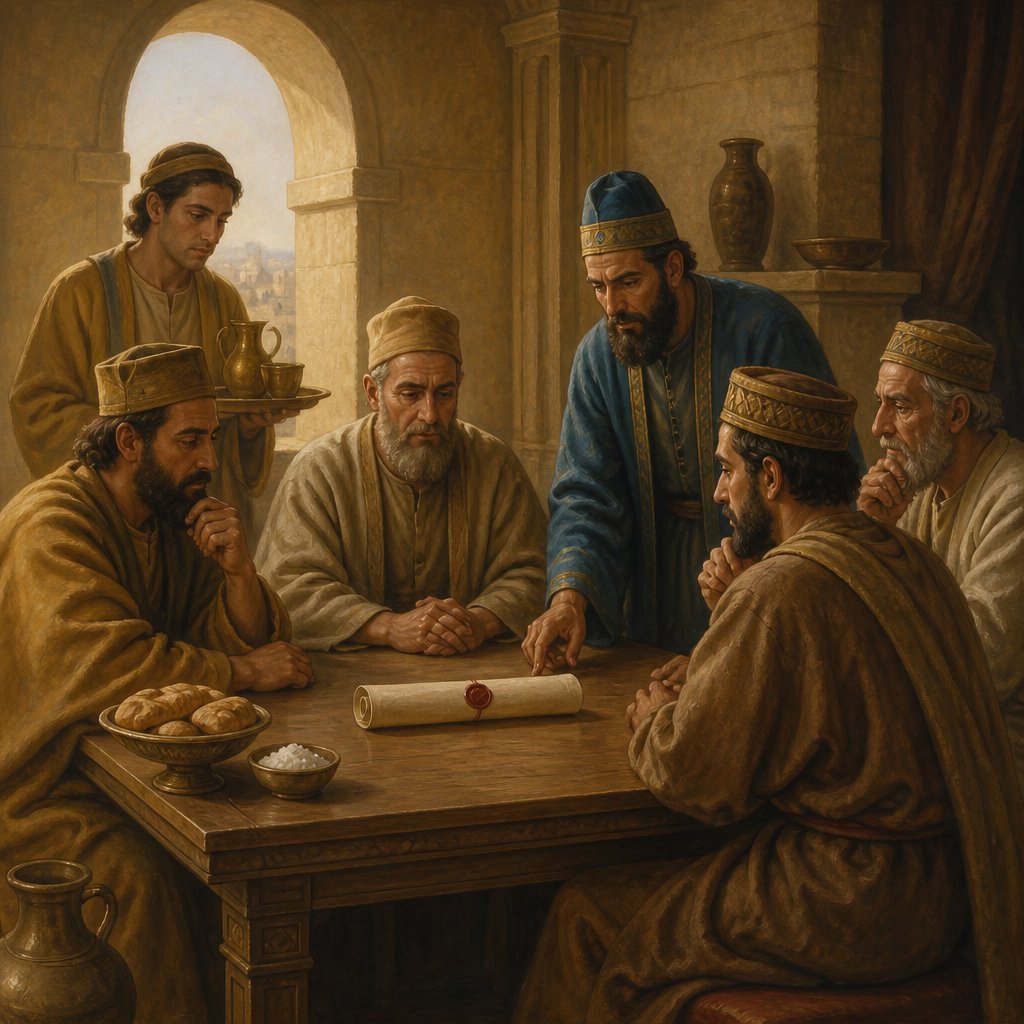
Ezra 4:14 presents a poignant moment in the history of the Israelites as they return to Jerusalem to rebuild the temple after the Babylonian exile. The verse states: "Now because we have maintenance from the king's palace, and it was not meet for us to see the king's dishonour, therefore have we sent and certified the king." This text not only captures a significant political moment but also an important spiritual lesson on how we relate to authority and honor in our daily lives.
As we unpack this verse, it is essential to understand the circumstances surrounding the Israelites' endeavors. They were rebuilding the temple, an act of restoration and worship, which was paramount for their identity as God’s chosen people. However, their progress was met with opposition from their adversaries, who sought to undermine their efforts. In those challenging moments, the exiles recognized the importance of maintaining respect for authority as represented by the king of Persia. Their decision to inform the king was a strategic move, ensuring that they acknowledged the power he held while also safeguarding their own mission to serve God.
The mention of "maintenance from the king's palace" signals something deeper than just a political alliance; it highlights the divine provision in the midst of their earthly circumstances. God had orchestrated their return and provided the means for them to thrive under a foreign ruler. Herein lies a crucial lesson for us: God can use any authority figure, even those outside of our faith community, for our benefit. When we find ourselves in situations where we feel challenged or oppressed, our call is not to rebel but to act with integrity and honor.
When we think of authority in our lives, we often focus on governmental or institutional dynamics. Yet, authority permeates our lives in many forms: in our workplaces, in our families, and even in our churches. How do we respond to these various authorities? The example given in Ezra 4:14 prompts us to consider how we show respect, even if the authority figure may not share our values or beliefs. Opting to see the king’s honor rather than dishonor reflects a heart of humility and wisdom. It shows an understanding that our actions can either elevate or diminish the image of those in positions above us. By choosing the former, the Israelites embraced an attitude of respect, which in turn could lead others to respect their own purpose and devotion to God.
Moreover, their decision to notify the king serves as a reminder of transparency and communication. In our dealings with authority, we often weigh the risks of disclosure against the potential fallout of dishonesty. The Israelites did not seek to hide their intentions; rather, they sought to certify their commitment to their cause while respecting the prevailing authorities. This call for transparency is a principle that resonates with us today—honoring our commitments while being straightforward in our dealings fosters trust and integrity.
Finally, we must reflect on the motivations behind our actions. Are we ensuring that our actions do not bring dishonor to God or to ourselves? Are we acting in ways that signify our allegiance to Him, even under the authority of others? The Israelites understood that their rebuild project was not just about reconstructing a physical structure; it was an act of worship and obedience to God. Thus, they were mindful of the implications their actions carried, both politically and spiritually.
In conclusion, Ezra 4:14 teaches us the importance of honoring authority while staying true to our commitments to God. We must recognize God’s sovereignty over all spheres of life, allowing Him to guide us in our interactions with those in authority. Let us strive to maintain honor in our hearts and lives, ensuring that our actions serve as a testimony of respect and integral faithfulness—to God, to authorities, and to ourselves.
Get our apps


Artwork for Ezra 4:14

Ezra 4:14 - "Now because we have maintenance from the king's palace, and it was not meet for us to see the king's dishonour, therefore have we sent and certified the king;"
"Now because we have maintenance from the king's palace, and it was not meet for us to see the king's dishonour, therefore have we sent and certified the king;" - Ezra 4:14

Ezra 4:4

Ezra 4:4

Zerubbabel in Ezra chapter 4

Zerubbabel in Ezra chapter 4

Ezra 4:4 - "Then the people of the land weakened the hands of the people of Judah, and troubled them in building,"

Ezra 2:14 - "The children of Bigvai, two thousand fifty and six."

Ezra 8:14 - "Of the sons also of Bigvai; Uthai, and Zabbud, and with them seventy males."

Letter to the king in Ezra chapter 4

Ezra 7:4 - "The son of Zerahiah, the son of Uzzi, the son of Bukki,"

Ezra 2:4 - "The children of Shephatiah, three hundred seventy and two."

Ezra 8:4 - "Of the sons of Pahath-moab; Elihoenai the son of Zerahiah, and with him two hundred males."

"The children of Bigvai, two thousand fifty and six." - Ezra 2:14

Ezra 4:22 - "Take heed now that ye fail not to do this: why should damage grow to the hurt of the kings?"

Ezra 5:4 - "Then said we unto them after this manner, What are the names of the men that make this building?"

Ezra 4:8 - "Rehum the chancellor and Shimshai the scribe wrote a letter against Jerusalem to Artaxerxes the king in this sort:"

Ezra 10:4 - "Arise; for this matter belongeth unto thee: we also will be with thee: be of good courage, and do it."

"Then the people of the land weakened the hands of the people of Judah, and troubled them in building," - Ezra 4:4

Ezra 4:18 - "The letter which ye sent unto us hath been plainly read before me."

"The son of Zerahiah, the son of Uzzi, the son of Bukki," - Ezra 7:4

Ezra 4:6 - "And in the reign of Ahasuerus, in the beginning of his reign, wrote they unto him an accusation against the inhabitants of Judah and Jerusalem."

Ezra 6:4 - "With three rows of great stones, and a row of new timber: and let the expenses be given out of the king's house:"

Ezra 4:10 - "And the rest of the nations whom the great and noble Asnappar brought over, and set in the cities of Samaria, and the rest that are on this side the river, and at such a time."

1 Chronicles 4:17 - "And the sons of Ezra were, Jether, and Mered, and Epher, and Jalon: and she bare Miriam, and Shammai, and Ishbah the father of Eshtemoa."

Ezra 4:24 - "Then ceased the work of the house of God which is at Jerusalem. So it ceased unto the second year of the reign of Darius king of Persia."

Ezra 4:1 - "Now when the adversaries of Judah and Benjamin heard that the children of the captivity builded the temple unto the LORD God of Israel;"

"The children of Shephatiah, three hundred seventy and two." - Ezra 2:4

"Of the sons also of Bigvai; Uthai, and Zabbud, and with them seventy males." - Ezra 8:14

Ezra 7:14 - "Forasmuch as thou art sent of the king, and of his seven counsellors, to enquire concerning Judah and Jerusalem, according to the law of thy God which is in thine hand;"