Understanding the Power of Communication in God's Purpose
“And in the days of Artaxerxes wrote Bishlam, Mithredath, Tabeel, and the rest of their companions, unto Artaxerxes king of Persia; and the writing of the letter was written in the Syrian tongue, and interpreted in the Syrian tongue.” — Ezra 4:7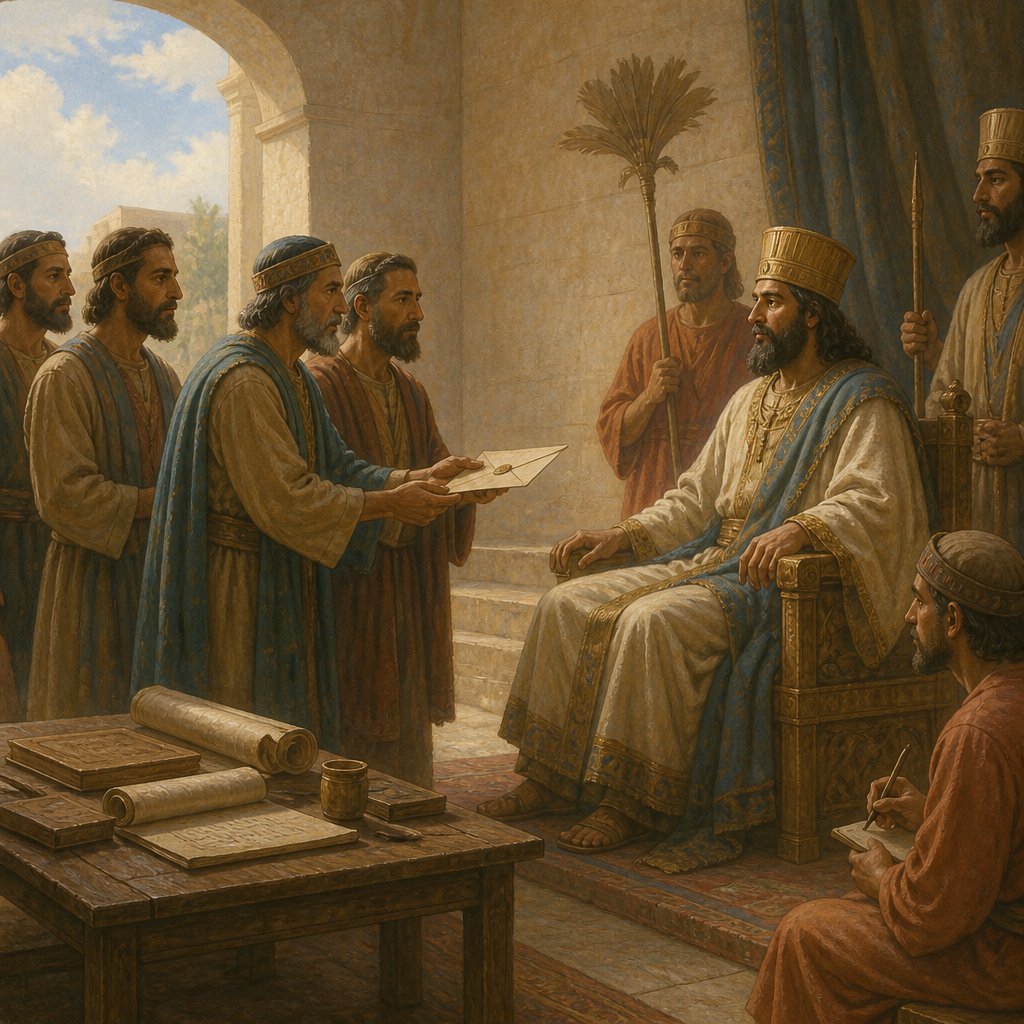
The verse Ezra 4:7 states, "And in the days of Artaxerxes wrote Bishlam, Mithredath, Tabeel, and the rest of their companions, unto Artaxerxes king of Persia; and the writing of the letter was written in the Syrian tongue, and interpreted in the Syrian tongue." This verse, though seemingly straightforward, opens up a profound truth about communication and the efforts to inhibit God's people, a theme that resonates deeply through scripture.
As we reflect on this passage, we must first recognize the historical context surrounding it. After the Israelites returned from Babylonian captivity, they began to rebuild the temple in Jerusalem. Their efforts were met with antagonism from surrounding nations, led by individuals like Bishlam, Mithredath, and Tabeel. These adversaries sought to disrupt the work of God’s people by writing letters to King Artaxerxes, attempting to undermine the Israelites' rebuilding efforts through political manipulation.
The significance of the communication in this verse cannot be understated. The letter was written in the 'Syrian tongue,' which speaks to the cultural and linguistic background of the people opposing the restoration of Jerusalem. In their attempt to persuade the king, these adversaries chose a language that aligned with their identity, a choice that strategically positioned them in a place of influence. Language, in this instance, was not merely a tool for communication but a weapon to wield against God’s work. As we consider this, we are reminded that the enemy often uses various means, including communication, to sow discord and delay God’s purposes in our lives.
However, as we engage with this scripture, we must turn our attention to the intent behind the communication from the Israelites’ adversaries. They were determined to thwart the restoration project that God had initiated through His people. This reality invites us to reflect: how often do we encounter opposition as we pursue God’s calling in our lives? How frequently do we find ourselves in situations where others, perhaps unknowingly, work against the good that the Lord has planned for us? It is crucial to recognize that the work of God is often met with resistance, and we must be prepared for the opposition that surrounds us.
Yet, even amidst this resistance, the reassurance lies in the fact that God is sovereign and actively working towards His purposes. While Bishlam, Mithredath, Tabeel, and others might have written with intentions to intimidate and sway the king against the Israelites, God was in control of the entire situation. Their letters might have appeared powerful, but they were ultimately powerless against the plans of the Almighty. It serves as an encouragement to us: though we may face opposition, we serve a God who can and will achieve His purposes through us. Our focus must remain steadfast on prayer, action, and trust in divine providence.
Furthermore, this verse also emphasizes the importance and necessity of careful communication in our own dealings. We must be wary of our words and their weight. Whether we are communicating encouragement or criticism, we must remember that the words we choose can significantly impact others, and that we must aim to build up rather than tear down. Ephesians 4:29 reminds us to let no corrupt communication proceed out of our mouth, but only that which is good to the use of edifying.
In conclusion, Ezra 4:7 invites us to engage deeply with the dynamics of communication, opposition, and reliance upon God's sovereignty. It serves as a reminder that while we may face adversaries and hardships in our endeavors to serve the Lord and fulfill His calling, we can take courage, knowing that He is continually working in the background. Let us commit to trust Him in all things, even when the path is fraught with challenges. May our words reflect His grace, and may our hearts remain unyielding in faith as we press forward in His purpose.
Get our apps


Artwork for Ezra 4:7

Ezra 4:7 - "¶ And in the days of Artaxerxes wrote Bishlam, Mithredath, Tabeel, and the rest of their companions, unto Artaxerxes king of Persia; and the writing of the letter was written in the Syrian tongue, and interpreted in the Syrian tongue."
"¶ And in the days of Artaxerxes wrote Bishlam, Mithredath, Tabeel, and the rest of their companions, unto Artaxerxes king of Persia; and the writing of the letter was written in the Syrian tongue, and interpreted in the Syrian tongue." - Ezra 4:7

Ezra 7:4 - "The son of Zerahiah, the son of Uzzi, the son of Bukki,"

"The son of Zerahiah, the son of Uzzi, the son of Bukki," - Ezra 7:4

Ezra 4:4

Ezra 4:4

Ezra 7:12 - "Artaxerxes, king of kings, unto Ezra the priest, a scribe of the law of the God of heaven, perfect peace, and at such a time."

Ezra 7:10 - "For Ezra had prepared his heart to seek the law of the LORD, and to do it, and to teach in Israel statutes and judgments."

Ezra 7:1 - "Now after these things, in the reign of Artaxerxes king of Persia, Ezra the son of Seraiah, the son of Azariah, the son of Hilkiah,"

Zerubbabel in Ezra chapter 4

Zerubbabel in Ezra chapter 4

Ezra 4:4 - "Then the people of the land weakened the hands of the people of Judah, and troubled them in building,"

Ezra 7:11 - "¶ Now this is the copy of the letter that the king Artaxerxes gave unto Ezra the priest, the scribe, even a scribe of the words of the commandments of the LORD, and of his statutes to Israel."

Ezra 7:2 - "The son of Shallum, the son of Zadok, the son of Ahitub,"

Letter to the king in Ezra chapter 4

Ezra 7:3 - "The son of Amariah, the son of Azariah, the son of Meraioth,"

Ezra 2:7 - "The children of Elam, a thousand two hundred fifty and four."

Ezra 8:7 - "And of the sons of Elam; Jeshaiah the son of Athaliah, and with him seventy males."

Ezra 2:4 - "The children of Shephatiah, three hundred seventy and two."

Ezra 7:8 - "And he came to Jerusalem in the fifth month, which was in the seventh year of the king."

Ezra 7:21 - "And I, even I Artaxerxes the king, do make a decree to all the treasurers which are beyond the river, that whatsoever Ezra the priest, the scribe of the law of the God of heaven, shall require of you, it be done speedily,"

Ezra 7:7 - "And there went up some of the children of Israel, and of the priests, and the Levites, and the singers, and the porters, and the Nethinims, unto Jerusalem, in the seventh year of Artaxerxes the king."

Ezra 7:5 - "The son of Abishua, the son of Phinehas, the son of Eleazar, the son of Aaron the chief priest:"

Ezra 8:4 - "Of the sons of Pahath-moab; Elihoenai the son of Zerahiah, and with him two hundred males."

Ezra 7:6 - "This Ezra went up from Babylon; and he was a ready scribe in the law of Moses, which the LORD God of Israel had given: and the king granted him all his request, according to the hand of the LORD his God upon him."

Ezra 7:25 - "And thou, Ezra, after the wisdom of thy God, that is in thine hand, set magistrates and judges, which may judge all the people that are beyond the river, all such as know the laws of thy God; and teach ye them that know them not."

"Artaxerxes, king of kings, unto Ezra the priest, a scribe of the law of the God of heaven, perfect peace, and at such a time." - Ezra 7:12

"For Ezra had prepared his heart to seek the law of the LORD, and to do it, and to teach in Israel statutes and judgments." - Ezra 7:10

Ezra 5:7 - "They sent a letter unto him, wherein was written thus; Unto Darius the king, all peace."

"Now after these things, in the reign of Artaxerxes king of Persia, Ezra the son of Seraiah, the son of Azariah, the son of Hilkiah," - Ezra 7:1