Unseen Opposition: The Challenge of Rebuilding
“Then wrote Rehum the chancellor, and Shimshai the scribe, and the rest of their companions; the Dinaites, the Apharsathchites, the Tarpelites, the Apharsites, the Archevites, the Babylonians, the Susanchites, the Dehavites, and the Elamites,” — Ezra 4:9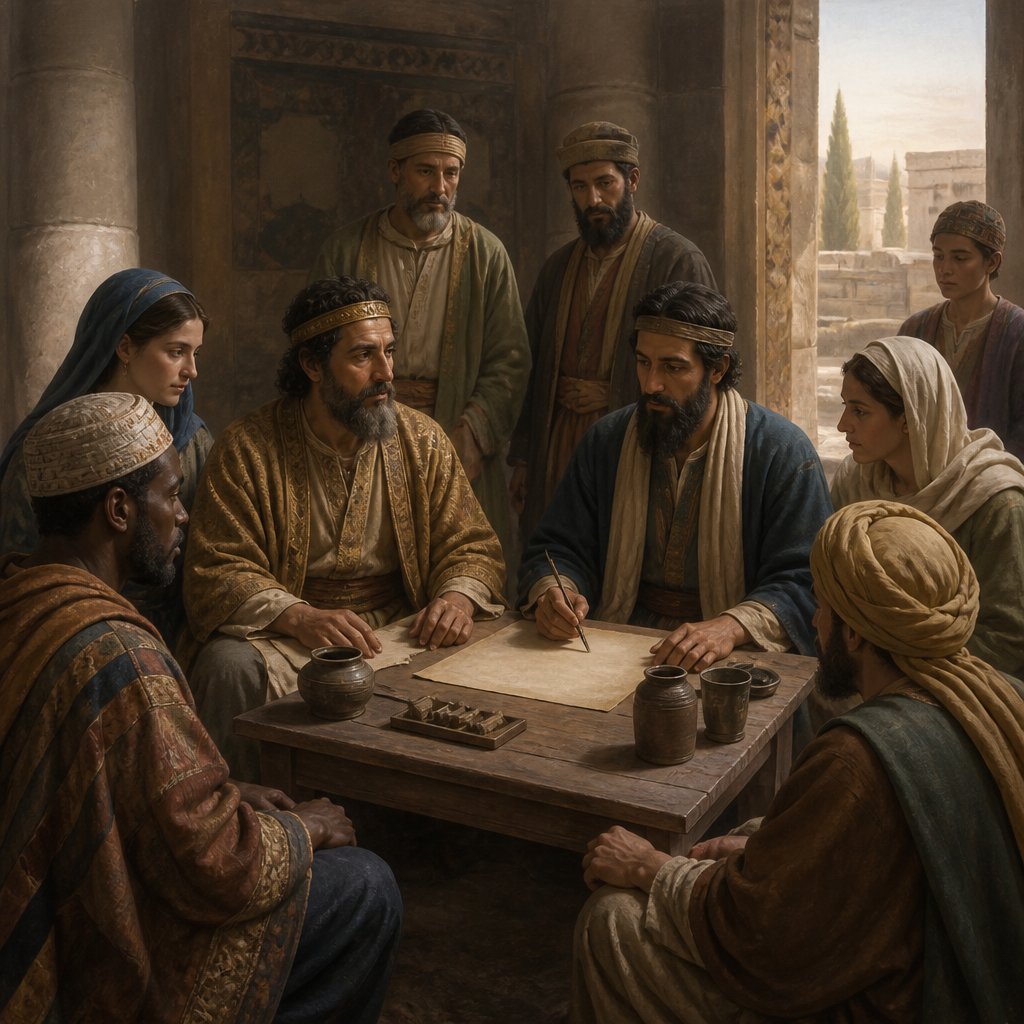
The verse from Ezra 4:9 tells us what happened when the Jewish exiles began to return to Jerusalem and rebuild the temple after its destruction: "Then wrote Rehum the chancellor, and Shimshai the scribe, and the rest of their companions; the Dinaites, the Apharsathchites, the Tarpelites, the Apharsites, the Archevites, the Babylonians, the Susanchites, the Dehavites, and the Elamites."
At first glance, it might be difficult to understand the significance of this verse. It presents a list of names and groups who were involved in opposition against the efforts of the returned exiles. However, beneath the surface, it reveals a profound truth about the journey of faith and the struggle we face when engaging in God’s work.
In returning to Jerusalem, the Jewish exiles were engaging in an act of faith, a return to their identity as God’s chosen people. With their hearts set on rebuilding the temple, they were not just restoring a physical structure; they were re-establishing their relationship with God. Yet, as they begin this momentous task, they encounter opposition from various groups, a testament to the reality of spiritual warfare.
**The Nature of Opposition**
The detailed listing of Rehum and his companions indicates that opposition often comes from many fronts. The array of names reflects a collection of different peoples and backgrounds who came together for a common cause against the Israelites. This suggests that opposition in our lives can come from varied sources—sometimes from those we least expect or from environments we perceive as safe. Spiritual opposition often manifests as discouragement, doubt, or hostility that can be both overt and subtle.
Opposition against God's work is not a new phenomenon. The Israelites faced it throughout their history, notably in the days of the prophets and even while Jesus walked the earth. For today's believers, understanding the likelihood of encountering resistance should equip us with realistic expectations. When we engage in building our lives according to God's calling—whether in ministry, community service, or personal growth—the challenge presented by opposition can feel overwhelming.
**God's Assurance Through the Struggle**
In the midst of their struggles, the exiles needed to remember that their task was divinely ordained. Their mission surpassed mere construction; it was about fulfilling God's prophetic word and re-inhabiting their Promised Land. God had already distinguished them from the other nations by a covenant, a promise that aligned with their identity, purpose, and community. This covenant meant nothing could ultimately thwart God’s plans.
We are likewise reminded that while challenges come, God is ever-present in our journey. Isaiah 41:10 illustrates God's promise: "Fear thou not; for I am with thee: be not dismayed; for I am thy God: I will strengthen thee; yea, I will help thee; yea, I will uphold thee with the right hand of my righteousness." These words should resonate with us during our encounters with opposition.
**Responding To Opposition**
How then do we respond to opposition that arises in our lives? First, we must engage in fervent prayer, seeking God's guidance and strength. Ezra's story shows us the value of humility—recognizing our limitations and total dependency on God to sustain us in the face of challenges.
Second, we should remain steadfast and not give in to discouragement. The opposition faced by the Israelites was meant to distract them from their calling. They could have easily been sidetracked by fear or frustration, but we are called to remain focused on the task God has set before us. Remember that spiritual growth often happens through adversity—"For our light affliction, which is but for a moment, worketh for us a far more exceeding and eternal weight of glory" (2 Corinthians 4:17).
Lastly, we must support one another within the body of Christ. Opposition can isolate us and make us feel alone; however, community strengthens our resolve and reminds us of our shared mission.
As we continue our journey of faith, let us be prepared for the realities of opposition. However, may we also be encouraged that with every effort to rebuild our lives in Christ, His unwavering presence stands behind us, promising that the work we do for His glory will never be in vain.
Get our apps


Artwork for Ezra 4:9

Ezra 4:9 - "Then wrote Rehum the chancellor, and Shimshai the scribe, and the rest of their companions; the Dinaites, the Apharsathchites, the Tarpelites, the Apharsites, the Archevites, the Babylonians, the Susanchites, the Dehavites, and the Elamites,"
"Then wrote Rehum the chancellor, and Shimshai the scribe, and the rest of their companions; the Dinaites, the Apharsathchites, the Tarpelites, the Apharsites, the Archevites, the Babylonians, the Susanchites, the Dehavites, and the Elamites," - Ezra 4:9

Ezra 4:4

Ezra 4:4

Ezra 9:6

Ezra 3:9

Ezra 9:4 - "Then were assembled unto me every one that trembled at the words of the God of Israel, because of the transgression of those that had been carried away; and I sat astonied until the evening sacrifice."

Ezra 9:3

Ezra 9:1

Ezra 9:1

Ezra 9:1

Ezra 9:1-2

Ezra 9:13-15

Ezra 9:1-2

Ezra 2:9 - "The children of Zaccai, seven hundred and threescore."

Zerubbabel in Ezra chapter 4

Zerubbabel in Ezra chapter 4

Ezra 4:4 - "Then the people of the land weakened the hands of the people of Judah, and troubled them in building,"

Letter to the king in Ezra chapter 4

Ezra 7:4 - "The son of Zerahiah, the son of Uzzi, the son of Bukki,"

Ezra 2:4 - "The children of Shephatiah, three hundred seventy and two."

Ezra 8:9 - "Of the sons of Joab; Obadiah the son of Jehiel, and with him two hundred and eighteen males."

Ezra 1:9 - "And this is the number of them: thirty chargers of gold, a thousand chargers of silver, nine and twenty knives,"

Ezra 8:4 - "Of the sons of Pahath-moab; Elihoenai the son of Zerahiah, and with him two hundred males."

"The children of Zaccai, seven hundred and threescore." - Ezra 2:9

Ezra 9:10 - "And now, O our God, what shall we say after this? for we have forsaken thy commandments,"

Ezra 4:22 - "Take heed now that ye fail not to do this: why should damage grow to the hurt of the kings?"

Ezra 5:4 - "Then said we unto them after this manner, What are the names of the men that make this building?"

Ezra 4:8 - "Rehum the chancellor and Shimshai the scribe wrote a letter against Jerusalem to Artaxerxes the king in this sort:"

Ezra 10:4 - "Arise; for this matter belongeth unto thee: we also will be with thee: be of good courage, and do it."