What does Ezra 4:9 mean?
“Then wrote Rehum the chancellor, and Shimshai the scribe, and the rest of their companions; the Dinaites, the Apharsathchites, the Tarpelites, the Apharsites, the Archevites, the Babylonians, the Susanchites, the Dehavites, and the Elamites,” — Ezra 4:9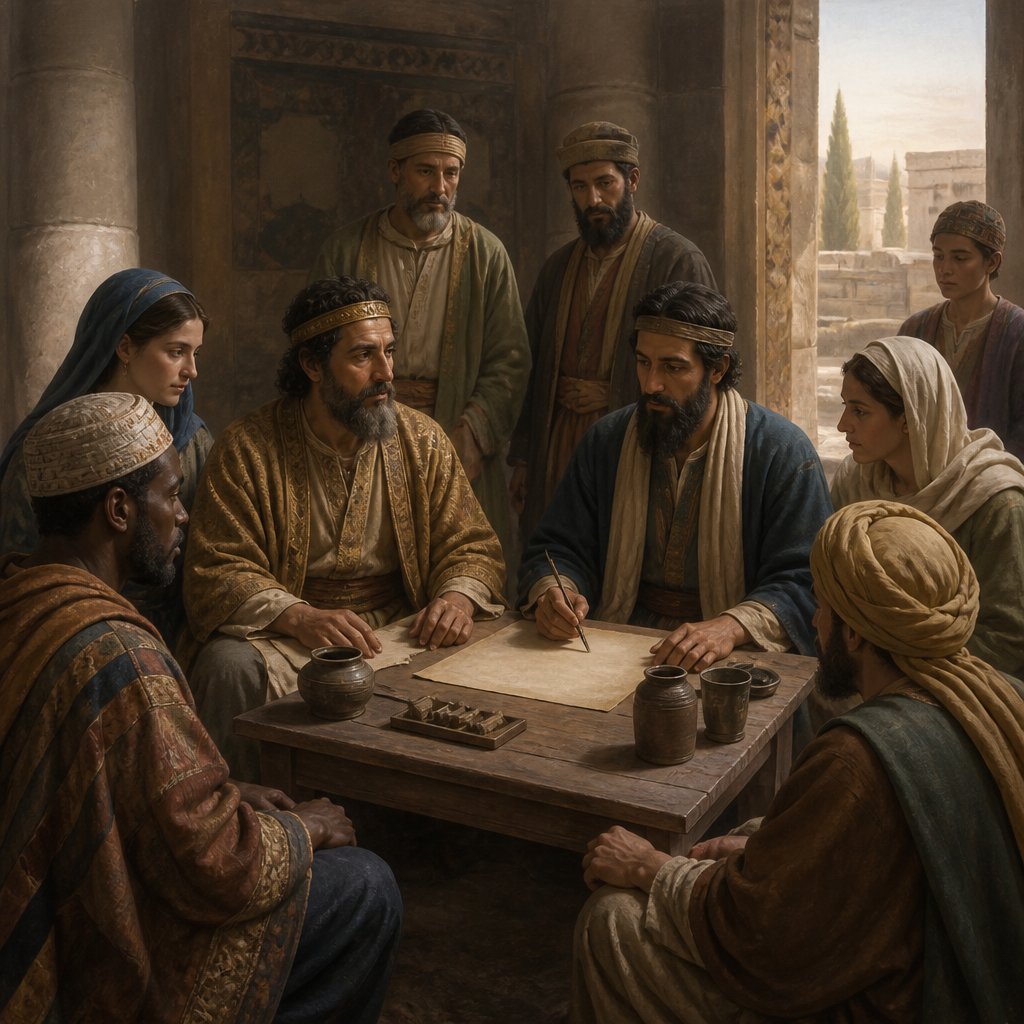
Ezra 4:9 (KJV) reads: "Then wrote Rehum the chancellor, and Shimshai the scribe, and the rest of their companions; the Dinaites, the Apharsathchites, the Tarpelites, the Apharsites, the Archevites, the Babylonians, the Susanchites, the Dehavites, and the Elamites,"
In the context of the book of Ezra, this verse comes in the midst of a historical account of the Israelites' return from exile in Babylon. The Israelites had been taken into captivity as a result of their disobedience to God, and after many years, a remnant was allowed to return to Jerusalem. The book of Ezra records the struggles and challenges faced by the returning exiles as they sought to rebuild their temple and reinstate their worship practices.
In Ezra 4:9, we see a list of different people groups who were living in the region at the time. The mention of these various groups serves to highlight the diverse and complex social and political landscape that the returning exiles had to navigate. These groups would have had their own customs, languages, and religious beliefs, which would have presented a challenge to the Israelites as they sought to establish themselves in the land.
From a broader thematic perspective, this verse reminds readers of the complex nature of the world and the challenges that arise when different cultures and belief systems come into contact with one another. The inclusion of this list of people groups serves as a reminder of the diversity of the world and the importance of understanding and engaging with people who are different from ourselves.
There is also a sense of foreboding in this verse, as it foreshadows the opposition and resistance that the Israelites will face as they seek to rebuild Jerusalem. The following verses go on to describe how these various groups sought to undermine and sabotage the Israelites' efforts, highlighting the hostility and opposition that often arises in the face of cultural and religious differences.
Moreover, the mention of these specific people groups may also hold symbolic significance. In biblical symbolism, different nations and cultures often represent different spiritual forces or ideologies. The inclusion of these particular groups may serve to symbolize the various spiritual and ideological forces that oppose God's people as they seek to fulfill His purposes. This serves as a reminder of the spiritual battles that believers face in the world, and the need to be vigilant and discerning in the face of opposition.
In conclusion, Ezra 4:9 serves as a reminder of the complex and diverse nature of the world, and the challenges that arise when different cultures and belief systems come into contact with one another. It also highlights the hostility and opposition that often arises in the face of cultural and religious differences. As believers, we are called to navigate this complexity with wisdom and discernment, and to remain steadfast in the face of opposition, knowing that ultimately, God is sovereign over all the nations of the earth.
Get our apps


Artwork for Ezra 4:9

Ezra 4:9 - "Then wrote Rehum the chancellor, and Shimshai the scribe, and the rest of their companions; the Dinaites, the Apharsathchites, the Tarpelites, the Apharsites, the Archevites, the Babylonians, the Susanchites, the Dehavites, and the Elamites,"
"Then wrote Rehum the chancellor, and Shimshai the scribe, and the rest of their companions; the Dinaites, the Apharsathchites, the Tarpelites, the Apharsites, the Archevites, the Babylonians, the Susanchites, the Dehavites, and the Elamites," - Ezra 4:9

Ezra 4:4

Ezra 4:4

Ezra 9:6

Ezra 3:9

Ezra 9:4 - "Then were assembled unto me every one that trembled at the words of the God of Israel, because of the transgression of those that had been carried away; and I sat astonied until the evening sacrifice."

Ezra 9:3

Ezra 9:1

Ezra 9:1

Ezra 9:1

Ezra 9:1-2

Ezra 9:13-15

Ezra 9:1-2

Ezra 2:9 - "The children of Zaccai, seven hundred and threescore."

Zerubbabel in Ezra chapter 4

Zerubbabel in Ezra chapter 4

Ezra 4:4 - "Then the people of the land weakened the hands of the people of Judah, and troubled them in building,"

Letter to the king in Ezra chapter 4

Ezra 7:4 - "The son of Zerahiah, the son of Uzzi, the son of Bukki,"

Ezra 2:4 - "The children of Shephatiah, three hundred seventy and two."

Ezra 8:9 - "Of the sons of Joab; Obadiah the son of Jehiel, and with him two hundred and eighteen males."

Ezra 1:9 - "And this is the number of them: thirty chargers of gold, a thousand chargers of silver, nine and twenty knives,"

Ezra 8:4 - "Of the sons of Pahath-moab; Elihoenai the son of Zerahiah, and with him two hundred males."

"The children of Zaccai, seven hundred and threescore." - Ezra 2:9

Ezra 9:10 - "And now, O our God, what shall we say after this? for we have forsaken thy commandments,"

Ezra 4:22 - "Take heed now that ye fail not to do this: why should damage grow to the hurt of the kings?"

Ezra 5:4 - "Then said we unto them after this manner, What are the names of the men that make this building?"

Ezra 4:8 - "Rehum the chancellor and Shimshai the scribe wrote a letter against Jerusalem to Artaxerxes the king in this sort:"

Ezra 10:4 - "Arise; for this matter belongeth unto thee: we also will be with thee: be of good courage, and do it."