Sweet Sacrifices: A Call to Prayer and Worship
“That they may offer sacrifices of sweet savours unto the God of heaven, and pray for the life of the king, and of his sons.” — Ezra 6:10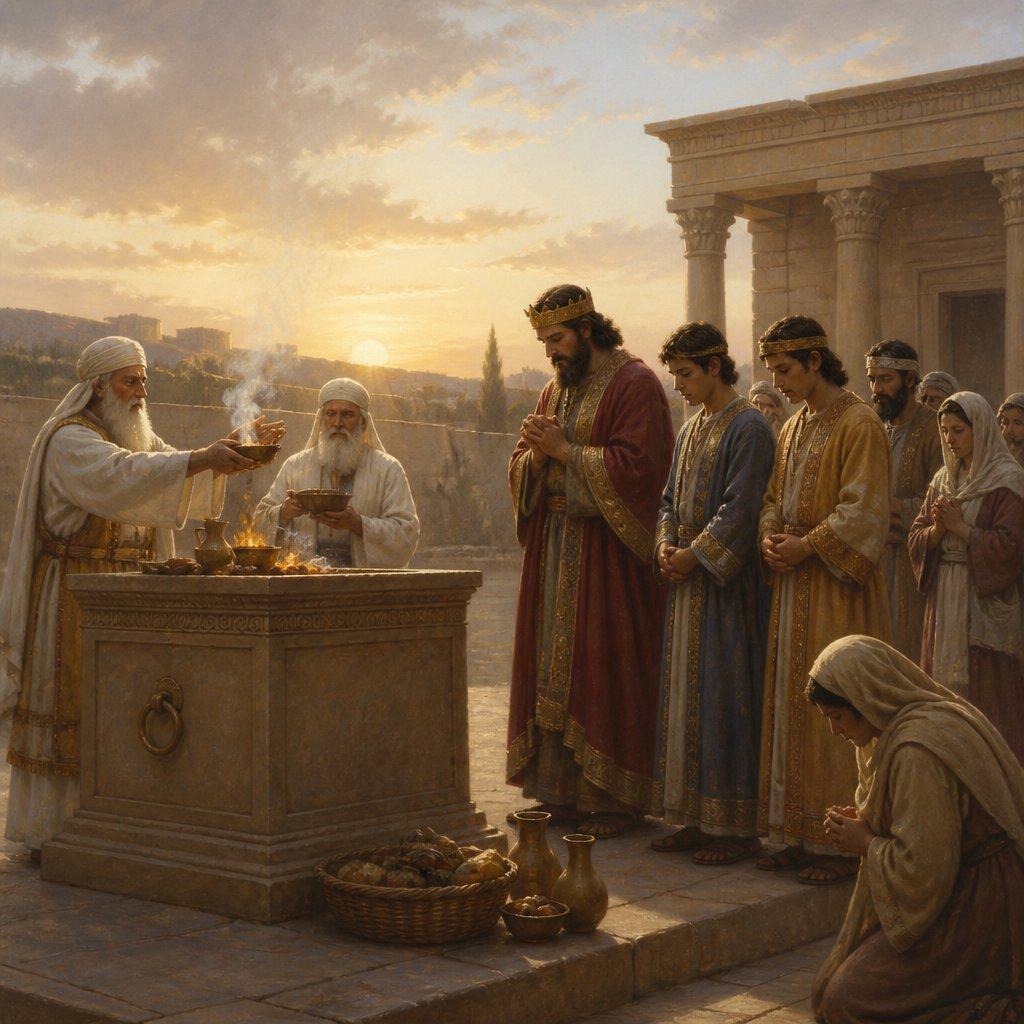
In the book of Ezra, we find a profound truth wrapped within the small yet significant verse of Ezra 6:10: "That they may offer sacrifices of sweet savours unto the God of heaven, and pray for the life of the king, and of his sons." This verse presents an introspective view into the lives of the Israelites as they rebuild their community and re-establish their worship after years of captivity. The explicit instruction to offer sacrifices and pray illustrates a dual commitment to piety and the principles of good governance.
The phrase "sweet savours" refers to the fragrant offerings—symbolic of devotion and reverence—that were made in the temple to honor God. In essence, the Israelites were encouraged to reconnect with their God through acts of worship that would please Him. These acts were not mere rituals but were intended to frame their relationship with God; to engage actively in the divine dialogue that sustains faith. Every offering they made echoed their reliance on divine grace, redemption, and the collective memory of their covenant with Yahweh.
But the verse goes further, illustrating the parallel responsibility to pray for those in authority: "and pray for the life of the king, and of his sons." This directive highlights an essential aspect of their faith: the intersection of spirituality and civic duty. The Israelites were not only called to seek the favor of God for themselves but to also intercede for their leaders. As they rebuilt their temple, they recognized the importance of peaceful governance and the impact a righteous king would have on their community and spiritual endeavors.
In our modern context, this ancient wisdom resonates powerfully today. It serves as a reminder that our prayers—while personal and inward-looking—must extend beyond individual needs. As followers of Christ, we are called to pray for our leaders, just as the Israelites did. In the tumultuous landscape of today’s political climate, praying for leaders is not merely an act of obedience but a demonstration of the love and hope we harbor for the nation. We realize that the decisions made at the highest levels affect not just the laws but the very fabric of our society, including the freedom and ability to worship openly.
Offering sacrifices as a response to God’s goodness calls us also to a daily practice of gratitude and reflection. When we offer our first fruits—whether it be through our time, resources, or talents—we engage with our faith meaningfully. The sacrifices we render can be seen as acts of stewardship and love in which we consciously direct our lives towards pleasing God. Each prayer we offer, each service we render, becomes a sweet smelling sacrifice, creating a fragrance of worship that is acceptable in the Sights of our Heavenly Father.
The commitment to pray for the life of the king and his sons can also compel us to reckon with our own roles as stewards of this world. Are we fostering an atmosphere where faith reigns? Are we encouraged to stand up for righteousness? Are we actively involved in praying for and serving our communities? Each of these actions embodies the essence of the worship God desires.
In closing, as we meditate on Ezra 6:10, let us not overlook the profound connection between sincere worship and our communal responsibility. Let us commit our hearts to offering sweet sacrifices unto the God of heaven. Let us renew our dedication to pray, not just for ourselves, but for our leaders and our nations, enveloping our communities in prayerful love. As we draw closer to God through worship, may we also reflect His grace in the world around us, asking for divine wisdom as we cultivate lives that heal and uplift society.
Get our apps


Artwork for Ezra 6:10

Ezra 6:10 - "That they may offer sacrifices of sweet savours unto the God of heaven, and pray for the life of the king, and of his sons."

"That they may offer sacrifices of sweet savours unto the God of heaven, and pray for the life of the king, and of his sons." - Ezra 6:10

Ezra 10:6 - "¶ Then Ezra rose up from before the house of God, and went into the chamber of Johanan the son of Eliashib: and when he came thither, he did eat no bread, nor drink water: for he mourned because of the transgression of them that had been carried away."

Ezra 10:10-12

Ezra 10:10 - "And Ezra the priest stood up, and said unto them, Ye have transgressed, and have taken strange wives, to increase the trespass of Israel."

Ezra 10:3

Ezra 3:10

Ezra 9:6

Ezra 6:16

Ezra 10:3

Ezra 10:5 - "Then arose Ezra, and made the chief priests, the Levites, and all Israel, to swear that they should do according to this word. And they sware."

Ezra 7:10 - "For Ezra had prepared his heart to seek the law of the LORD, and to do it, and to teach in Israel statutes and judgments."

Ezra 10:38 - "And Bani, and Binnui, Shimei,"

Ezra 10:37 - "Mattaniah, Mattenai, and Jaasau,"

Ezra 10:40 - "Machnadebai, Shashai, Sharai,"

Ezra 10:32 - "Benjamin, Malluch, and Shemariah."

Zerubbabel in Ezra chapter 6

Ezra 6:1-12

Ezra 10:35 - "Benaiah, Bedeiah, Chelluh,"

Ezra 10:41 - "Azareel, and Shelemiah, Shemariah,"

Ezra 10:36 - "Vaniah, Meremoth, Eliashib,"

Ezra 10:42 - "Shallum, Amariah, and Joseph."

Ezra 10:39 - "And Shelemiah, and Nathan, and Adaiah,"

Ezra 6:15-16

Ezra 6:15-16

Ezra 10:20 - "And of the sons of Immer; Hanani, and Zebadiah."

Ezra 10:34 - "Of the sons of Bani; Maadai, Amram, and Uel,"

Ezra 2:10 - "The children of Bani, six hundred forty and two."

Ezra 10:24 - "Of the singers also; Eliashib: and of the porters; Shallum, and Telem, and Uri."

Ezra 10:21 - "And of the sons of Harim; Maaseiah, and Elijah, and Shemaiah, and Jehiel, and Uzziah."