What does Ezra 6:10 mean?
“That they may offer sacrifices of sweet savours unto the God of heaven, and pray for the life of the king, and of his sons.” — Ezra 6:10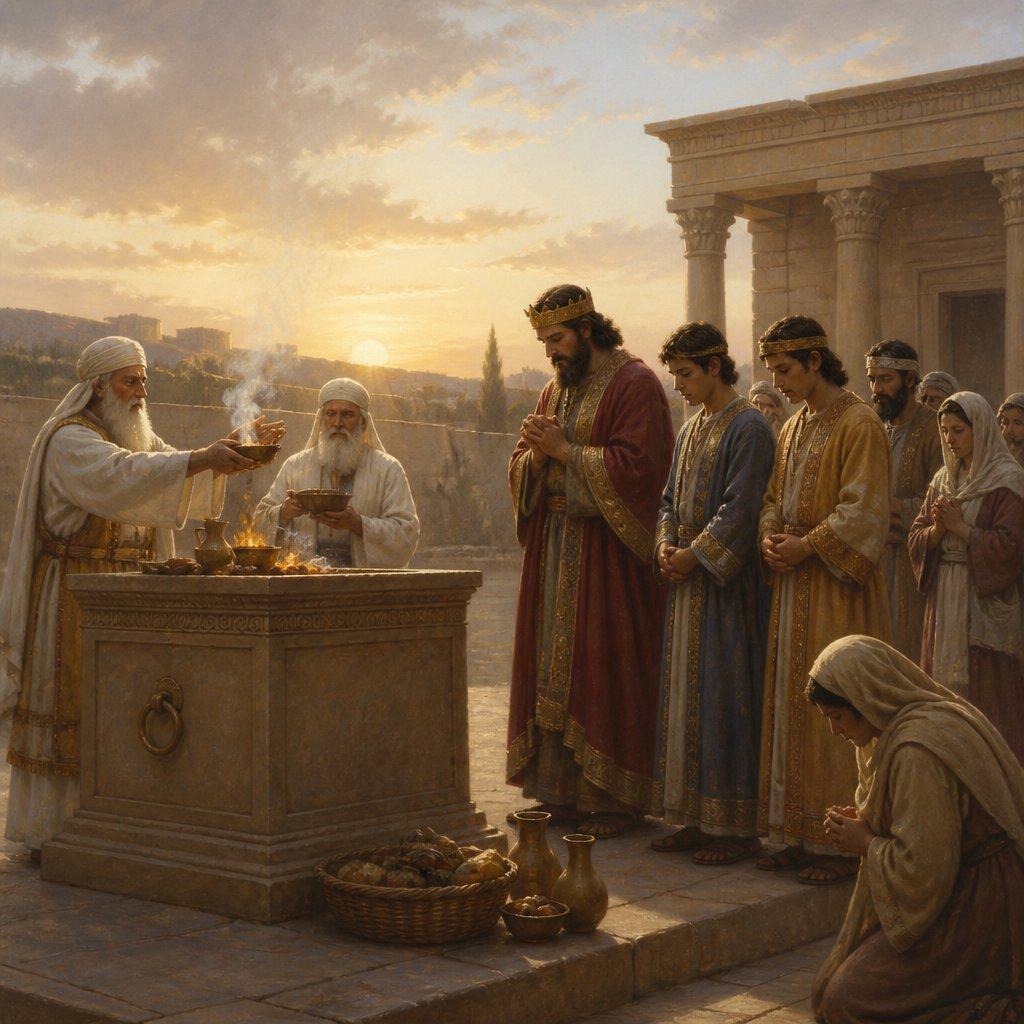
Ezra 6:10 (KJV) says, "That they may offer sacrifices of sweet savours unto the God of heaven, and pray for the life of the king, and of his sons."
This verse comes from the book of Ezra, which is a book of the Bible that chronicles the events following the Babylonian exile of the Israelites. In this verse, King Darius has issued a decree allowing the Israelites to rebuild the temple in Jerusalem which had been destroyed by the Babylonians. The verse outlines the specific purpose for the sacrifices that were to be offered—offering sweet savours unto the God of heaven and praying for the life of the king and his sons.
On a surface level, this verse is instructing the Israelites to make offerings and pray for the well-being of the king and his family. It serves as a reminder that the Israelites were to pray for and support the ruler of the land, even though they were living in exile and not under their own king. This act of obedience and respect for the ruling authority is emphasized throughout the Bible, and this verse is a reflection of that principle.
However, when looking deeper into the verse, there are several themes, contexts, and symbolism to consider.
One prevalent theme in this verse is the act of sacrifice. Sacrifices were a central part of the religious practices of the Israelites and were meant to demonstrate their devotion and obedience to God. The sacrifices offered were not only for their own spiritual well-being but were also a way of expressing their desire for the well-being of their rulers. This act of sacrifice serves as a symbol of humility and submission, acknowledging the divine authority over their earthly rulers.
Another theme is the idea of prayer. The act of praying for the king and his sons is a powerful demonstration of loyalty and care for the leaders of the land. It reflects the importance of intercession and seeking the welfare of those in authority, which is a principle that is also upheld in the New Testament (1 Timothy 2:1-4). This act of prayer serves as a symbol of the Israelites' desire for peace and prosperity not only for themselves but for the entire kingdom under the rule of the king.
The context of this verse is also significant. The Israelites had been living in exile, and the permission to rebuild their temple was a vital step in reclaiming their identity and faith. By offering sacrifices and praying for the king, the Israelites were acknowledging their position as a people living under a different ruler and seeking to display their loyalty and faithfulness to both God and the king.
The symbolism in this verse is multi-faceted. The sacrifices offered represent the Israelites' commitment to God and their acknowledgment of His authority. The prayers for the king and his family symbolize their desire for the well-being and prosperity of the entire kingdom, demonstrating their willingness to submit to the rulership and to seek peace within their land.
In conclusion, Ezra 6:10 is a verse that not only emphasizes the importance of sacrifices and prayers in the context of the Israelites' relationship with God, but also portrays the themes of loyalty, humility, and intercession. It serves as a powerful reminder of the role of the Israelites as a people living under the rule of a foreign king and their commitment to demonstrate their faith and loyalty in their actions and prayers. The verse also stands as a timeless reminder for believers to seek the welfare of those in authority and to express their devotion to God through acts of sacrifice and intercession.
Get our apps


Artwork for Ezra 6:10

Ezra 6:10 - "That they may offer sacrifices of sweet savours unto the God of heaven, and pray for the life of the king, and of his sons."

"That they may offer sacrifices of sweet savours unto the God of heaven, and pray for the life of the king, and of his sons." - Ezra 6:10

Ezra 10:6 - "¶ Then Ezra rose up from before the house of God, and went into the chamber of Johanan the son of Eliashib: and when he came thither, he did eat no bread, nor drink water: for he mourned because of the transgression of them that had been carried away."

Ezra 10:10-12

Ezra 10:10 - "And Ezra the priest stood up, and said unto them, Ye have transgressed, and have taken strange wives, to increase the trespass of Israel."

Ezra 10:3

Ezra 3:10

Ezra 9:6

Ezra 6:16

Ezra 10:3

Ezra 10:5 - "Then arose Ezra, and made the chief priests, the Levites, and all Israel, to swear that they should do according to this word. And they sware."

Ezra 7:10 - "For Ezra had prepared his heart to seek the law of the LORD, and to do it, and to teach in Israel statutes and judgments."

Ezra 10:38 - "And Bani, and Binnui, Shimei,"

Ezra 10:37 - "Mattaniah, Mattenai, and Jaasau,"

Ezra 10:40 - "Machnadebai, Shashai, Sharai,"

Ezra 10:32 - "Benjamin, Malluch, and Shemariah."

Zerubbabel in Ezra chapter 6

Ezra 6:1-12

Ezra 10:35 - "Benaiah, Bedeiah, Chelluh,"

Ezra 10:41 - "Azareel, and Shelemiah, Shemariah,"

Ezra 10:36 - "Vaniah, Meremoth, Eliashib,"

Ezra 10:42 - "Shallum, Amariah, and Joseph."

Ezra 10:39 - "And Shelemiah, and Nathan, and Adaiah,"

Ezra 6:15-16

Ezra 6:15-16

Ezra 10:20 - "And of the sons of Immer; Hanani, and Zebadiah."

Ezra 10:34 - "Of the sons of Bani; Maadai, Amram, and Uel,"

Ezra 2:10 - "The children of Bani, six hundred forty and two."

Ezra 10:24 - "Of the singers also; Eliashib: and of the porters; Shallum, and Telem, and Uri."

Ezra 10:21 - "And of the sons of Harim; Maaseiah, and Elijah, and Shemaiah, and Jehiel, and Uzziah."