Returning to God: A Reflection on Ezra 9:10
“And now, O our God, what shall we say after this? for we have forsaken thy commandments,” — Ezra 9:10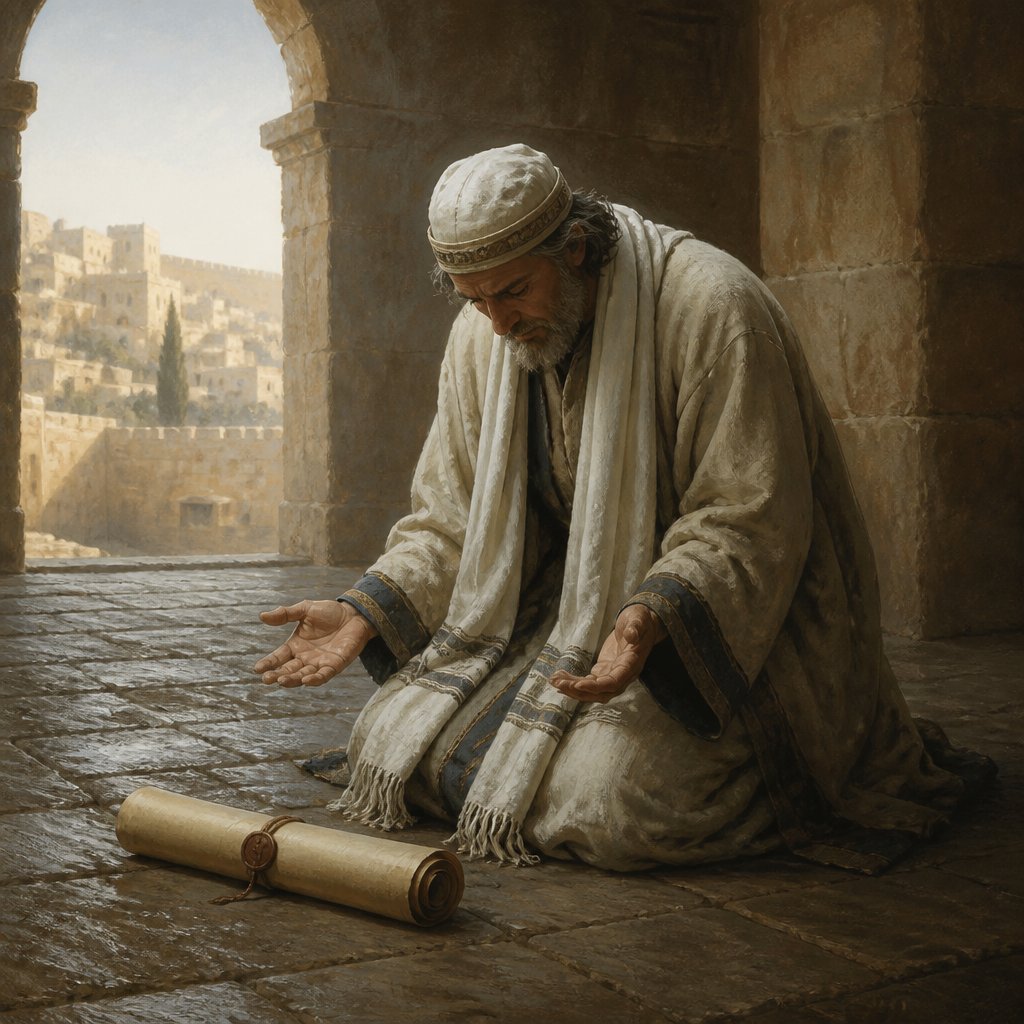
The book of Ezra opens a profound chapter in the history of Israel, a time marked by turmoil, exile, and the eventual return to the Promised Land. In Ezra 9:10, we find a haunting question raised by Ezra himself: "And now, O our God, what shall we say after this? for we have forsaken thy commandments." This poignant verse serves as a wake-up call to not only the Israelites of Ezra's day but also to us, as we navigate our own journeys of faith in a world filled with distractions and temptations.
To fully appreciate Ezra's statement, we must explore the context in which it was written. Ezra, a priest and a scribe, has just returned from Babylon to Jerusalem, where he witnesses the spiritual deterioration of the people. Despite their return to their homeland, the Israelites have engaged in practices that are contrary to God's commandments, including intermarriage with surrounding pagan nations. This flagrant disregard for God's law stirred Ezra's heart, resulting in deep anguish and a heartfelt prayer of confession.
Ezra’s cry, "What shall we say after this?" encapsulates a sense of despair and shame. His question reflects a moment of reckoning, a moment when one stands before God, stripped of pretense, and must confront the crushing weight of disobedience. It encourages us to reflect on our own lives: how many times have we turned from God’s ways, seeking comfort in the familiar paths of the world?
This brings us to the essence of repentance. When we forsake God’s commandments, we don’t just break a set of rules; we sever the relationship that sustains our spiritual life. An essential aspect of Ezra's plea is not merely an admission of guilt but a movement towards restoration—a recognition that God is a faithful God, ever eager to receive those who return to Him in humility. In our modern context, we often find ourselves in similar predicaments, forsaking God’s principles in the face of cultural pressures, desires, or convenience.
Moreover, the phrase "for we have forsaken thy commandments" indicates collective acknowledgment of sin. As believers, we often have a tendency to focus on individual sins, but Ezra's acknowledgment brings to light the communal aspects of worship and faith. We are not just individuals in isolated journeys; we are part of a body, and our actions have repercussions for the entire community. The realization that our corporate life can lead to spiritual downfall is crucial in our walk with God.
As we meditate on this scripture, we are invited to consider our own spiritual lives. What commandments have we forsaken? Are there areas of intentional neglect or unintentional wandering? How can we, like Ezra, cry out to God in sincere confession? The beautiful truth is that God does not leave us in our despair; rather, His grace invites us back into His embrace.
In light of Ezra’s desperate prayer, we can approach God with honest hearts, laying bare our failures. Reflect on the promise found in 1 John 1:9: "If we confess our sins, he is faithful and just to forgive us our sins, and to cleanse us from all unrighteousness." Confession brings healing, restoration, and a renewed covenant with our Creator.
Let us, therefore, take Ezra’s cry to heart and turn towards God. Let us put aside distractions and what the world deems important, returning to our first love. After all, the right response to the recognition of our failures is not shame, but a fervent desire to restore our relationship with God. As we embark on this journey of reflection and repentance, may we find joy in His mercy and strength in His commandments, developing a community that honors God’s ways above all else.
In conclusion, remember that no matter how far we have strayed, God is always ready to welcome us back. In our uncertainty and brokenness, let us join Ezra in seeking the Lord wholeheartedly. What shall we say after recognizing our faults? We say, "Lord, I return to You! Help me to obey Your commandments and walk in Your ways!" Thus, we turn our hearts back to God, knowing He is waiting with open arms.
Get our apps


Artwork for Ezra 9:10

Ezra 9:10 - "And now, O our God, what shall we say after this? for we have forsaken thy commandments,"
"And now, O our God, what shall we say after this? for we have forsaken thy commandments," - Ezra 9:10

Ezra 10:10-12

Ezra 10:10 - "And Ezra the priest stood up, and said unto them, Ye have transgressed, and have taken strange wives, to increase the trespass of Israel."

Ezra 9:6

Ezra 3:9

Ezra 10:3

Ezra 3:10

Ezra 9:3

Ezra 9:1

Ezra 9:1

Ezra 9:1

Ezra 10:3

Ezra 10:5 - "Then arose Ezra, and made the chief priests, the Levites, and all Israel, to swear that they should do according to this word. And they sware."

Ezra 7:10 - "For Ezra had prepared his heart to seek the law of the LORD, and to do it, and to teach in Israel statutes and judgments."

Ezra 10:9 - "¶ Then all the men of Judah and Benjamin gathered themselves together unto Jerusalem within three days. It was the ninth month, on the twentieth day of the month; and all the people sat in the street of the house of God, trembling because of this matter, and for the great rain."

Ezra 9:1-2

Ezra 9:13-15

Ezra 10:38 - "And Bani, and Binnui, Shimei,"

Ezra 10:37 - "Mattaniah, Mattenai, and Jaasau,"

Ezra 10:40 - "Machnadebai, Shashai, Sharai,"

Ezra 10:32 - "Benjamin, Malluch, and Shemariah."

Ezra 10:36 - "Vaniah, Meremoth, Eliashib,"

Ezra 10:35 - "Benaiah, Bedeiah, Chelluh,"

Ezra 10:42 - "Shallum, Amariah, and Joseph."

Ezra 10:41 - "Azareel, and Shelemiah, Shemariah,"

Ezra 10:39 - "And Shelemiah, and Nathan, and Adaiah,"

Ezra 9:1-2

Ezra 10:20 - "And of the sons of Immer; Hanani, and Zebadiah."

Ezra 2:9 - "The children of Zaccai, seven hundred and threescore."