Revived from Bondage: A Journey of Restoration
“For we were bondmen; yet our God hath not forsaken us in our bondage, but hath extended mercy unto us in the sight of the kings of Persia, to give us a reviving, to set up the house of our God, and to repair the desolations thereof, and to give us a wall in Judah and in Jerusalem.” — Ezra 9:9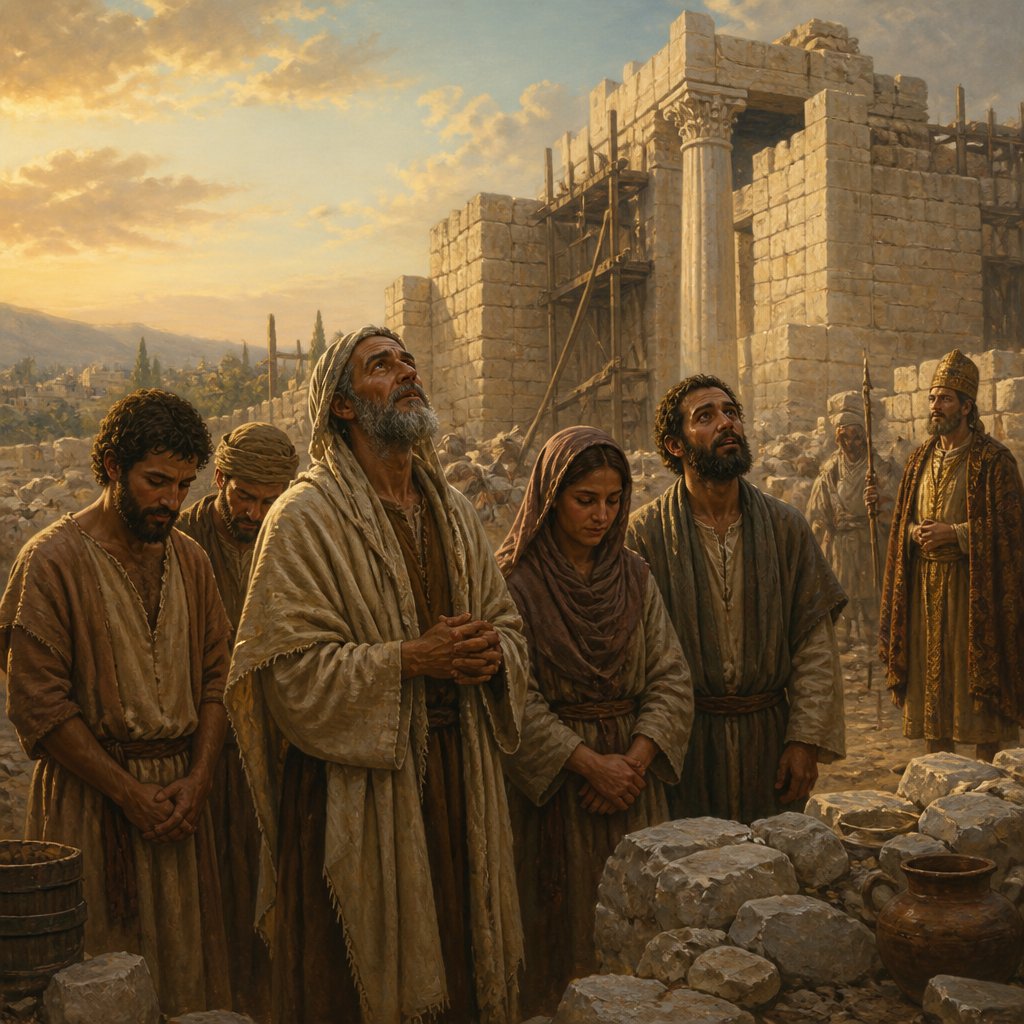
The book of Ezra provides a profound narrative of restoration and revival. In Ezra 9:9, we read: "For we were bondmen; yet our God hath not forsaken us in our bondage, but hath extended mercy unto us in the sight of the kings of Persia, to give us a reviving, to set up the house of our God, and to repair the desolations thereof, and to give us a wall in Judah and in Jerusalem." This verse stands as a powerful reminder of God's unyielding faithfulness, even in our most desperate times.
To truly grasp the depth of this passage, we must first understand the historical context in which it was written. The Israelites had been in exile in Babylon for seventy years, subjected to foreign rule and stripped of their land and temple worship. They had become bondmen, or slaves, to a society that did not acknowledge their God. Yet, amidst this desolation, the Lord's intervention was evident.
Imagine the despair felt by the Israelites during their bondage. They must have experienced the weight of hopelessness, questioning their identity and their future. In such dire circumstances, it would have been easy to believe that they had been completely forsaken by God. Yet, this verse illuminates a truth that transcends time: God does not abandon His people, even when we stray far from Him. The pain of captivity did not render them unworthy of His mercy; indeed, it became the backdrop against which His love and grace would shine the brightest.
The cry of God’s people captured in Ezra 9:9 reveals their recognition of their plight and the stark reality of God’s mercy. The phrase "yet our God hath not forsaken us in our bondage" serves as both affirmation and celebration. It is a declaration of hope, reminding them – and us – that God’s love and compassion persist through all our trials. He remains present with us, offering grace and a path towards revival.
As we reflect on these words, we see not just the restoration of a nation but also the restoration of individual hearts. The God who extended mercy to a nation in ruin is the same God who extends His mercy to us in our personal struggles. Whether we find ourselves in emotional turmoil, spiritual drought, or relational bondage, we must remember that God's compassion is always available.
In this verse, God did not merely free His people from physical bondage; He also provided a way to rebuild their spiritual lives. The passage speaks of a ‘’reviving’’—a renewal that breathes life into the weary and broken. It is a reminder that God not only addresses our current circumstances but actively engages in the remaking of our lives. His vision encompasses all aspects of our existence, including the house of God, which signifies our relationship with Him. To "set up the house of our God" is to prioritize His presence in our lives, making space for Him to dwell and to work.
Moreover, the mention of repairing the desolations and establishing a wall symbolizes security and protection. God’s revival is comprehensive; He desires to restore not just our spirits but also our hopes and dreams. The wall represents safety against future dangers, an assurance that God will continue to provide for and protect His people. In our own lives, God calls us to build protective barriers within our hearts and minds, ensuring that our faith remains intact amidst the chaos of life’s trials.
In conclusion, let us meditate on the promise contained in Ezra 9:9. We have all faced our share of trials, and at times, we may feel like we are bondmen to our circumstances. However, take heart! Our God is a God of mercy, actively working on our behalf, surrounded by grace and revival. Each day we can choose to lay our burdens before Him, trusting that He will rebuild us, revive us, and protect us as we journey forward in faith. Let this truth anchor our souls, reminding us that we are never alone, and that with God, restoration is always possible.
Get our apps


Artwork for Ezra 9:9

Ezra 9:9 - "For we were bondmen; yet our God hath not forsaken us in our bondage, but hath extended mercy unto us in the sight of the kings of Persia, to give us a reviving, to set up the house of our God, and to repair the desolations thereof, and to give us a wall in Judah and in Jerusalem."
"For we were bondmen; yet our God hath not forsaken us in our bondage, but hath extended mercy unto us in the sight of the kings of Persia, to give us a reviving, to set up the house of our God, and to repair the desolations thereof, and to give us a wall in Judah and in Jerusalem." - Ezra 9:9

Ezra 9:6

Ezra 3:9

Ezra 9:3

Ezra 9:1

Ezra 9:1

Ezra 9:1

Ezra 9:1-2

Ezra 9:13-15

Ezra 9:1-2

Ezra 2:9 - "The children of Zaccai, seven hundred and threescore."

Ezra 8:9 - "Of the sons of Joab; Obadiah the son of Jehiel, and with him two hundred and eighteen males."

Ezra 1:9 - "And this is the number of them: thirty chargers of gold, a thousand chargers of silver, nine and twenty knives,"

"The children of Zaccai, seven hundred and threescore." - Ezra 2:9

Ezra 9:10 - "And now, O our God, what shall we say after this? for we have forsaken thy commandments,"

Ezra 5:9 - "Then asked we those elders, and said unto them thus, Who commanded you to build this house, and to make up these walls?"

Ezra 4:9 - "Then wrote Rehum the chancellor, and Shimshai the scribe, and the rest of their companions; the Dinaites, the Apharsathchites, the Tarpelites, the Apharsites, the Archevites, the Babylonians, the Susanchites, the Dehavites, and the Elamites,"

Ezra 9:3 - "And when I heard this thing, I rent my garment and my mantle, and plucked off the hair of my head and of my beard, and sat down astonied."

Ezra 3:9 - "Then stood Jeshua with his sons and his brethren, Kadmiel and his sons, the sons of Judah, together, to set forward the workmen in the house of God: the sons of Henadad, with their sons and their brethren the Levites."

Ezra 9:2 - "For they have taken of their daughters for themselves, and for their sons: so that the holy seed have mingled themselves with the people of those lands: yea, the hand of the princes and rulers hath been chief in this trespass."

"Of the sons of Joab; Obadiah the son of Jehiel, and with him two hundred and eighteen males." - Ezra 8:9

Ezra 9:4 - "Then were assembled unto me every one that trembled at the words of the God of Israel, because of the transgression of those that had been carried away; and I sat astonied until the evening sacrifice."

Ezra 9:15 - "O LORD God of Israel, thou art righteous: for we remain yet escaped, as it is this day: behold, we are before thee in our trespasses: for we cannot stand before thee because of this."
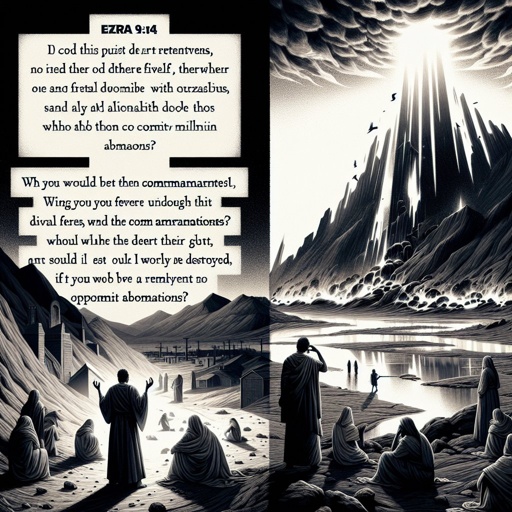
Ezra 9:14 - "Should we again break thy commandments, and join in affinity with the people of these abominations? wouldest not thou be angry with us till thou hadst consumed us, so that there should be no remnant nor escaping?"

"And this is the number of them: thirty chargers of gold, a thousand chargers of silver, nine and twenty knives," - Ezra 1:9

Ezra 7:9 - "For upon the first day of the first month began he to go up from Babylon, and on the first day of the fifth month came he to Jerusalem, according to the good hand of his God upon him."

Ezra 9:5 - "¶ And at the evening sacrifice I arose up from my heaviness; and having rent my garment and my mantle, I fell upon my knees, and spread out my hands unto the LORD my God,"

Ezra 9:6 - "And said, O my God, I am ashamed and blush to lift up my face to thee, my God: for our iniquities are increased over our head, and our trespass is grown up unto the heavens."

Ezra 9:13 - "And after all that is come upon us for our evil deeds, and for our great trespass, seeing that thou our God hast punished us less than our iniquities deserve, and hast given us such deliverance as this;"