From Heaviness to Hope: A Journey of Desperation to Devotion
“And at the evening sacrifice I arose up from my heaviness; and having rent my garment and my mantle, I fell upon my knees, and spread out my hands unto the LORD my God,” — Ezra 9:5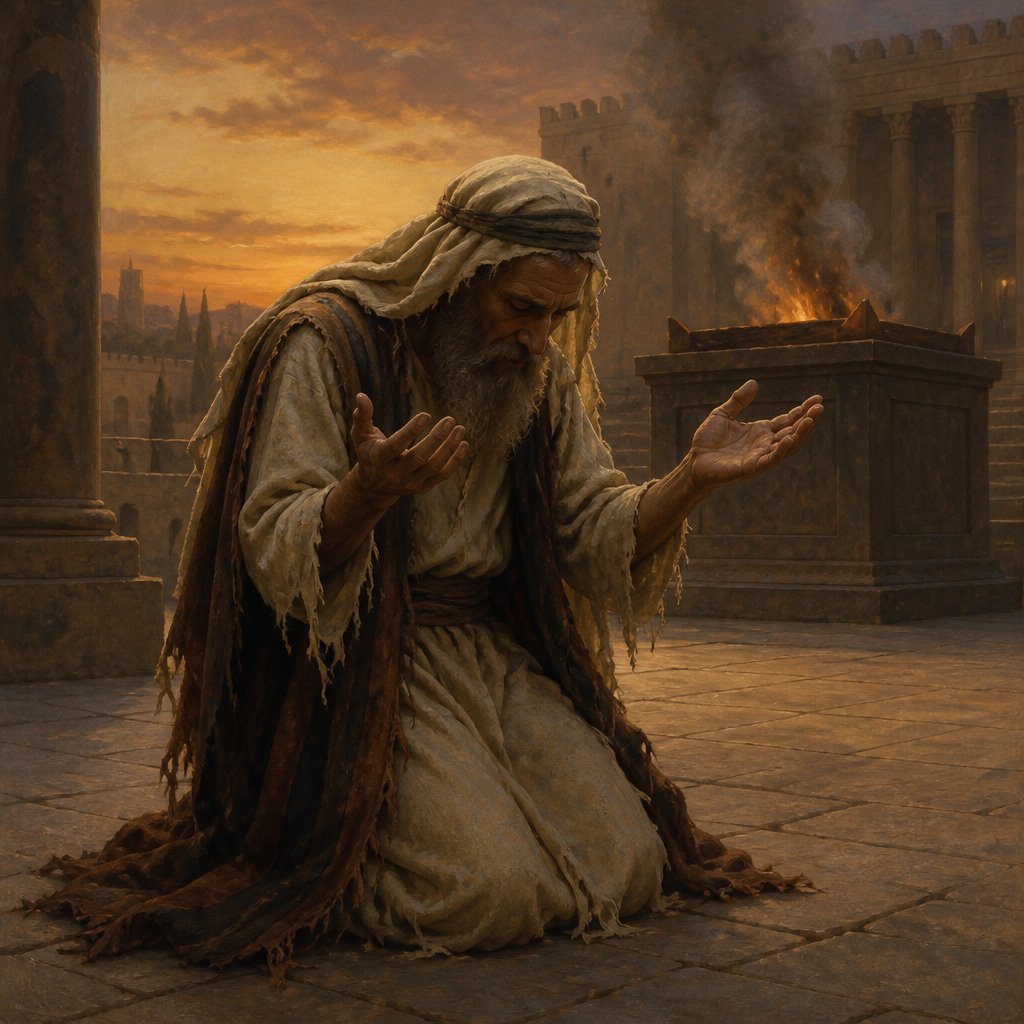
The verse Ezra 9:5 from the King James Version offers a vivid portrayal of emotional vulnerability and spiritual intensity: "And at the evening sacrifice I arose up from my heaviness; and having rent my garment and my mantle, I fell upon my knees, and spread out my hands unto the LORD my God." In this passage, we find Ezra, a scribe and spiritual leader during the return from Babylonian exile, embodying both the weight of despair and the hope found in earnest prayer.
Ezra’s actions are steeped in significance. The context of his weeping and mourning reflects the spiritual state of the people of Israel who had returned to Jerusalem but were entangled in the very sins that had led to their previous captivity. The Israelites had mixed themselves with foreign peoples and adopted their abominable practices, straying from the covenantal fidelity required by God. This grave situation brings Ezra to his knees, where he physically expresses his sorrow — rending his garments as a traditional sign of mourning and sincere contrition.
When we look closely at Ezra’s heaviness, we see the deep emotional struggle that many of us can relate to at various points in our spiritual journey. He does not shy away from his feelings of despair, nor does he pretend that everything is okay. Instead, he acknowledges his heaviness, which is crucial for anyone seeking a genuine relationship with God. It serves as a reminder that we can come before the Lord with our burdens, worries, fears, and failures. Ezra models what it means to confront our spiritual dilemmas with honesty and vulnerability.
There is something profoundly intimate about the act of falling to one’s knees, as Ezra does in this passage. It is a position of submission, humility, and surrender. In this posture, he is not just physically lowering himself; he is spiritually aligning his heart with God, acknowledging the Lord’s sovereignty over every situation. It reminds us today that prayer often begins with recognizing where we stand in relation to God’s holiness and our shortcomings.
Ezra “spread out [his] hands unto the LORD [his] God.” This gesture symbolizes openness and the longing for divine intervention. The act of extending hands is a universal sign of reaching out for help, surrendering oneself, and seeking connection. In essence, Ezra is demonstrating a faith that is not passive but one that actively reaches for the divine. He is pleading for restoration, not only for himself but for the entire nation of Israel.
As we reflect on our lives, we might ponder: what are the heaviness or sins we carry? What situations in our lives seem overwhelming? Perhaps it is guilt from past mistakes, sadness from broken relationships, or fear about the future. These burdens can become heavy weights, keeping us from experiencing the fullness of God’s grace and mercy. Just as Ezra did, we must learn to bring these weights before God in prayer, acknowledging our need for His help and listening for His guidance and forgiveness.
The imagery of the evening sacrifice, which is the time when Ezra prayed, also speaks volumes. The evening sacrifice was a time set aside for atonement and reflection. Similarly, we, too, should carve out time in our daily lives to seek God. It’s in the stillness of the evening, amidst the chaos of life, that we can turn our heaviness into heartfelt prayer, casting our cares upon Him.
Ultimately, Ezra’s fervent prayer and humility became a catalyst for the people's restoration, ushering them back into alignment with God’s will. Likewise, our moments of vulnerability can lead to profound breakthroughs in our spiritual journeys. When we bring our heaviness to God, we invite Him to transform our sorrow into hope, our despair into joy, and our failures into testimonies of His grace.
In conclusion, let us learn from Ezra’s example: do not shy away from your heaviness. Instead, rent your heart and turn to the Lord in prayer, for it is in surrender that we find strength and hope. Through our earnest pleas, God’s mercy can flow, restoring us and realigning us with His purpose.
Get our apps


Artwork for Ezra 9:5

Ezra 9:5 - "¶ And at the evening sacrifice I arose up from my heaviness; and having rent my garment and my mantle, I fell upon my knees, and spread out my hands unto the LORD my God,"
"¶ And at the evening sacrifice I arose up from my heaviness; and having rent my garment and my mantle, I fell upon my knees, and spread out my hands unto the LORD my God," - Ezra 9:5

Ezra 5:9 - "Then asked we those elders, and said unto them thus, Who commanded you to build this house, and to make up these walls?"

Ezra 9:6

Ezra 3:9

Ezra 9:3

Ezra 9:1

Ezra 9:1

Ezra 9:1

Ezra 10:5 - "Then arose Ezra, and made the chief priests, the Levites, and all Israel, to swear that they should do according to this word. And they sware."

Ezra 9:1-2

Ezra 9:13-15

Zerubbabel in Ezra chapter 5

Ezra 9:1-2

Ezra 2:9 - "The children of Zaccai, seven hundred and threescore."

Ezra 2:5 - "The children of Arah, seven hundred seventy and five."

"Then asked we those elders, and said unto them thus, Who commanded you to build this house, and to make up these walls?" - Ezra 5:9

Zerubbabel in Ezra chapter 5 but zerubbabel is not a priest

Ezra 8:5 - "Of the sons of Shechaniah; the son of Jahaziel, and with him three hundred males."

Ezra 7:5 - "The son of Abishua, the son of Phinehas, the son of Eleazar, the son of Aaron the chief priest:"

Ezra 8:9 - "Of the sons of Joab; Obadiah the son of Jehiel, and with him two hundred and eighteen males."

Ezra 1:9 - "And this is the number of them: thirty chargers of gold, a thousand chargers of silver, nine and twenty knives,"

Ezra 5:5 - "But the eye of their God was upon the elders of the Jews, that they could not cause them to cease, till the matter came to Darius: and then they returned answer by letter concerning this matter."

"The children of Zaccai, seven hundred and threescore." - Ezra 2:9

Ezra 5:4 - "Then said we unto them after this manner, What are the names of the men that make this building?"

Ezra 5:13 - "But in the first year of Cyrus the king of Babylon the same king Cyrus made a decree to build this house of God."

"Then arose Ezra, and made the chief priests, the Levites, and all Israel, to swear that they should do according to this word. And they sware." - Ezra 10:5

Ezra 5:7 - "They sent a letter unto him, wherein was written thus; Unto Darius the king, all peace."

Ezra 9:10 - "And now, O our God, what shall we say after this? for we have forsaken thy commandments,"

Ezra 5:10 - "We asked their names also, to certify thee, that we might write the names of the men that were the chief of them."