The Joy of the Barren: A Call to Hope and Rejoicing
“For it is written, Rejoice, thou barren that bearest not; break forth and cry, thou that travailest not: for the desolate hath many more children than she which hath an husband.” — Galatians 4:27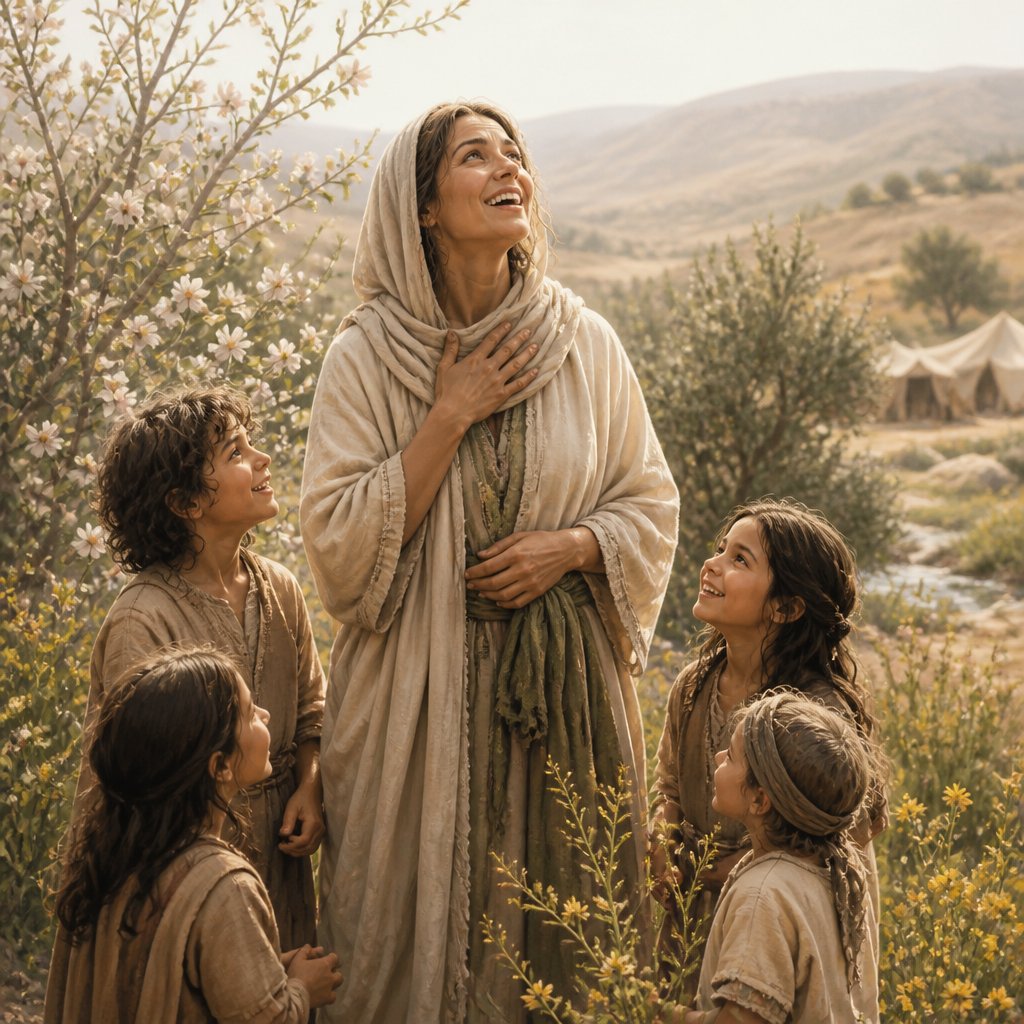
In Galatians 4:27, the Apostle Paul, through divine inspiration, calls us into a profound understanding of joy even amidst barrenness: "For it is written, Rejoice, thou barren that bearest not; break forth and cry, thou that travailest not: for the desolate hath many more children than she which hath a husband." This verse challenges commonly held perceptions of value and success, turning our earthly metrics upside-down, and invites us to partake in God’s perspective on life and potential.
At first glance, the call to rejoice amidst barrenness seems paradoxical. We’re conditioned to associate joy with abundance—whether through material wealth, family, or personal achievements. However, through this apostolic declaration, Paul reminds us that God's kingdom often operates in a realm far beyond our limited human understanding and experience. Here, the barren woman symbolizes a state of emptiness and unfruitfulness, yet she is invited to rejoice. This contrasts sharply with societal norms where those who bear fruit are celebrated while those who appear otherwise are sidelined or lamented.
In the context of the Old Testament, this verse echoes the life of Sarah, Abraham’s wife, who struggled with infertility yet became the matriarch of a great nation through divine promise. It also reflects the story of Hannah, who, after years of despair, bore Samuel, a prophet who would lead a nation. Both women faced societal pressure and personal anguish but, through faith, contributed significantly to God’s plan. The promise given to them—and to us—emboldens us to celebrate and expect a season of abundance, even when our current reality suggests otherwise.
Paul’s appeal in Galatians is not merely an encouragement to rejoice but an exhortation to break forth and cry. This suggests an active participation in the joy of the Lord, a passionate expression of hope and expectation. It’s an acknowledgment that despite the present condition of barrenness, God's truth prevails: "the desolate hath many more children than she which hath a husband." Here lies the crux of our faith journey—believing in God's promise for multiplication and fecundity, even when our circumstances paint a different picture.
This verse draws on the profound truth that our worth is not defined by earthly standards or certifications but by our identity as children of the Most High. Paul expresses that it is not the natural order or societal approval that determines our productivity and legacy in the Kingdom of God. Instead, he reminds us of our spiritual inheritance in Christ. As children of promise, we have access to every blessing and are eligible for a transformation that transcends our immediate realities.
What does it mean for us to rejoice when we face our own seasons of barrenness, be it in relationships, ambitions, or in spiritual growth? First, it means shifting our focus from deficits to the fullness of God's promises. We are called to rest in the assurance that God's timing is perfect. The act of rejoicing is an act of faith; it is declaring that we trust God’s promises will manifest, and we are willing to wait in expectation.
Moreover, we are encouraged to uplift others who may also be experiencing desolation. Just as Sarah and Hannah found their stories intertwined in faith, we, together as a body of Christ, can spur one another on towards joy and hope. Our cries can intertwine in a chorus of praise that ultimately becomes a testimony of God’s goodness.
In conclusion, let us embrace the transformative joy that Paul speaks about in Galatians 4:27. Let us find a deeper solace in our barrenness, breaking forth with hope and expectation. As we do this, we lay the groundwork for a greater work of God in our lives and the lives of those around us. May our lives be a testament that even in desolation, we have a powerful God who grants us eternal promises far beyond what we can perceive.
Get our apps


Artwork for Galatians 4:27

Galatians 4:27 - "For it is written, Rejoice, thou barren that bearest not; break forth and cry, thou that travailest not: for the desolate hath many more children than she which hath an husband."
"For it is written, Rejoice, thou barren that bearest not; break forth and cry, thou that travailest not: for the desolate hath many more children than she which hath an husband." - Galatians 4:27

Galatians 4:24-27

galatians 4:4

Galatians 3:27 - "For as many of you as have been baptized into Christ have put on Christ."

Galatians 6:4

Galatians 6:4

Galatians 6:4

Galatians 6:4

Galatians 6:4

Galatians 6:4

Galatians 4:13

Galatians 6:4

Galatians 4:13

Galatians 6:4

Galatians 6:4

Galatians 4:13

Galatians 6: 4-5

Galatians 6: 4-5

Galatians 6: 4-5

Galatians 4:28 - "Now we, brethren, as Isaac was, are the children of promise."

Galatians 4:31 - "So then, brethren, we are not children of the bondwoman, but of the free."

Galatians 4:10 - "Ye observe days, and months, and times, and years."

Galatians 4:4 - "But when the fulness of the time was come, God sent forth his Son, made of a woman, made under the law,"

Galatians 4:26 - "But Jerusalem which is above is free, which is the mother of us all."

Galatians 4:2 - "But is under tutors and governors until the time appointed of the father."

Galatians 4:22 - "For it is written, that Abraham had two sons, the one by a bondmaid, the other by a freewoman."
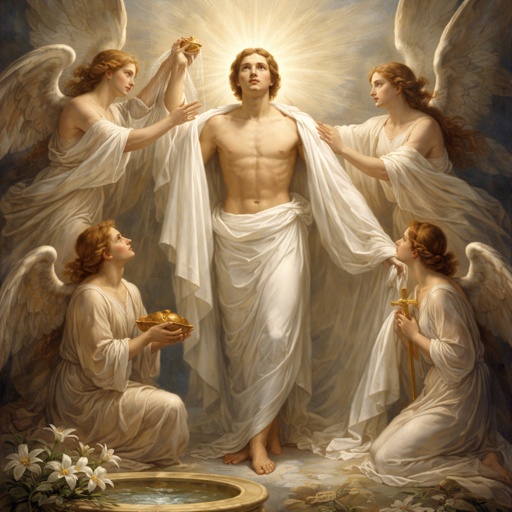
For all of you who were baptized into Christ have clothed yourselves with Christ Galatians 3:27

Galatians 4:5 - "To redeem them that were under the law, that we might receive the adoption of sons."

Galatians 3:4 - "Have ye suffered so many things in vain? if it be yet in vain."