Covenant of Sacrifice: Understanding God's Promises in Genesis 15:9
“And he said unto him, Take me an heifer of three years old, and a she goat of three years old, and a ram of three years old, and a turtledove, and a young pigeon.” — Genesis 15:9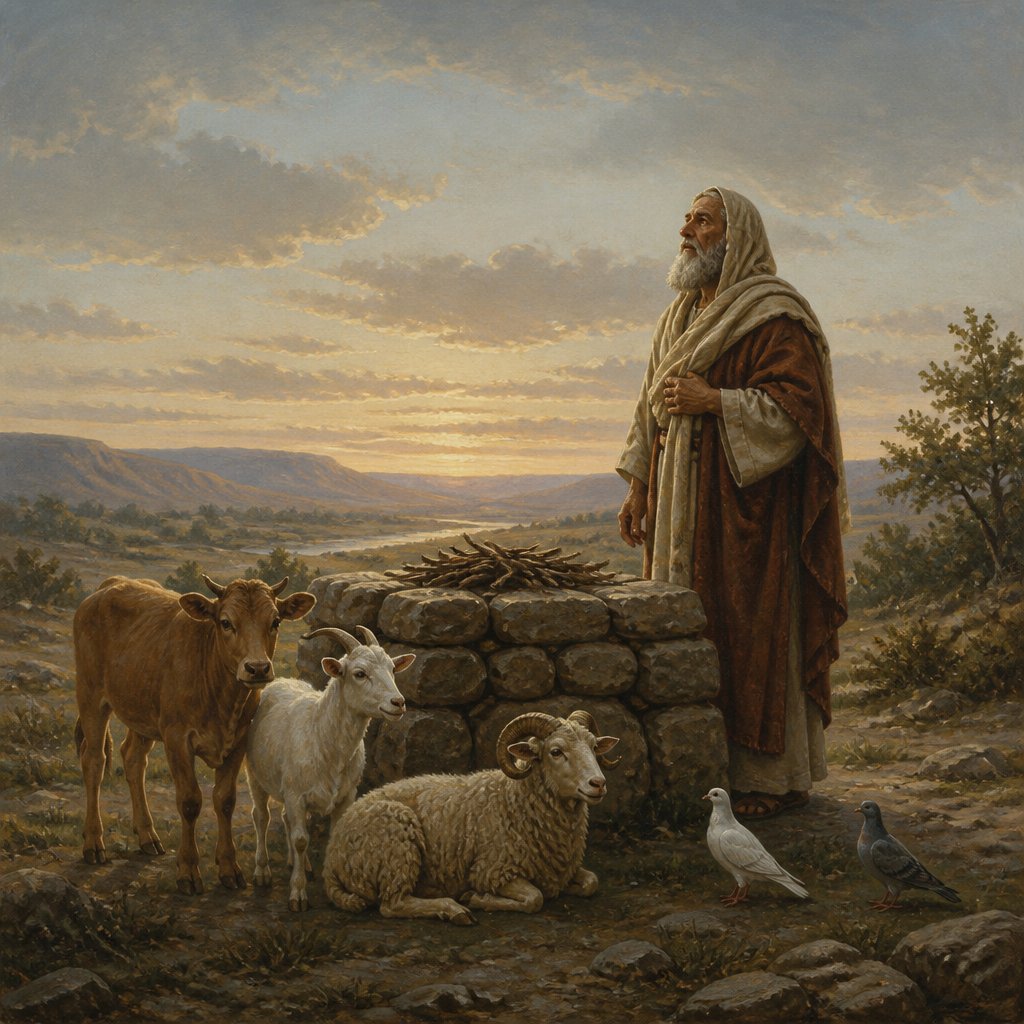
In Genesis 15:9, the Lord instructs Abram, saying, "And he said unto him, Take me an heifer of three years old, and a she goat of three years old, and a ram of three years old, and a turtledove, and a young pigeon." At first glance, this command may appear to be just a specific instruction for a ritual sacrifice, yet it holds profound significance regarding the nature of God's covenant with mankind and the concept of sacrifice in our relationship with Him.
Abram’s story is foundational to the understanding of faith and commitment in our walk with God. Prior to this moment, in Genesis 15, God had assured Abram of His promises. He told Abram that his descendants would be as numerous as the stars in the sky, despite his old age and Sarah’s barrenness. This was not just a blessing; it was a covenant – a solemn agreement rooted in divine faithfulness and human response.
Covenants in the ancient world were often sealed with blood. Animals would be sacrificed, and the parties involved would walk between the halves, symbolizing their commitment to uphold the terms of the agreement. Thus, the animals that God commands Abram to bring are not random; they serve a profound purpose as a prelude to a covenantal promise. By instructing Abram to prepare these specific sacrifices, God is establishing the seriousness of their relationship.
Let us delve deeper into the significance of each animal listed:
1. **Heifer and She-goat**: The heifer (a young cow) and the she-goat symbolize strength and vitality. In the context of sacrifice, these animals represent the offering of one's best to God. When God asks for these specific animals, He invites Abram to offer that which is valuable and cost him something. Likewise, in our spiritual journey, we are called to offer our best to God – our time, our talents, and ultimately, ourselves as living sacrifices (Romans 12:1).
2. **Ram**: The ram, often associated with atonement, reminds us of the sacrificial system that God later establishes through Moses. The ram vividly points to the eventual sacrifice of Jesus Christ, the Lamb of God, whose blood seals the New Covenant. In this way, God is foreshadowing the ultimate sacrifice that would bring redemption to humanity.
3. **Turtledove and Young Pigeon**: These smaller birds signify the accessibility of God’s grace. They were commonly used for offerings by those who could not afford larger sacrifices (Leviticus 12:6-8). This aspect of the offering highlights the inclusivity of God's covenant – it is available to everyone, regardless of social or economic status. All can participate in this relationship with God, which is cemented through sacrifice.
Through these offerings, God is not merely asking for animals; He is inviting Abram—and in a broader sense, all of humanity—into a relationship built on trust and commitment. The offering signifies Abram's willingness to obey and engage in sacrificial faith.
Furthermore, God goes on to make a profound promise to Abram after these sacrifices are prepared. It is in this sacred space of offering and waiting that God reveals His assurances. This teaches us that while God calls us to offer our sacrifices, He also prepares to reveal His plans for our lives.
As we apply Genesis 15:9 to our lives today, let us reflect on what it means to enter into covenant with God. What sacrifices is He asking you to make? Are you prepared to give God your best, to offer your strongest vulnerabilities, and to trust Him with your future? Like Abram, we may not always see the fulfillment of God’s promises right away, but we can trust that He is faithful to His word.
As we meditate on this passage, may we commit to sacrifice—our pride, our anxieties, our desire for control—as an act of faith in the covenantal love of our Lord. In our sacrifice, let us find the assurance of His promises, knowing that He walks with us, guiding us to a future filled with hope and joy.
Get our apps


Artwork for Genesis 15:9

Genesis 15:9
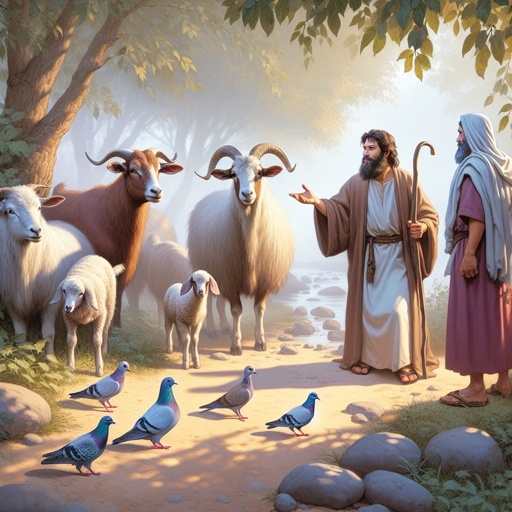
Genesis 15:9 - "And he said unto him, Take me an heifer of three years old, and a she goat of three years old, and a ram of three years old, and a turtledove, and a young pigeon."
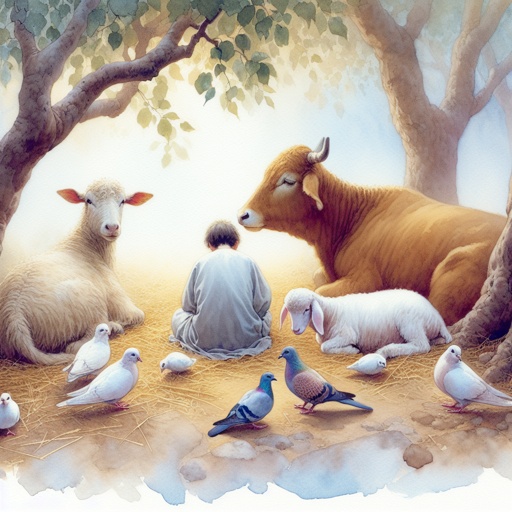
En Hij zeide tot hem: Neem mij een driejarige jonge koe, en een driejarige geit, en een driejarige ram, en een tortelduif, en een jonge duif. " - Genesis 15 : 9
"And he said unto him, Take me an heifer of three years old, and a she goat of three years old, and a ram of three years old, and a turtledove, and a young pigeon." - Genesis 15:9
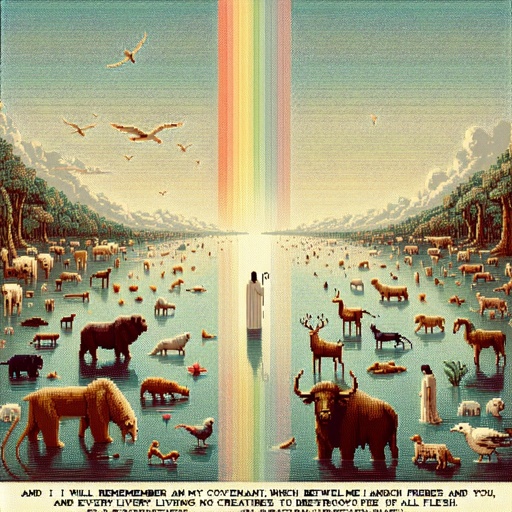
Genesis 9:15 - "And I will remember my covenant, which is between me and you and every living creature of all flesh; and the waters shall no more become a flood to destroy all flesh."

Genesis 15:15

Genesis 28-15

Genesis 17-15

Genesis 15:20

Genesis 15:10

Genesis 22:15

Genesis 15:11

Genesis 20-15

Genesis 16:15

Genesis 24-15

Genesis 15:14

Genesis 19-15

Genesis 25-15

Genesis 18-15

Genesis 15:13

Genesis 23-15

Genesis 21-15

Genesis 24:15

Genesis 15:19

Genesis 15:16

Genesis 15:7

Genesis 15:17
Genesis 15:18

Genesis 15:12

Genesis 15:8