Finding Refuge in the Wilderness: Lessons from Hagar's Journey
“And he said, Hagar, Sarai’s maid, whence camest thou? and whither wilt thou go? And she said, I flee from the face of my mistress Sarai.” — Genesis 16:8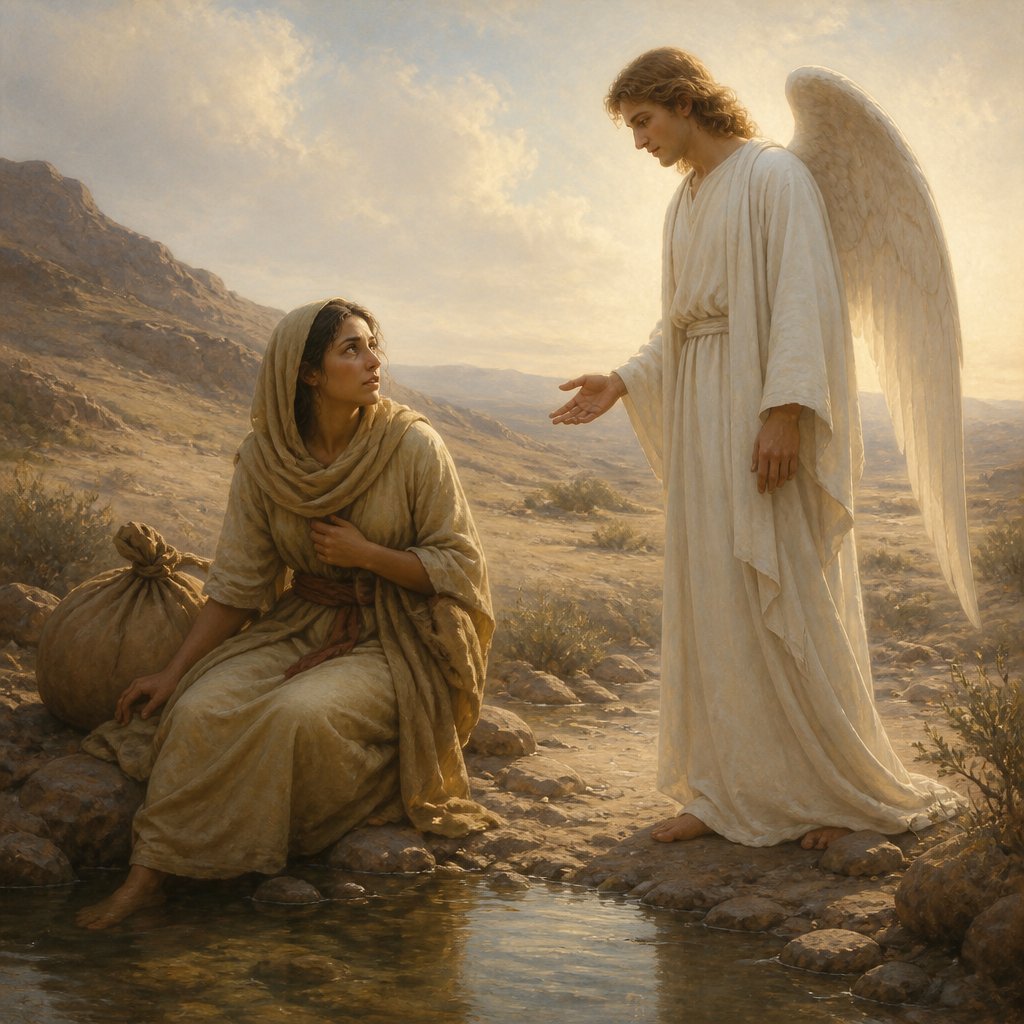
In the book of Genesis, we encounter a woman named Hagar who stands at a pivotal moment of desperation and decision as depicted in Genesis 16:8 (KJV): "And he said, Hagar, Sarai's maid, whence camest thou? and whither wilt thou go? And she said, I flee from the face of my mistress Sarai."
Hagar's narrative is often overshadowed by the stories of the patriarchs, yet it is profoundly rich in lessons about identity, struggle, and divine intervention. Hagar was an Egyptian servant who belonged to Sarai, Abraham's wife. In a time marked by societal inequities, Hagar found herself in a difficult position, thrust into a role that denied her autonomy and value. This backdrop is essential to understanding her plight. She was not merely a servant; she was a woman caught in a web of human frailty and dysfunctional family dynamics.
At the heart of her story is the moment she flees into the wilderness. The confrontation with the angel of the Lord is significant, not just for her but for all who have felt marginalized and invisible. In this moment, the angel inquires, "whence camest thou? and whither wilt thou go?" These questions are profound. They are not merely geographical; they probe the depths of Hagar's heart and circumstances. They ask us to reflect on our own departures and intentions.
"Whence camest thou?" The question challenges us to consider our origins. Where do we come from? What circumstances have driven us to seek refuge in the wilderness of our lives? Hagar's response reveals her pain and conflict: "I flee from the face of my mistress Sarai." There is a heaviness in her words that speaks to the human condition. Often, we too flee—flee from relationships, responsibilities, and circumstances that feel overwhelming. We may find ourselves abandoning paths because of hurt, betrayal, or fear. Hagar’s flight signifies a common human struggle; it serves as a poignant reminder that many have felt the need to escape the places and people that bring them pain.
"And whither wilt thou go?" This question assumes we must not only know where we’ve come from but also where we are heading. Hagar does not have a clear destination; she is lost, both physically and emotionally. How often do we find ourselves in similar situations, unsure of our next steps? The wilderness can be a place of confusion and uncertainty, but it can also be a space for divine encounters. It is where God often meets us when we feel most lost.
Hagar’s story is one of transformation. In the wilderness, she encounters the divine. The angel comforts her, telling her to return to Sarai and submit to her authority, promising that her descendants will be numerous. This divine reassurance is vital; it tells us that even in our lowly state, God sees us and has a purpose for us. Hagar names God in this moment, calling Him "El Roi", the God who sees me. In her plight, she discovers her own value—the God who sees our struggles and hears our cries is also the One who provides hope.
As we meditate on this passage, let us remember that God is intimately aware of our journey. He meets us in our fears, guiding us through the wilderness of our lives. Just as He saw Hagar in her distress, He sees us in ours. We are encouraged to bring our burdens and questions to Him, for He is not deterred by our fleeing but instead awaits with open arms to show us the way forward.
In conclusion, Genesis 16:8 serves as a powerful reminder of God’s presence in our vulnerability. May we take comfort in knowing that our journeys are seen, understood, and redeemed by the One who knows us by name.
Get our apps


Artwork for Genesis 16:8

Genesis 16:8

Genesis 16:8 - "And he said, Hagar, Sarai's maid, whence camest thou? and whither wilt thou go? And she said, I flee from the face of my mistress Sarai."
"And he said, Hagar, Sarai's maid, whence camest thou? and whither wilt thou go? And she said, I flee from the face of my mistress Sarai." - Genesis 16:8

Genesis 8:16 - "Go forth of the ark, thou, and thy wife, and thy sons, and thy sons' wives with thee."

Genesis 16:16
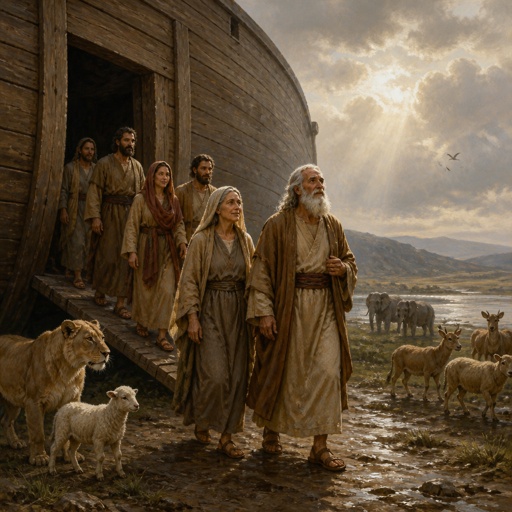
"Go forth of the ark, thou, and thy wife, and thy sons, and thy sons' wives with thee." - Genesis 8:16

Genesis 16:3

Genesis 16:14

Genesis 16:2

Genesis 16:6

Genesis 1:16

Genesis 15:16

Genesis 16:12

Genesis 25-16

Genesis 16:1

Genesis 18-16

Genesis 16:11

Genesis 3:16

Genesis 17-16

Genesis 16:4

Genesis 16:7

Genesis 23-16

Genesis 16:9

Genesis 16:5

Genesis 20-16

Genesis 28-16

Genesis 22-16

Genesis 16:15

Genesis 16:10

Genesis 16:3