The Legacy of Moab: A Reflection on Choices and Consequences
“And the firstborn bare a son, and called his name Moab: the same is the father of the Moabites unto this day.” — Genesis 19:37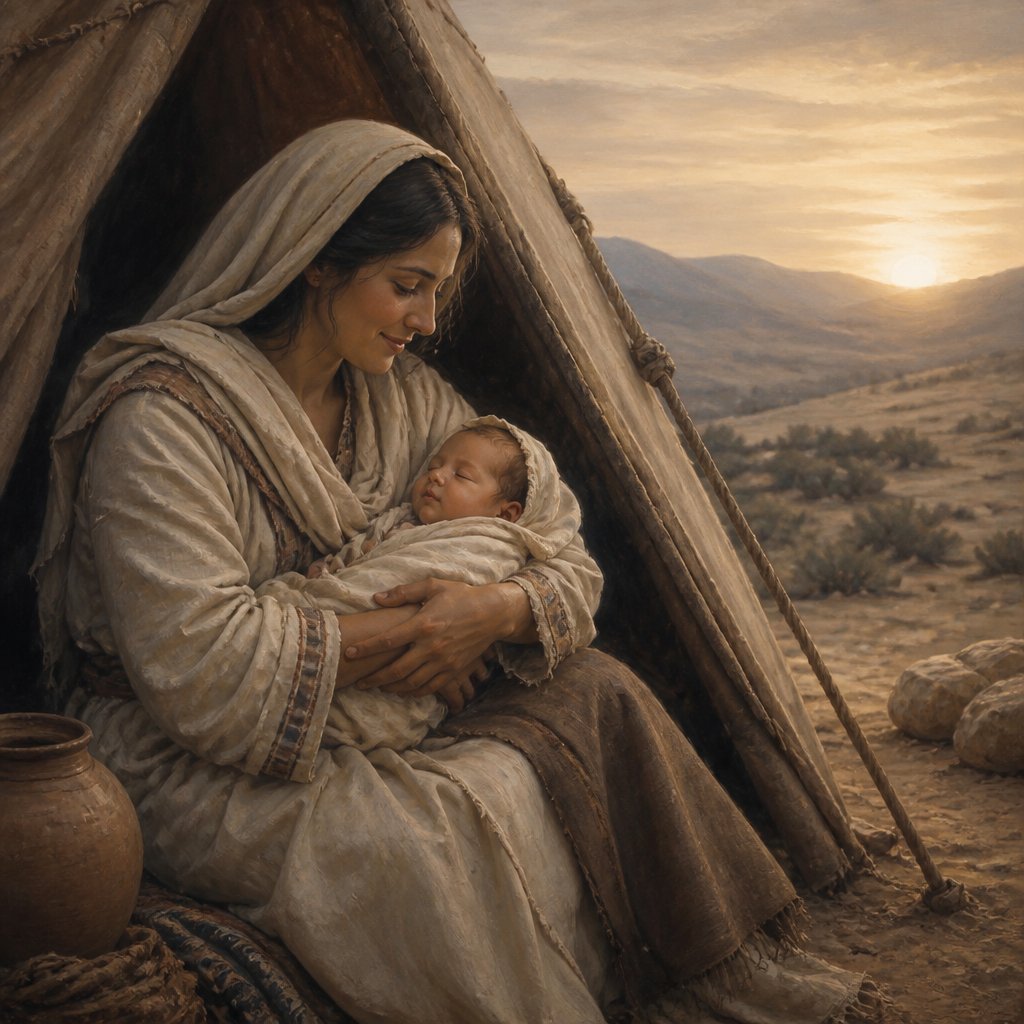
Genesis 19:37 recounts a sobering moment in the biblical narrative: "And the firstborn bare a son, and called his name Moab: the same is the father of the Moabites unto this day." This verse emerges from a tragic backdrop where Lot’s daughters, after the destruction of Sodom and Gomorrah, felt the weight of their desolation and fear of being childless. In their desperation, they made choices that would ripple through generations, laying the foundation for the Moabites, a people who played a significant role in Israel's history.
As we delve into this verse, we come face to face with themes of legacy, identity, and the profound impact of our choices. The name "Moab" means "from father," indicating the origin of the child born under such morally questionable circumstances. It serves as a reminder that our decisions often stem not only from our desires but also from our circumstances and emotions.
Lot’s daughters, in their isolation and fear, chose a path that would forever alter their narrative. They believed that their survival was contingent upon preserving their line; however, they did so at the expense of moral choices. This leads us to reflect on our own lives: how often do we make choices out of fear or desperation? How frequently do we act impulsively, giving little thought to the long-range consequences of our actions?
While our circumstances may seem overwhelming, we must remember the value of patience and faith in divine providence. Instead of turning to self-devised solutions, we are called to seek God’s wisdom in the decisions we face. Proverbs 3:5-6 admonishes us to “Trust in the Lord with all thine heart; and lean not unto thine own understanding. In all thy ways acknowledge him, and he shall direct thy paths.” Lot’s daughters could have sought guidance through prayer or waited for a way forward through God’s provision instead of resorting to such drastic measures.
Moab eventually became a nation with its own identity, complete with its own culture and beliefs, but this was a nation borne out of illicit beginnings. The choices we make not only shape our immediate reality but also create a legacy that can extend into unknown futures. Can you think of decisions made in haste or out of fear that have had lasting implications on your own life or your family’s history?
In the broader biblical context, the Moabites often found themselves at odds with the Israelites. They represent a complex interplay of kinship and conflict, illustrating how choices rooted in desperation can lead to enmity and division. For those born into this legacy — the Moabites — the name carried both a rich heritage and a stigma that would endure.
This verse challenges us to consider our own legacies. What do we want to pass down to future generations? Are we actively creating a narrative of faith, integrity, and righteousness, or are we possibly sowing seeds that might grow into conflict, pain, and separation?
As such, let us approach our everyday choices with the heart of God in mind. Each action we take can contribute to a legacy of faith for our children and those around us. Let us be encouraged by the reminder of Moab to establish paths of righteousness and to be intentional in our moments of decision-making, seeking God earnestly and reflecting on the long-term impacts of our actions.
In conclusion, rather than allowing fear or despair to dictate our actions, let us stand firm in our faith, trusting that God has a greater plan. For every Moab that arises from our past mistakes, His grace is sufficient to reshape our narrative and redefine our legacy. We can build a lineage rooted in His truth, one that honors Him and reflects His love to a world in desperate need of redemption.
Get our apps


Artwork for Genesis 19:37

Genesis 19-37

Genesis 19:37 - "And the firstborn bare a son, and called his name Moab: the same is the father of the Moabites unto this day."

"And the firstborn bare a son, and called his name Moab: the same is the father of the Moabites unto this day." - Genesis 19:37

Genesis 37:19 - "And they said one to another, Behold, this dreamer cometh."

"And they said one to another, Behold, this dreamer cometh." - Genesis 37:19

genesis 37

Genesis 24-37

Genesis 37:2

Joshua 19:37 - "And Kedesh, and Edrei, and En-hazor,"

Genesis 37:12 - "¶ And his brethren went to feed their father's flock in Shechem."

Genesis 19-19

Psalms 37:19 - "They shall not be ashamed in the evil time: and in the days of famine they shall be satisfied."

Genesis 37:24 - "And they took him, and cast him into a pit: and the pit was empty, there was no water in it."

Genesis 37:11 - "And his brethren envied him; but his father observed the saying."

Genesis 41:37 - "¶ And the thing was good in the eyes of Pharaoh, and in the eyes of all his servants."
Genesis 36:37 - "And Samlah died, and Saul of Rehoboth by the river reigned in his stead."

John 19:37 - "And again another scripture saith, They shall look on him whom they pierced."

"And Kedesh, and Edrei, and En-hazor," - Joshua 19:37

Genesis 37:31 - "And they took Joseph's coat, and killed a kid of the goats, and dipped the coat in the blood;"

Genesis 37:1 - "And Jacob dwelt in the land wherein his father was a stranger, in the land of Canaan."

Genesis 37:36 - "And the Midianites sold him into Egypt unto Potiphar, an officer of Pharaoh's, and captain of the guard."

Genesis 37:29 - "¶ And Reuben returned unto the pit; and, behold, Joseph was not in the pit; and he rent his clothes."

Genesis 37:5 - "¶ And Joseph dreamed a dream, and he told it his brethren: and they hated him yet the more."

Genesis 37:30 - "And he returned unto his brethren, and said, The child is not; and I, whither shall I go?"

Genesis 37:21 - "And Reuben heard it, and he delivered him out of their hands; and said, Let us not kill him."

Genesis 37:6 - "And he said unto them, Hear, I pray you, this dream which I have dreamed:"

Acts 19:37 - "For ye have brought hither these men, which are neither robbers of churches, nor yet blasphemers of your goddess."

Genesis 37:26 - "And Judah said unto his brethren, What profit is it if we slay our brother, and conceal his blood?"

Genesis 37:16 - "And he said, I seek my brethren: tell me, I pray thee, where they feed their flocks."

Genesis 37:34 - "And Jacob rent his clothes, and put sackcloth upon his loins, and mourned for his son many days."