The Power of Covenants: Lessons from Beer-sheba
“Thus they made a covenant at Beer-sheba: then Abimelech rose up, and Phichol the chief captain of his host, and they returned into the land of the Philistines.” — Genesis 21:32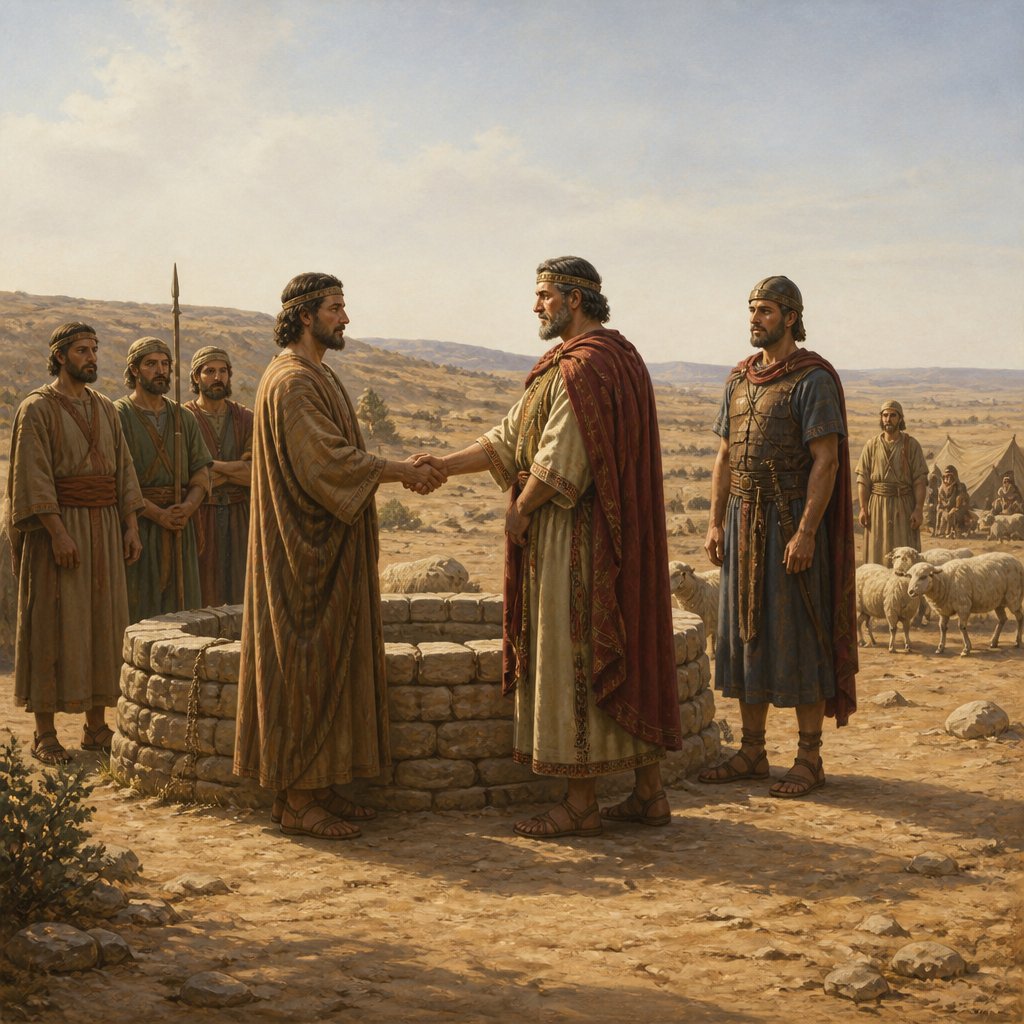
The story of the covenant made at Beer-sheba between Abraham and Abimelech, recorded in Genesis 21:32, is a powerful narrative that exemplifies the significance of covenants in our relationship with God and others. The verse states, "Thus they made a covenant at Beer-sheba: then Abimelech rose up, and Phichol the chief captain of his host, and they returned into the land of the Philistines." This moment is more than a historical account; it is a profound lesson on trust, integrity, and divine purpose.
Covenants are foundational in biblical history. In its essence, a covenant is a binding agreement where two parties come together under mutual promises. In the case of Abraham and Abimelech, we find a significant turning point. Here, Abraham, a man intimately acquainted with God's promises, establishes a relationship based on trust and respect with Abimelech, the king of the Philistines.
The context of this covenant is interesting. It follows a period of conflict concerning a well that Abraham had dug, which Abimelech's servants had seized. Rather than retaliate or distance himself from Abimelech, Abraham chooses to address the matter openly, leading to a peaceful resolution. He presents the case of the well (Genesis 21:25) and seeks justice. This is a testament to Abraham's character—an emblem of righteousness who values peace over personal vindication. Abraham's actions remind us that it is often within conflict that our true character is revealed, and thus, how we choose to respond can pave the way for reconciliation.
When they made the covenant at Beer-sheba, it was an act of faith. Knowing the animosity that often existed between clans and nations, this agreement signifies a commitment to coexistence and mutual respect. It shows that Abraham, though a sojourner in a foreign land, was living out his faith in a way that transcended his circumstances. He was not merely a man of promise; he was a man of peace and integrity.
This act led to a peace treaty that ultimately established a bridge of trust between the Philistines and those aligned with Abraham. The significance of this covenant reached beyond Isaac, Abraham's heir; it highlighted how God can work through our relationships with others to fulfill His promises. As partakers in a covenant, both parties were expected to uphold their end, a principle that still holds value today in our own relationships.
In our spiritual lives, we too are called to make covenants—not only with God but also with those around us. The New Testament reinforces this through the blood of Christ, which establishes a new covenant with us. When we partake in communion, for instance, we are reminded of the promises God has made to us and the commitment we are to foster with Him and one another. Just like Abraham, we are called to be people of peace, seeking reconciliation and ensuring our connections reflect God's love.
Furthermore, Abimelech’s return to the land of the Philistines after the covenant also teaches us about responsibility. He did not merely acknowledge the covenant in a ceremonial way; he took it back to his people, ensuring they understood the significance of this agreement. This speaks to us about the obligation we have to uphold the covenants and commitments we make in our lives. We must carry forward the values and agreements in our families, our churches, and our communities.
Ultimately, the covenant made at Beer-sheba represents more than a simple agreement between two leaders. It is a blueprint for how we can approach our relationships with integrity, peace, and a commitment to God's purposes. As we navigate our own lives, let us remember the importance of establishing lasting connections that honor God and reflect His covenant love.
Get our apps


Artwork for Genesis 21:32
Genesis 21-32

Genesis 21:32 - "Thus they made a covenant at Beer-sheba: then Abimelech rose up, and Phichol the chief captain of his host, and they returned into the land of the Philistines."
"Thus they made a covenant at Beer-sheba: then Abimelech rose up, and Phichol the chief captain of his host, and they returned into the land of the Philistines." - Genesis 21:32

Genesis 32:21 - "So went the present over before him: and himself lodged that night in the company."
"So went the present over before him: and himself lodged that night in the company." - Genesis 32:21

Genesis 19-32

Genesis 27:32

Genesis 25-32

Genesis 18-32

Genesis 24-32
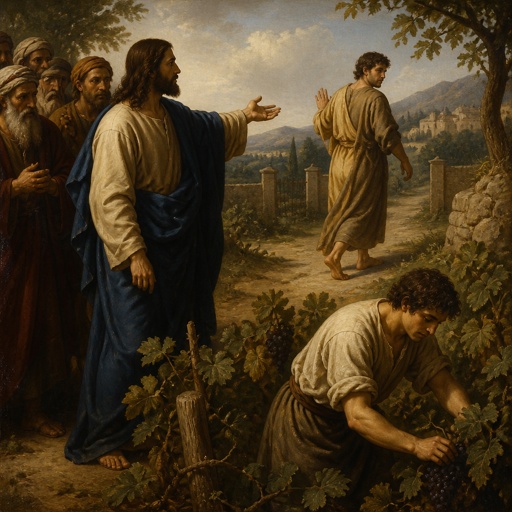
Matthew 21:28-32

Genesis 21-21

Genesis 49:32 - "The purchase of the field and of the cave that is therein was from the children of Heth."

Job 21:32 - "Yet shall he be brought to the grave, and shall remain in the tomb."

Genesis 32:1 - "And Jacob went on his way, and the angels of God met him."

Genesis 1:21

Genesis 1:21

Genesis 32:32 - "Therefore the children of Israel eat not of the sinew which shrank, which is upon the hollow of the thigh, unto this day: because he touched the hollow of Jacob's thigh in the sinew that shrank."

Genesis 36:32 - "And Bela the son of Beor reigned in Edom: and the name of his city was Dinhabah."

Genesis 32:24 - "¶ And Jacob was left alone; and there wrestled a man with him until the breaking of the day."

Genesis 11:32 - "And the days of Terah were two hundred and five years: and Terah died in Haran."

Genesis 32:27 - "And he said unto him, What is thy name? And he said, Jacob."

Genesis 5:32 - "And Noah was five hundred years old: and Noah begat Shem, Ham, and Japheth."

Genesis 21-20

Genesis 21-6

Genesis 21-13

Genesis 21-10

Genesis 21-34

Genesis 21-2

Genesis 21-7