Serving with Humility: Lessons from Genesis 24:32
“And the man came into the house: and he ungirded his camels, and gave straw and provender for the camels, and water to wash his feet, and the men’s feet that were with him.” — Genesis 24:32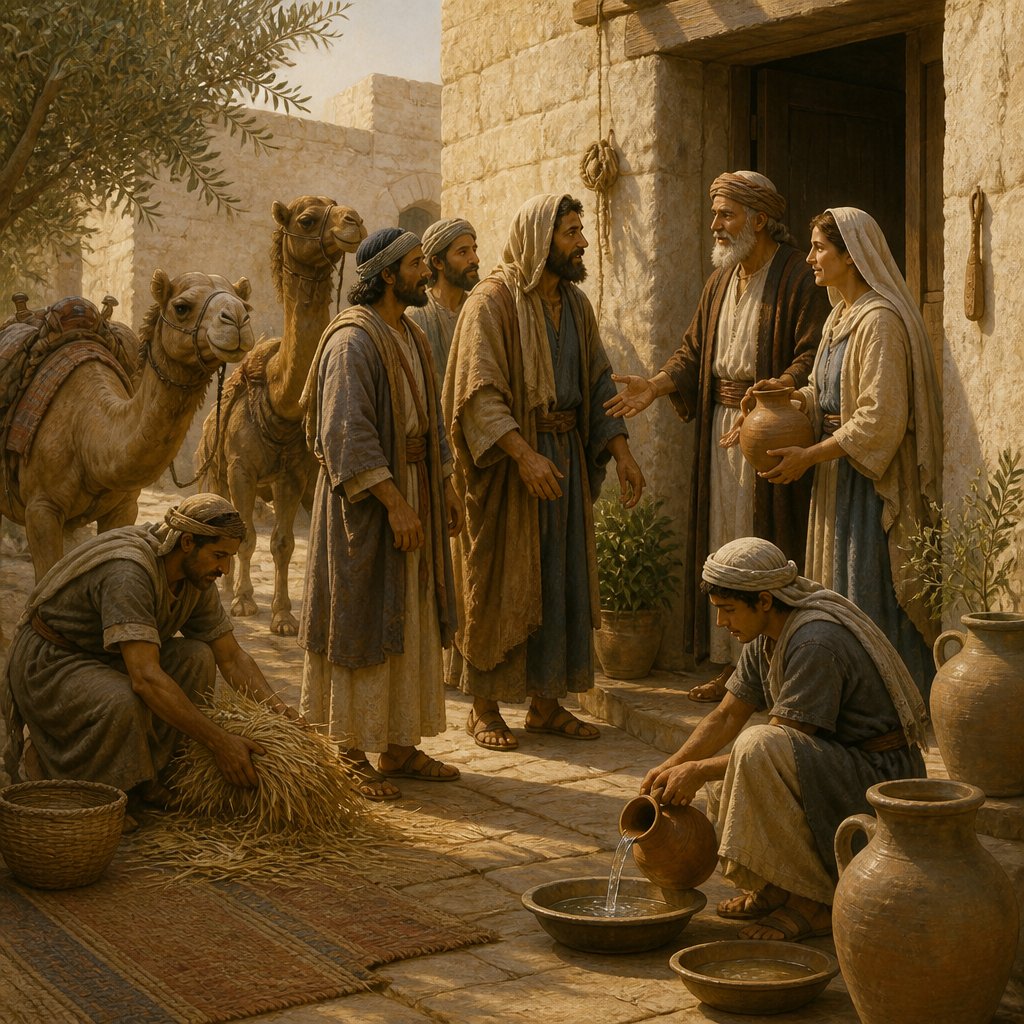
In the pursuit of understanding our place within God’s grand design, we often overlook the significance of the small, seemingly mundane actions that reflect our character and intentions. Genesis 24:32 presents us with a vivid scene that encapsulates both hospitality and duty, one that serves as a model for our interactions with others: "And the man came into the house: and he ungirded his camels, and gave straw and provender for the camels, and water to wash his feet, and the men's feet that were with him."
This account is part of the larger narrative where Abraham's servant is tasked with finding a bride for Isaac. As we ponder the precise details offered in this passage, we recognize how they center around the themes of hospitality, service, and humility.
**Humility in Service**
When the servant arrives at Rebekah’s household, he first gives priority to his camels. In a sense, this act is multifaceted; it is both practical and reflective of high virtue. The servant ungirds the camels, signaling a transition from travel to rest. This simple act illustrates a fundamental principle of service: before attending to our own needs, we must first care for those who accompany us. In this case, the camels represent the burdens of our journey, and by prioritizing their well-being, the servant exemplifies humility.
Jesus, our greatest example of servant leadership, embodied this principle consistently throughout His ministry. He washed His disciples’ feet—a task designated for the lowest servant—effectively communicating that true greatness lies in the willingness to serve others (John 13:12-17). Likewise, we are reminded that our service to others should stem from a heart of humility, recognizing that everyone and everything created by God holds value. Each day, we are given opportunities to ‘ungird our camels’—to lay aside our pride, our titles, and status to engage fully with those around us.
**The Gift of Hospitality**
The servant provided not only for the camels but also for himself and his companions by ensuring their feet were washed. In ancient times, foot washing was not merely an act of cleansing; it was a cultural expression of hospitality. As Middle Eastern hospitality was characterized by the gracious welcome of travelers, this gesture underscores our call to extend kindness and care to those who enter our space.
In today’s world, where rushing and self-absorption often dictate our interactions, we can look to this servant’s actions as a persuasive template for how we open our homes and hearts to others. Offering a warm meal, a comfortable place to sit, or even a listening ear can make all the difference in someone’s day. Hebrews 13:2 reminds us, "Be not forgetful to entertain strangers: for thereby some have entertained angels unawares." By embracing hospitality, we engage not only in relationship-building but in the opportunity to be a conduit for God’s love.
**Reflection and Action**
As we contemplate Genesis 24:32, let us reflect on our own lives and interactions. Do we take the time to serve those around us? Are we willing to set aside our own agendas for the sake of offering love and kindness? In our encounters, big or small, let us remember that each moment is filled with opportunity—opportunity to reflect Christ’s humility and love.
In practical application, we could prepare our homes for gatherings—inviting friends, family, or even acquaintances over for a meal, where we can share in fellowship. Let us also seek out ways to care for those around us; perhaps volunteering at a local shelter or offering assistance to a neighbor in need.
Ultimately, it is through our humble service and generous hospitality that we become reflections of Christ’s love. Like the faithful servant in Genesis 24:32, may we lay aside our burdens and embrace every opportunity to serve, presenting our lives as living testimonies to the glory of God.
Get our apps


Artwork for Genesis 24:32

Genesis 24-32
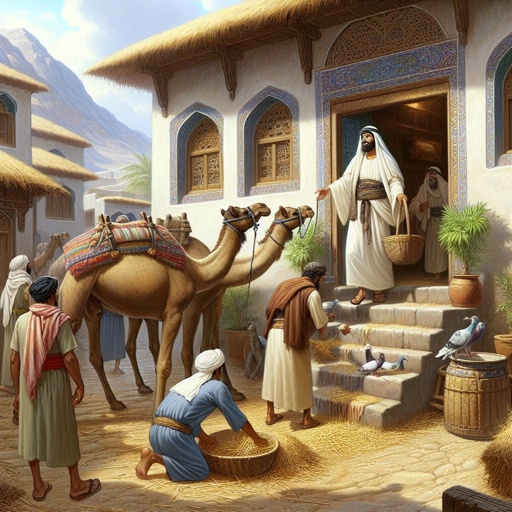
Genesis 24:32 - "¶ And the man came into the house: and he ungirded his camels, and gave straw and provender for the camels, and water to wash his feet, and the men's feet that were with him."
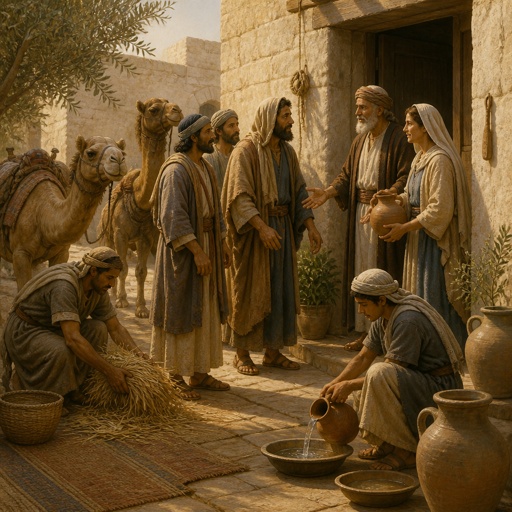
"¶ And the man came into the house: and he ungirded his camels, and gave straw and provender for the camels, and water to wash his feet, and the men's feet that were with him." - Genesis 24:32

Genesis 32:24 - "¶ And Jacob was left alone; and there wrestled a man with him until the breaking of the day."

Gen 32:24

Gen 32:24
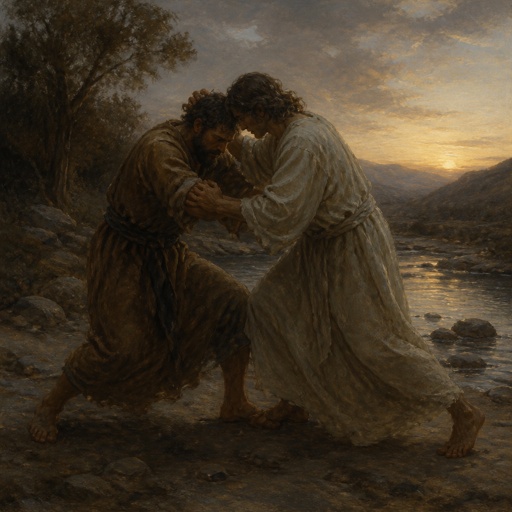
"¶ And Jacob was left alone; and there wrestled a man with him until the breaking of the day." - Genesis 32:24

Genesis 19-32

Genesis 27:32

Genesis 25-32

Genesis 18-32
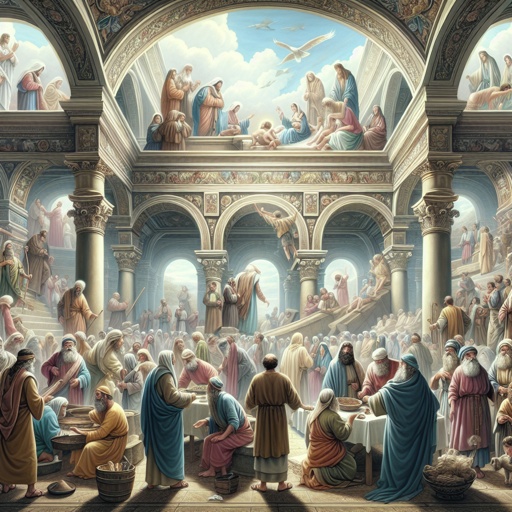
Genesis 21-32

Genesis 24:24

Proverbs 24:32 - "Then I saw, and considered it well: I looked upon it, and received instruction."

Genesis 49:32 - "The purchase of the field and of the cave that is therein was from the children of Heth."

Genesis 32:1 - "And Jacob went on his way, and the angels of God met him."

Genesis 24-21

Genesis 25-24

Genesis 24-41

Genesis 24-61

Genesis 24:36

Genesis 24-54

Genesis 24-50

Genesis 24:60

Genesis 24-62

Genesis 24-7

Genesis 24-26

Genesis 24-55

Genesis 24-59

Genesis 24-56