The Deception of Identity: A Divine Perspective
“And he said, Art thou my very son Esau? And he said, I am.” — Genesis 27:24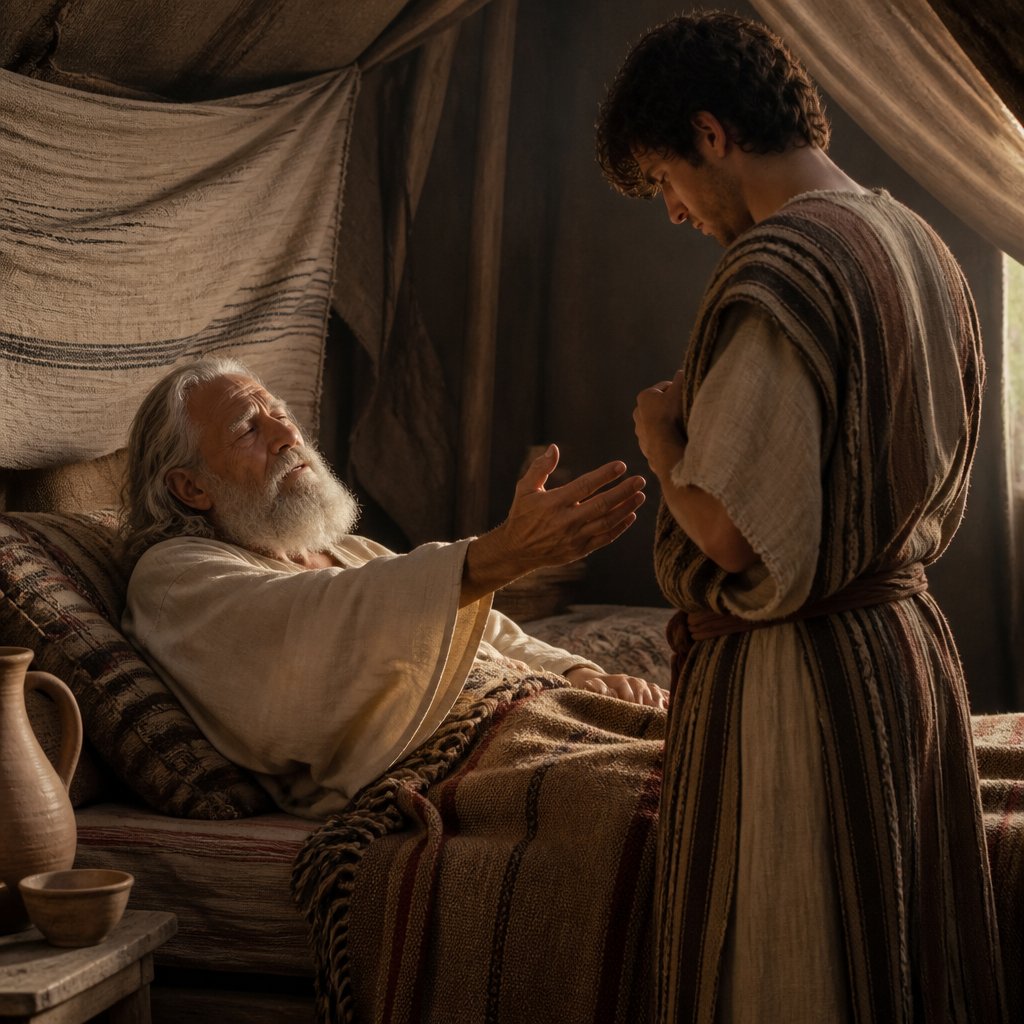
In the unfolding story of Genesis 27, we find ourselves at the crossroads of familial conflict and God’s overarching sovereignty. The verse that holds our attention today, Genesis 27:24, reads: "And he said, Art thou my very son Esau? And he said, I am." This moment, rich with tension and deception, takes place in the context of Isaac, the blind patriarch, asking his son whether he is indeed Esau, his favored son. The answer that follows, Jacob's firm, albeit deceptive, declaration, “I am,” leads us to deeper reflections about identity, truth, and divine purpose.
At first glance, this encounter illustrates a stark moment of deception. Jacob, who has already usurped his brother’s birthright, now goes a step further by disguising himself to receive the blessing meant for Esau. The motivations behind this act are complex; driven by a mother’s favoritism and his own ambition, Jacob takes on the identity of his brother to fulfill what was prophesied before he was even born—that the older would serve the younger (Genesis 25:23). Jacob’s assertion, “I am,” is significant. With these words, he is not merely claiming the identity of his brother; he is also wrestling with his own identity—a blend of both flesh and the promise spoken over him.
In our lives, we too face moments where we may feel compelled to conceal our true identity. Perhaps society pressures us to fit into predetermined roles, leading us to don masks that don’t represent our true selves. We might, like Jacob, feel that strength and blessing are reserved for a different group and fear that our true selves will be overlooked. Yet, it is important to remember that God knows our true identity, beyond the roles we play or the masks we wear.
Jacob's encounter with Isaac underlines the complexity of human relationships and the way our identities can be misconstrued. When Isaac asks, "Art thou my very son Esau?" it underscores the longing for connection, truth, and validation. Isaac’s blindness is not just physical; it symbolizes a deeper spiritual blindness to the reality unfolding before him. This blindness allows for deception but also invites us to consider what truths lie beneath our outward appearances.
Deception often leads us down paths we did not anticipate. Jacob’s lie does lead him to receive the blessing, but at great cost. The subsequent chapter reveals the fractured relationship with his brother and the fear that drives him into exile. Our attempts to seek validation through deceit often end in brokenness, both in relationships and within ourselves. Yet, God remains steadfast, working through our mistakes to fulfill His sovereign plan.
In our pursuit of identity, let us reflect on God’s truth over us. In Genesis 32:28, God assures Jacob of his identity with the name change from Jacob (deceiver) to Israel (one who struggles with God). This signifies that God sees beyond our failures and deceit, calling us by a name that reflects His love and purpose for us.
As we meditate on the moment of Jacob’s admission, "I am," let us ask ourselves what identities we claim and what truths we hold onto in our lives. Do we embrace the identity bestowed upon us by others, or do we seek and affirm the identity that God has assigned us? In this encounter between Isaac and Jacob, we witness not only a deceitful exchange but also God’s intricate design working within the human story.
Ultimately, the story reminds us that while our journeys may be marked by mistakes and missteps, God is committed to unveiling the truth of who we are in Him. May we find comfort in knowing that our true identity is not defined by our failures but by the love of a Father who calls us His own, beckoning us to step away from deceit and walk in the light of truth.
Get our apps


Artwork for Genesis 27:24
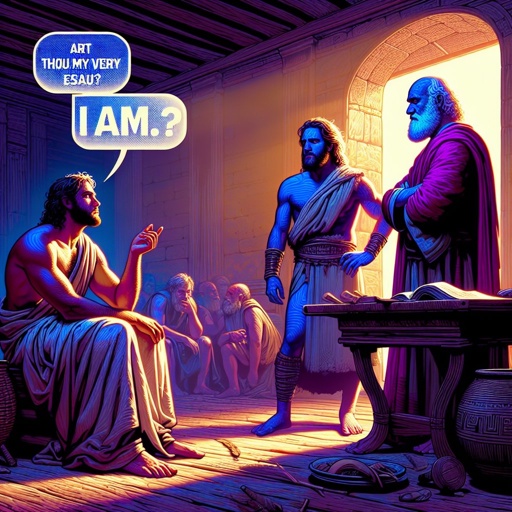
Genesis 27:24 - "And he said, Art thou my very son Esau? And he said, I am."
"And he said, Art thou my very son Esau? And he said, I am." - Genesis 27:24

Genesis 24-27
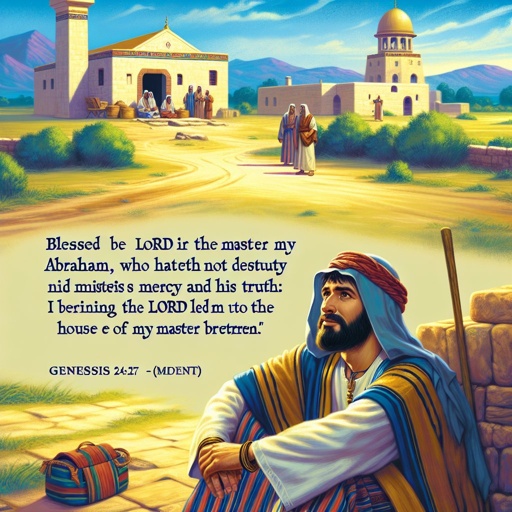
Genesis 24:27 - "And he said, Blessed be the LORD God of my master Abraham, who hath not left destitute my master of his mercy and his truth: I being in the way, the LORD led me to the house of my master's brethren."

Genesis 24:24

Galatians 4:24-27

Matthew 24:27

Matthew 7:24-27

Genesis 27:5

Genesis 27:32

Genesis 25-27

Genesis 17-27

Genesis 18-27

Genesis 21-27

Genesis 19-27

Genesis 10:27 - "And Hadoram, and Uzal, and Diklah,"

Genesis 27:10 KJV

Genesis 27:18-19

Genesis 24-21

Genesis 25-24

Genesis 24-41

Genesis 24-61

Genesis 24:36

Genesis 24-54

Genesis 24-50

Genesis 24:60

Genesis 24-62

Genesis 24-7

Genesis 24-26

Genesis 24-55