The Heart Behind the Names: Embracing Divine Purpose
“And she conceived again, and bare a son; and said, Now this time will my husband be joined unto me, because I have born him three sons: therefore was his name called Levi.” — Genesis 29:34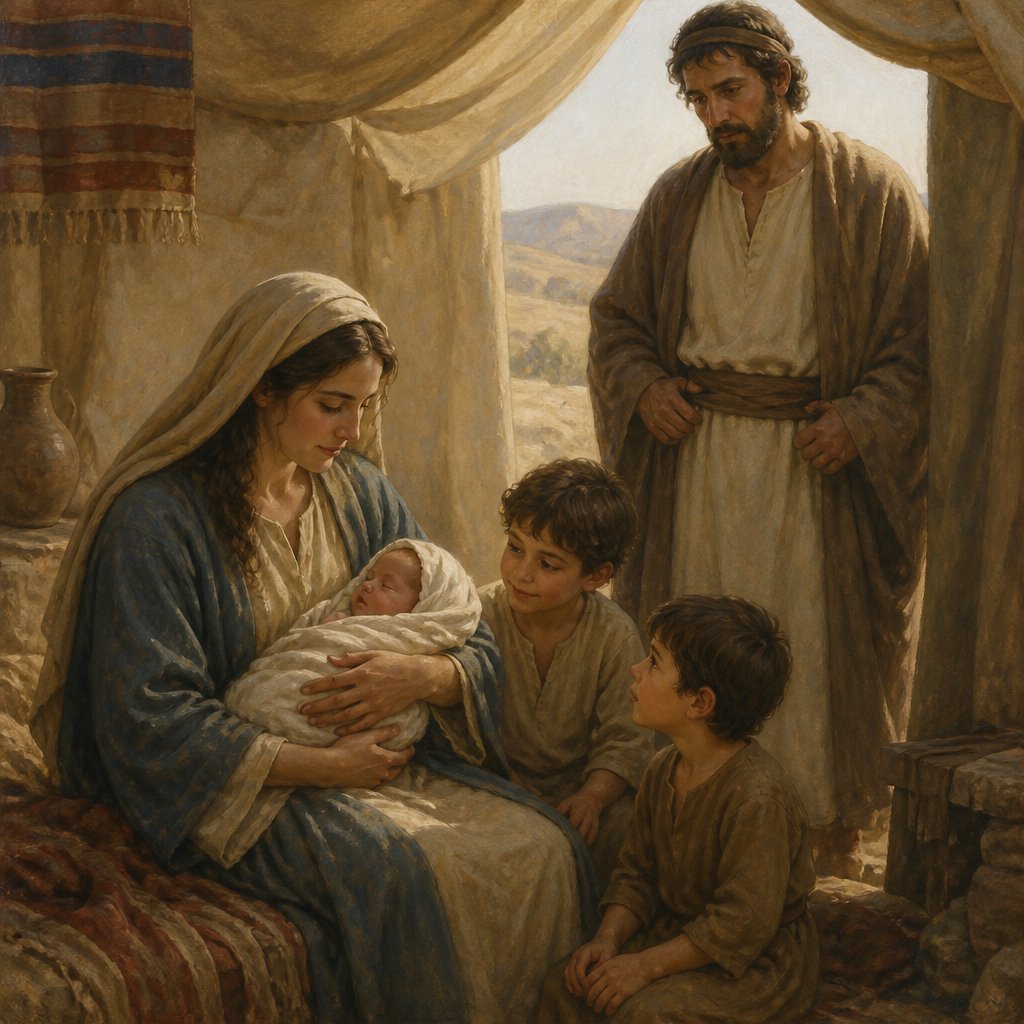
In the story of Leah, we encounter a struggle of the heart, a narrative rich in emotion and vulnerability. Genesis 29:34 reveals her longing for connection, as she states, "And she conceived again, and bare a son; and said, Now this time will my husband be joined unto me, because I have borne him three sons: therefore was his name called Levi." This verse encapsulates Leah's desire for love and acceptance, mirrored by her experiences, and we find ourselves reflecting on the deeper meanings behind her words and her actions.
Leah's emotional journey is profound and speaks directly to many of our own experiences. After bearing her first son, Reuben, and her second son, Simeon, Leah hoped that her husband Jacob might finally see her as worthy of his love. Yet, her expectation for Jacob's affection hinged on her ability to produce sons. The societal norms of her time placed value on motherhood, and Leah’s endeavors to gain her husband's love became intricately tied to her identity. The birth of Levi, her third son, signifies her deepening hope that perhaps now, after gifting Jacob three sons, he would be more inclined to join his heart with hers.
The name "Levi" itself, derived from Hebrew, means "joined" or "attached." Through this choice, Leah expresses her longing for closeness, for unity that had been elusive throughout her marriage. This makes us pause and consider how often we too might associate our worth with our achievements or our ability to meet the needs of those around us. Leah’s circumstance encourages us to evaluate our own struggles for approval and affection.
In many ways, Leah represents a broader human condition: the quest for validation. Each of us may find ourselves attempting to earn the love and acceptance of others through our actions or by modifying our behaviors. Leah’s hope that having three sons would prompt Jacob to be "joined unto her" reflects a universal desire to be loved for who we are, not merely for what we can provide.
Yet, there is a pivotal lesson in Leah’s story. Despite her misplaced hope in her husband's attention, God was watching over her. The very fact that she continued to bear children demonstrates God's grace and provision. Leah was not seen as merely a means to an end, but as a beloved daughter of God, who had plans for her life that went beyond her relationship with Jacob. In her moments of despair, Leah’s story reminds us of the crucial truth that our worth is intrinsic and not contingent upon earthly relationships.
In our modern walk of faith, we too may feel overlooked or undervalued, longing for connection, whether with family, friends, or society. Let us take comfort in knowing that our worth comes not from the approval of others but from our Creator, who calls us by name, cherishes our existence, and has purpose for our lives. Just as Leah was part of the lineage that led to the nation of Israel, which in turn brought forth Jesus Christ, we too have a role in God's divine narrative.
When faced with feelings of inadequacy or desire for belonging, we can echo Leah’s cry but in a different light: instead of seeking validation from tempestuous relationships, let us seek the embrace of our loving God. Pray for the wisdom to release the burdens of meeting human expectations and embrace instead the truth of who we are in Christ. We are loved, valued, and chosen, regardless of our circumstances or how others perceive us.
As we meditate on Leah’s experience with Levi, let us remember that in every season of longing, God is working all things together for our good. We are invited to walk in the knowledge that He is joined to us in love, and it is in this divine attachment that we find our true identity and purpose. Let Leah’s story inspire us to find fulfillment not in the approval of others, but in the unchanging love of our Father.
Get our apps


Artwork for Genesis 29:34
Genesis 29:34 - "And she conceived again, and bare a son; and said, Now this time will my husband be joined unto me, because I have born him three sons: therefore was his name called Levi."
"And she conceived again, and bare a son; and said, Now this time will my husband be joined unto me, because I have born him three sons: therefore was his name called Levi." - Genesis 29:34

Genesis 34:29 - "And all their wealth, and all their little ones, and their wives took they captive, and spoiled even all that was in the house."
"And all their wealth, and all their little ones, and their wives took they captive, and spoiled even all that was in the house." - Genesis 34:29

Matthew 20:29-34

Genesis 21-34

Genesis 19-34

Genesis 24-34

2 Chronicles 34:29 - "¶ Then the king sent and gathered together all the elders of Judah and Jerusalem."

Numbers 34:29 - "These are they whom the LORD commanded to divide the inheritance unto the children of Israel in the land of Canaan."

Genesis 29:29 - "And Laban gave to Rachel his daughter Bilhah his handmaid to be her maid."

Genesis 29-2

Genesis 29-6

Genesis 29-5

Genesis 42:29

Genesis 29:1

Genesis 29-7

Genesis 18-29

Genesis 26:29

Genesis 19-29

Genesis 29-8

Genesis 29-3

Genesis 29-4

Genesis 21-29

Genesis 24-29

Genesis 21:34 - "And Abraham sojourned in the Philistines' land many days."

Genesis 24:34 - "And he said, I am Abraham's servant."

Genesis 34:18 - "And their words pleased Hamor, and Shechem Hamor's son."

Genesis 34:31 - "And they said, Should he deal with our sister as with an harlot?"

Numbers 29:34 - "And one goat for a sin offering; beside the continual burnt offering, his meat offering, and his drink offering."