The Search for True Wealth: Lessons from Laban and Jacob
“And Laban went into Jacob’s tent, and into Leah’s tent, and into the two maidservants’ tents; but he found them not. Then went he out of Leah’s tent, and entered into Rachel’s tent.” — Genesis 31:33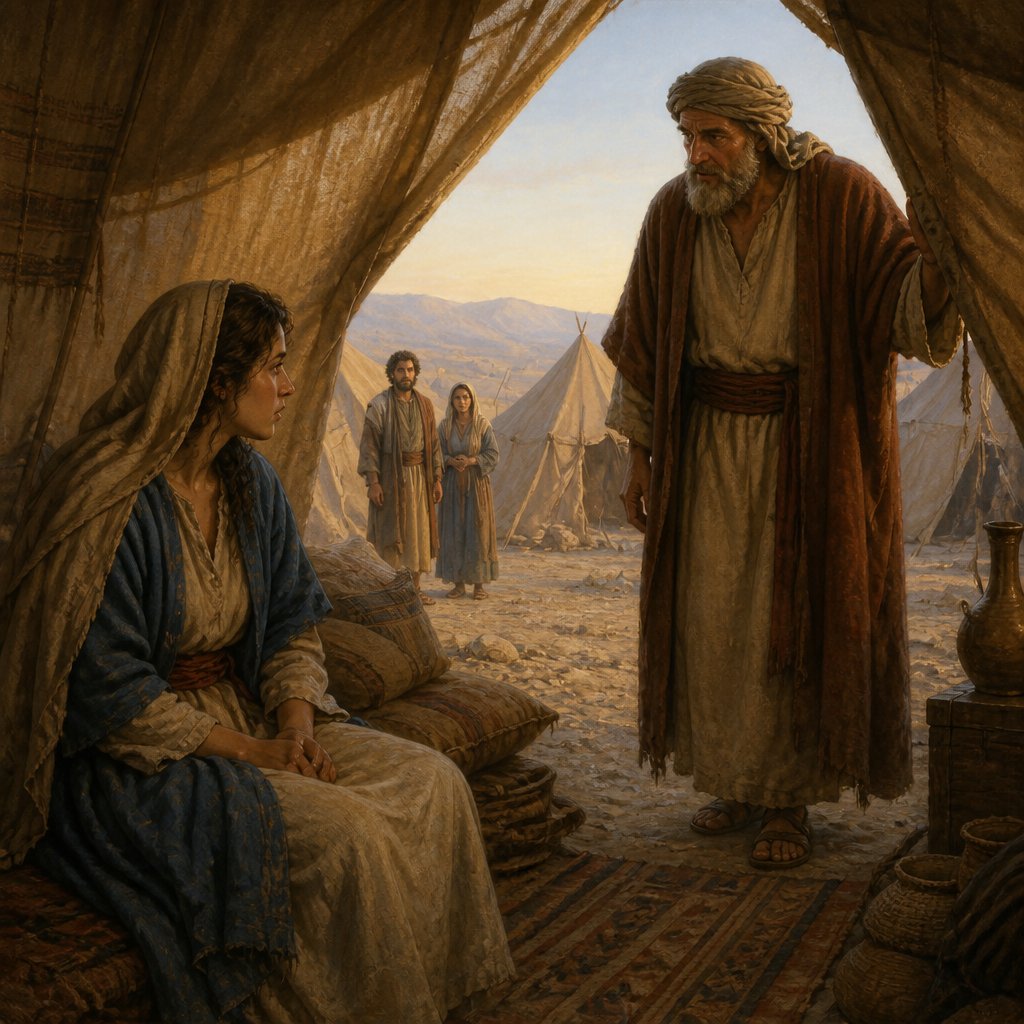
In the intricate narrative of Genesis, there exists a poignant moment that echoes the human quest for wealth, ownership, and relationships. Genesis 31:33 captures a critical juncture in the lives of Jacob and Laban: "And Laban went into Jacob's tent, and into Leah's tent, and into the two maidservants' tents; but he found them not. Then went he out of Leah's tent, and entered into Rachel's tent." This verse not only highlights the ongoing tension between these two men, but it also intricately weaves a tapestry of divine providence, human striving, and the relentless search for what we deem valuable.
To fully understand the context of this verse, we must delve into the backstory. Jacob, having left his father's house to escape his brother's wrath, had come under the employment and influence of his uncle, Laban. Initially, this relationship was marked by a form of familial goodwill, but as Jacob prospered through God’s blessing, Laban's attitude darkened. Jacob had amassed wealth in the form of livestock and servants, leading Laban to grow increasingly resentful and protective of his own interests. It was against this backdrop of strained relationships and hidden agendas that we find the scene depicted in Genesis 31:33.
When Laban enters the tents searching for his stolen idols, we see a metaphorical representation of a search that is often reflected in our own lives. Laban’s relentless pursuit of his stolen possessions can symbolize humanity's quest for material wealth. In life, we often find ourselves in a similar position, searching high and low for validation, possessions, or power. Like Laban, we sometimes fail to comprehend that true wealth is not found in material items, but in our relationships, faith, and alignment with God's will.
The text paints a vivid picture of desperation as Laban scours the tents of Jacob’s family, only to find nothing. A deeper reflection on this moment reveals that, though he searched earnestly, what Laban sought was meaningless in the grand scheme of God's plan. He sought idols—images representing power and success—not realizing that the true source of wealth was with Jacob, a man blessed by the Almighty. As Laban desperately entered each tent, he was blinded to the fact that Jacob's blessings did not derive from deceitful practices (as he always suspected) but from a steadfast relationship with God.
In contrast, Jacob symbolizes the believer who, despite being surrounded by tension and strife, remains rooted in faith. Jacob had fled from Laban not simply out of fear but also out of a divine direction. He was a man transformed by encounters with God, bearing the scars of struggle yet emulating hope and determination. Where Laban sought to control and possess, Jacob learned to trust and yield.
The verse ultimately challenges us to evaluate what we pursue. Are we in a constant search for what this world defines as wealth? Are we, like Laban, blinded by materialism, forgetting the relational and spiritual riches that God bestows upon us? In our lives, we can often find ourselves scrambling through the tents of our ambitions and desires, only to find that we are coming up empty. Yet, when we turn our gaze toward God and His promises, we discover that true wealth resides in knowing Him, being known by Him, and sharing His love with others.
As we ponder the journey of Laban and Jacob, let us be reminded that searching for material possessions will always leave us feeling empty. Instead, may we focus on the eternal riches of relationships—our relationship with God, our family, and our community. In this life, let us not seek after illusory idols but rather strive toward the presence of the God who truly enriches our souls.
Get our apps


Artwork for Genesis 31:33

Genesis 31:33 - "And Laban went into Jacob's tent, and into Leah's tent, and into the two maidservants' tents; but he found them not. Then went he out of Leah's tent, and entered into Rachel's tent."
"And Laban went into Jacob's tent, and into Leah's tent, and into the two maidservants' tents; but he found them not. Then went he out of Leah's tent, and entered into Rachel's tent." - Genesis 31:33

Jeremiah 31:31-33

Jeremiah 31:31-33

Exodus 26:31-33

Numbers 31:33 - "And threescore and twelve thousand beeves,"

Numbers 33:31 - "And they departed from Moseroth, and pitched in Bene-jaakan."

Genesis 19-33

Genesis 21-33

Genesis 18-33

Genesis 24-33

Genesis 25-33

"And threescore and twelve thousand beeves," - Numbers 31:33

Job 31:33 - "If I covered my transgressions as Adam, by hiding mine iniquity in my bosom:"

Genesis 21-31

Genesis 18-31

Genesis 31:35

Genesis 19-31

Genesis 24-31

Job 33:31 - "Mark well, O Job, hearken unto me: hold thy peace, and I will speak."

Genesis 33:6 - "Then the handmaidens came near, they and their children, and they bowed themselves."

"And they departed from Moseroth, and pitched in Bene-jaakan." - Numbers 33:31

Genesis 33:20 - "And he erected there an altar, and called it El-elohe-Israel."

Genesis 31:22 - "And it was told Laban on the third day that Jacob was fled."

Genesis 33:16 - "¶ So Esau returned that day on his way unto Seir."

Genesis 36:33 - "And Bela died, and Jobab the son of Zerah of Bozrah reigned in his stead."

Genesis 31:45 - "And Jacob took a stone, and set it up for a pillar."

Genesis 31:47 - "And Laban called it Jegarsahadutha: but Jacob called it Galeed."

Genesis 31:31 - "And Jacob answered and said to Laban, Because I was afraid: for I said, Peradventure thou wouldest take by force thy daughters from me."

Genesis 34:31 - "And they said, Should he deal with our sister as with an harlot?"