The Weight of Betrayal: A Reflection on Jacob's Conflict with Laban
“And Jacob was wroth, and chode with Laban: and Jacob answered and said to Laban, What is my trespass? what is my sin, that thou hast so hotly pursued after me?” — Genesis 31:36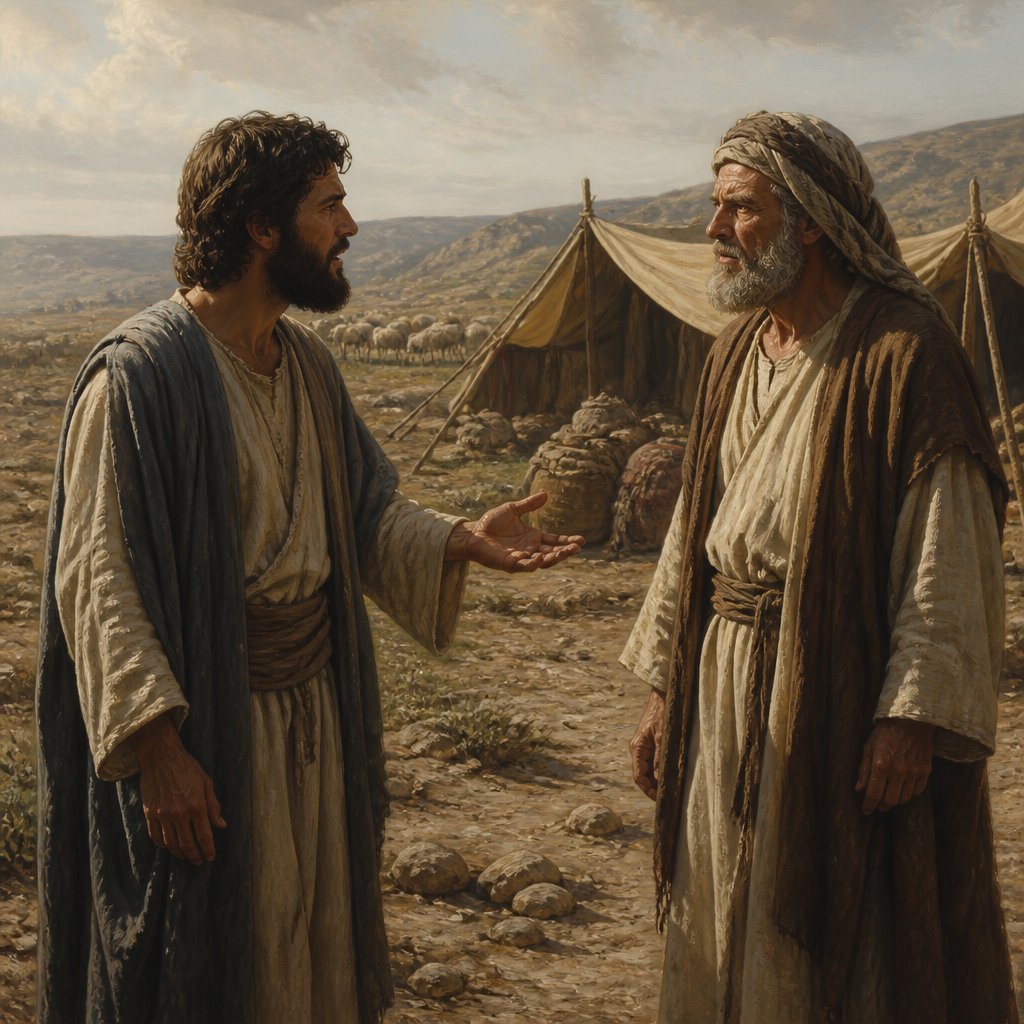
In Genesis 31:36, we are confronted with a moment of intense confrontation: "And Jacob was wroth, and chode with Laban: and Jacob answered and said to Laban, What is my trespass? what is my sin, that thou hast so hotly pursued after me?" This verse captures the culmination of years of tension between Jacob and his uncle Laban, a conflict that is rich with lessons on relationships, trust, and the quest for justice.
Jacob’s journey to this point begins much earlier in his life, marked by trickery and strife. He deceived his father Isaac to obtain the blessing meant for his brother Esau and later fled from his home to avoid Esau's wrath. While in Haran, he worked for Laban for fourteen years, not only to marry Rachel but to establish himself and make a life for his family. However, Laban’s deceit tempered those years with bitterness. Laban changed Jacob’s wages ten times and manipulated the conditions of their agreement repeatedly (Genesis 31:7). The very man Jacob hoped would be a protector and mentor became a source of continual frustration and betrayal.
This moment in Genesis 31 encapsulates not just a personal confrontation, but an emblem of human struggles—our natural inclination to question justice when wronged. Jacob, having spent years under the shadow of Laban’s guile, finally confronts his uncle with a blend of righteous anger and a demand for clarity. “What is my trespass? what is my sin...?” Jacob’s questions resonate deeply, reflecting our own moments of confusion and hurt when those we trust betray us.
Jacob's wroth can be understood as a response to a strong emotional build-up rather than a mere flash of anger. It speaks to his weariness from years of subservience and manipulation. It begs us to ask: When do we stand up against the wrongs done to us? Are we confident enough to voice our pain when faced with betrayal or mistreatment in our own lives?
When we encounter betrayal, whether in our relationships, workplaces, or even within our faith communities, it sparks various human responses. We may turn inwards, feeling shame or guilt for voicing our hurt. Alternatively, we may feel justified to lash out, as Jacob did, in pursuit of our own brand of 'justice.' However, it’s essential to remember the essence of Jacob's query: he seeks understanding. This plea for clarity reflects a heart that longs for resolution. In relationships, when conflict arises, the first step in reconciliation is to communicate—bringing our grievances into the light in a thoughtful manner rather than in bitterness or resentment.
Importantly, Jacob did not confront Laban without cause. He had legitimate grievances, having been wronged repeatedly. The scripture highlights a vital aspect of our Christian walk: it’s acceptable to hold others accountable for their actions, especially when those actions inflict harm. However, we must ensure that we confront with a spirit of grace, balancing honesty about our feelings with compassion for the other person’s value in God’s eyes.
Reflecting on Jacob's plight invites us to examine our own lives. Are there unresolved issues that need to be addressed? Do we confront issues, or do we allow them to fester? Jacob’s discourse with Laban is a reminder that while we may find ourselves in difficult relationships, we can find freedom through honest communication with those who have hurt us. Moreover, God often uses our struggles as a backdrop for His greater story—a pathway towards growth and maturity in our faith.
As we navigate conflicts, let us do so remembering that God hears our cries and sees our struggles. Just as God was with Jacob through every twist and turn, He walks with us through pain, offering peace and resolution. Let us not shy away from addressing our grievances, seeking truth and reconciliation, all the while holding fast to the hope that God will turn our conflicts into a deeper understanding of His character and love.
Get our apps


Artwork for Genesis 31:36

Genesis 31:36 - "¶ And Jacob was wroth, and chode with Laban: and Jacob answered and said to Laban, What is my trespass? what is my sin, that thou hast so hotly pursued after me?"
"¶ And Jacob was wroth, and chode with Laban: and Jacob answered and said to Laban, What is my trespass? what is my sin, that thou hast so hotly pursued after me?" - Genesis 31:36

Genesis 36:31 - "¶ And these are the kings that reigned in the land of Edom, before there reigned any king over the children of Israel."
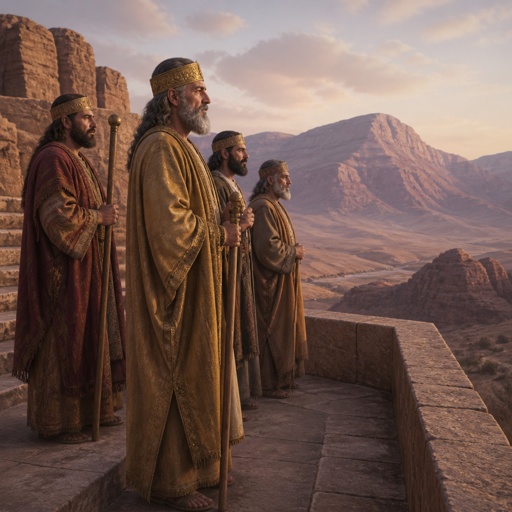
"¶ And these are the kings that reigned in the land of Edom, before there reigned any king over the children of Israel." - Genesis 36:31

Genesis 36:36 - "And Hadad died, and Samlah of Masrekah reigned in his stead."

Job 36:31 - "For by them judgeth he the people; he giveth meat in abundance."

Genesis 24:36

Genesis 19-36

Job 31:36 - "Surely I would take it upon my shoulder, and bind it as a crown to me."

Exodus 36:31 - "¶ And he made bars of shittim wood; five for the boards of the one side of the tabernacle,"

Genesis 36:28 - "The children of Dishan are these; Uz, and Aran."

"And Hadad died, and Samlah of Masrekah reigned in his stead." - Genesis 36:36

Genesis 36:27 - "The children of Ezer are these; Bilhan, and Zaavan, and Akan."

Genesis 36:3 - "And Bashemath Ishmael's daughter, sister of Nebajoth."

Genesis 36:19 - "These are the sons of Esau, who is Edom, and these are their dukes."

Genesis 36:1 - "Now these are the generations of Esau, who is Edom."

Genesis 21-31

Genesis 18-31

Genesis 31:35

Genesis 36:26 - "And these are the children of Dishon; Hemdan, and Eshban, and Ithran, and Cheran."

Genesis 36:42 - "Duke Kenaz, duke Teman, duke Mibzar,"

Genesis 36:9 - "¶ And these are the generations of Esau the father of the Edomites in mount Seir:"

Genesis 19-31

Genesis 24-31

Genesis 36:41 - "Duke Aholibamah, duke Elah, duke Pinon,"

Genesis 36:8 - "Thus dwelt Esau in mount Seir: Esau is Edom."

Genesis 19:36 - "Thus were both the daughters of Lot with child by their father."

Genesis 36:25 - "And the children of Anah were these; Dishon, and Aholibamah the daughter of Anah."

Genesis 36:4 - "And Adah bare to Esau Eliphaz; and Bashemath bare Reuel;"

Genesis 36:11 - "And the sons of Eliphaz were Teman, Omar, Zepho, and Gatam, and Kenaz."