Crossing the Ford Jabbok: A Journey of Transformation
“And he rose up that night, and took his two wives, and his two womenservants, and his eleven sons, and passed over the ford Jabbok.” — Genesis 32:22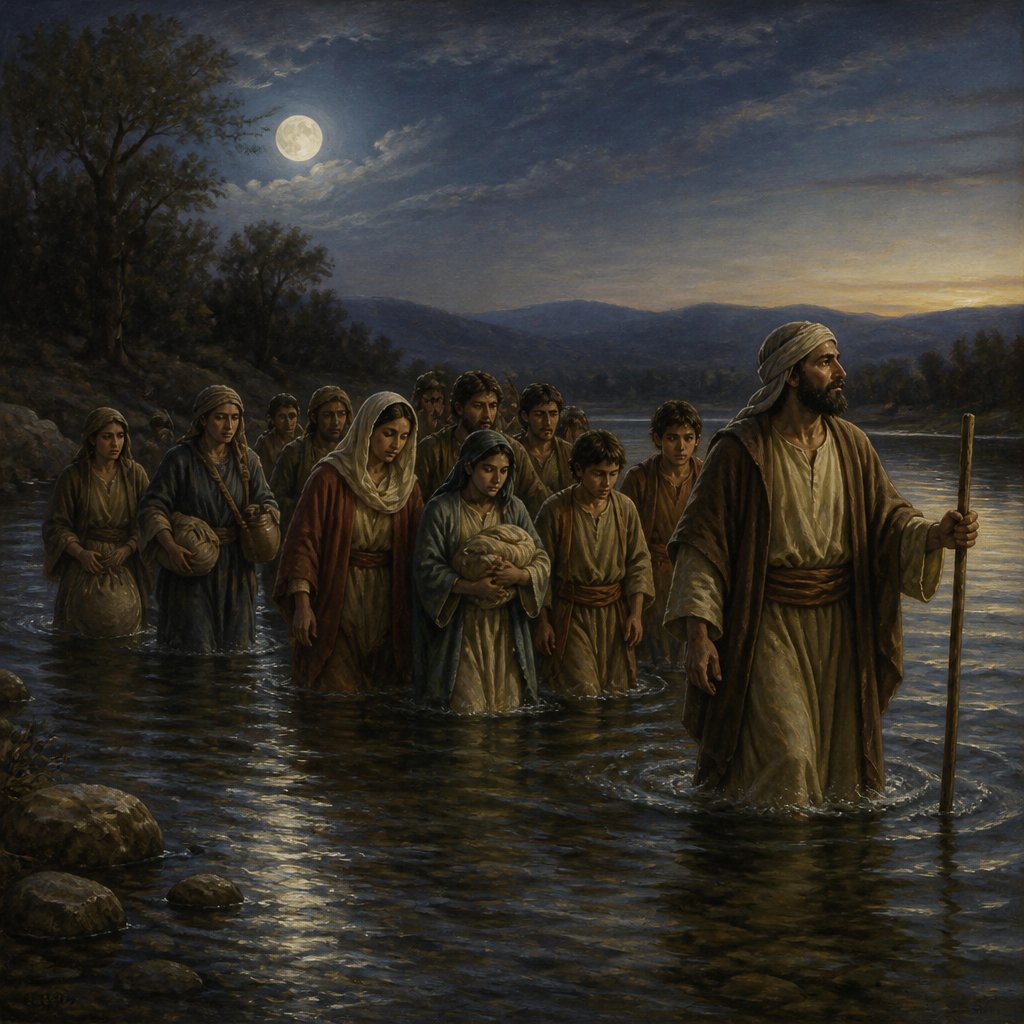
The narrative of Jacob crossing the ford of Jabbok is a profound moment in the life of this patriarch. In Genesis 32:22 KJV, we read, "And he rose up that night, and took his two wives, and his two womenservants, and his eleven sons, and passed over the ford Jabbok." This simple verse sets the stage for a night that will culminate in both a physical and spiritual transformation for Jacob.
To understand the weight of this moment, it’s important to review the context. Jacob was fleeing from his brother Esau, whom he had wronged earlier in life by deceitfully obtaining Esau’s blessing. After years of toil and personal growth, Jacob found himself on the brink of reconciliation, yet the fear of Esau's wrath loomed large over him. It was a night filled with anxiety, uncertainty, and the haunting reminders of past regrets.
As Jacob set out that night with his family, he was, in many ways, still carrying the burdens of his past. The mention of his two wives, two women servants, and eleven sons signifies not just his family, but also the complexities of his relationships and the consequences of his earlier decisions. Each individual that traveled with him represented the tapestry of his life – the choices made, the mistakes committed, and the blessings received.
The act of crossing the Jabbok River is deeply significant. Physically, this was a transition from one side of the river to the other, but spiritually, it symbolizes a crossing from the old, troubled self to the new, transformed identity. The word 'Jabbok' translates to "emptying," and as Jacob prepared to cross, he was, whether he realized it or not, about to undergo an emptying of self—a stripping away of his old life to receive a new one.
As we reflect on this pivotal moment for Jacob, we are invited to consider our own lives. What rivers do we need to cross? What pasts do we carry as we approach our present and future? Jacob’s journey serves as a reminder that the path to transformation often begins with moments of deep discomfort and turmoil. The night was dark, symbolizing confusion and fear, yet it was also a precursor to an encounter with God.
It is at the ford of Jabbok that Jacob wrestles with the divine presence. This wrestling symbolizes the struggles we endure as we seek clarity, redemption, and understanding. God often meets us on the fringes of our past traumas and fears. In the wrestling, there is a refining process—a spiritual encounter that is both painful and liberating. Through this struggle, Jacob receives a new name: Israel, which means “He who struggles with God.”
In our own journeys, we must ask ourselves if we are willing to engage in the wrestling. Are we prepared to confront our pasts? Are we ready to submit to the struggle that often leads to our spiritual metamorphosis? Jacob crossed the Jabbok that night, not only leaving his old life behind but also stepping into an unknown future with a new identity. In that moment, he left behind fear and stepped into faith.
The act of passing over the ford emphasizes a critical truth in our walk of faith: crossing life's rivers can lead to new blessings and new beginnings. Jacob's transformation teaches us that God's grace is sufficient even when we feel unworthy. God desires to meet us in our wrestling, to help us confront our fears and to remind us that our past does not define us.
As we meditate on this passage, may we find the courage to rise up during our dark nights, to confront wherever we need to cross our own Jabboks, seeking God’s presence through the struggles of life. Let us trust that on the other side of our sacred wrestling, we may emerge with a deeper understanding of who we are and who God has called us to be.
Get our apps


Artwork for Genesis 32:22

Genesis 32:22 - "And he rose up that night, and took his two wives, and his two womenservants, and his eleven sons, and passed over the ford Jabbok."
"And he rose up that night, and took his two wives, and his two womenservants, and his eleven sons, and passed over the ford Jabbok." - Genesis 32:22

Genesis 19-32

Genesis 27:32

Genesis 24-32

Genesis 25-32

Genesis 18-32
Genesis 21-32

Genesis 22-22

Luke 22:31-32 - "Luke 22:31-32: And the Lord said, Simon, Simon, behold, Satan hath desired to have you, that he may sift you as wheat: But I have prayed for thee, that thy faith fail not: and when thou art converted, strengthen thy brethren."

Genesis 22:22 - "And Chesed, and Hazo, and Pildash, and Jidlaph, and Bethuel."

Genesis 49:32 - "The purchase of the field and of the cave that is therein was from the children of Heth."

Genesis 32:1 - "And Jacob went on his way, and the angels of God met him."

Genesis 22

Genesis 32:32 - "Therefore the children of Israel eat not of the sinew which shrank, which is upon the hollow of the thigh, unto this day: because he touched the hollow of Jacob's thigh in the sinew that shrank."

2 Samuel 22:32 - "For who is God, save the LORD? and who is a rock, save our God?"

Genesis 36:32 - "And Bela the son of Beor reigned in Edom: and the name of his city was Dinhabah."

Genesis 32:24 - "¶ And Jacob was left alone; and there wrestled a man with him until the breaking of the day."

Genesis 11:32 - "And the days of Terah were two hundred and five years: and Terah died in Haran."

Genesis 32:27 - "And he said unto him, What is thy name? And he said, Jacob."

Genesis 5:32 - "And Noah was five hundred years old: and Noah begat Shem, Ham, and Japheth."

Genesis 32:21 - "So went the present over before him: and himself lodged that night in the company."

Genesis 22 14

Genesis 21:22

Genesis 18-22

Genesis 22-9

Genesis 22-8

Genesis 22:15

Genesis 22-12

Genesis 28-22