Communion at the Gate: A Lesson from Shechem
“And Hamor and Shechem his son came unto the gate of their city, and communed with the men of their city, saying,” — Genesis 34:20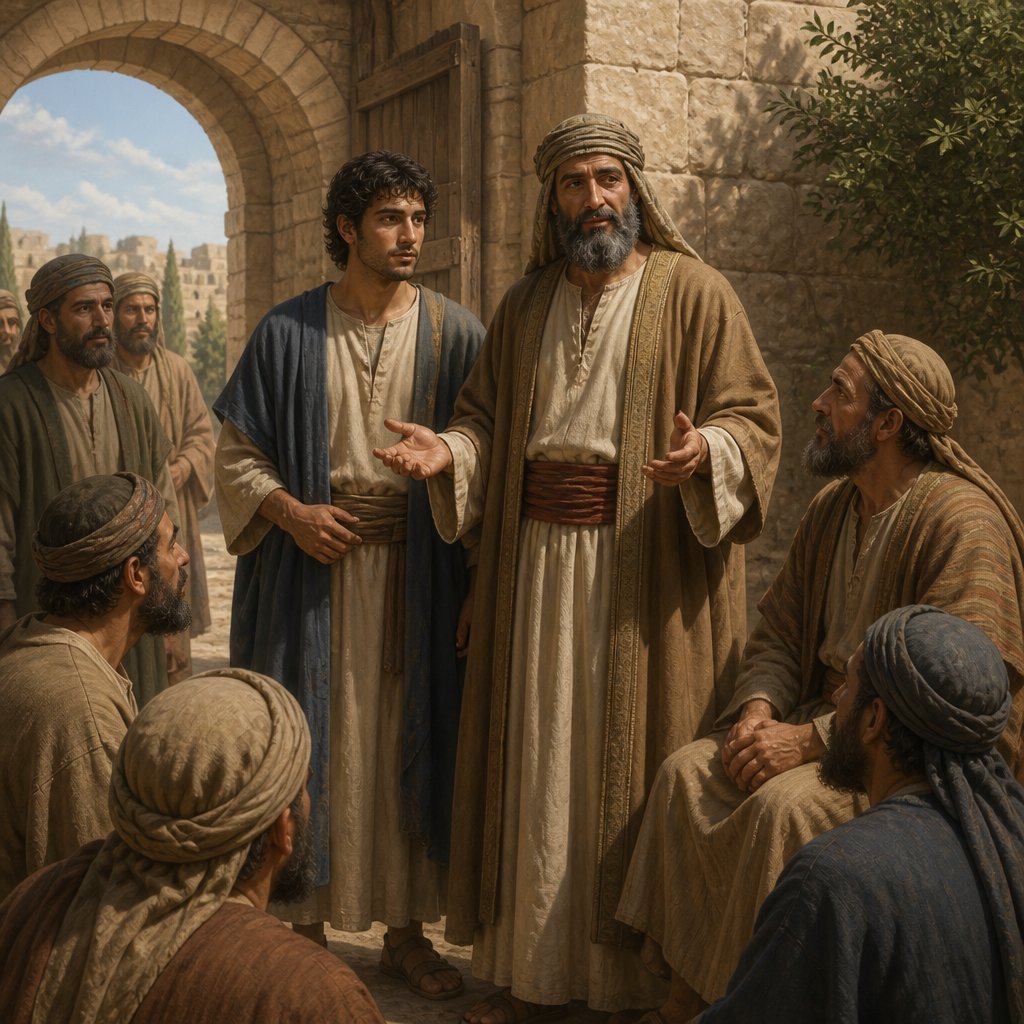
In Genesis 34:20, we find a pivotal moment in the story of Dinah, the daughter of Jacob and Leah, where tension arises, and decisions are made that will ultimately affect the destinies of several families. The verse states, ‘And Hamor and Shechem his son came unto the gate of their city, and communed with the men of their city, saying.’ Here, we observe a critical gathering at the city gate, a place often associated with judgment, commerce, and the administration of community affairs in ancient times. Let’s unpack this scenario and extract some valuable lessons that resonate with our own lives.
**The City Gate as a Place of Influence**
The city gate was more than just a physical location; it represented a place of authority, discussion, and decision-making in the community. Hamor, the father, along with his son Shechem, goes forth to engage with the elders and the men of the city. Their decision to come to the gate signifies a need for dialogue and community involvement in the aftermath of Shechem’s actions toward Dinah.
This scene sets the stage for us to examine the importance of communication in resolving conflict. In our own lives, how often do we choose to discuss matters openly with those who are affected? The events that follow this dialogue reveal how the priorities of the men of Shechem diverged significantly from the values held by Jacob’s family, ultimately leading to a tragic and violent outcome.
**Honesty and Transparency in Communication**
Hamor and Shechem’s visit reflects a desire for resolution and an effort to maintain honor, albeit in a misguided way. Their approach illustrates a common yet deeply flawed tendency to seek consensus without addressing the moral implications of one’s actions. Yet, how often do we see similar patterns in our lives? The desire to smooth over issues with tentative agreements instead of confrontational honesty can lead to deeper wounds than those we initially sought to heal.
When confronted with moral dilemmas or interpersonal conflicts, we would do well to remember Ephesians 4:15, which encourages us to “speak the truth in love.” Genuine communication invites real healing and reconciliation. Hamor and Shechem’s gathering around the city gate should remind us that any conversation about significant conflict must include truthfulness and a willingness to face the hard truths of the situation.
**The Ripple Effect of Our Decisions**
As we consider the aftermath of Hamor and Shechem's actions, we must acknowledge that our decisions carry weight beyond our immediate circumstances. The men of Shechem chose to side with Hamor and Shechem’s desire for peace at the cost of their moral integrity. Their response to the situation had repercussions that echoed through generations, resulting in deep-seated enmity between two bloodlines.
This serves as a cautionary tale for us: our decisions influence not just our lives but those of future generations. In our daily choices—whether in family, work, or community—every decision ripples outward. Proverbs 4:23 reminds us to guard our hearts, for from them flow the issues of life. We must choose wisely, prioritizing integrity, justice, and righteousness.
**God's Sovereignty Amidst Human Conflict**
Finally, while we explore the dynamics at the city gate, we must remember that God’s hand guides even the chaotic circumstances of humanity. He was aware of what took place in Shechem’s city. In moments of conflict, we may be tempted to lose sight of His sovereignty and ultimate plan for our lives.
As we navigate our challenges and conflicts, let us remember to seek God’s wisdom in our communications. He can guide our words and decisions and help us pursue paths toward reconciliation and life rather than division and strife. The story of Dinah ultimately teaches us not only about the impact of our choices but also the importance of pointing our conflicts back to the Lord.
**Conclusion**
As we reflect upon Genesis 34:20, may we take note of the importance of honest and open communication, the gravity of our decisions, and the ever-present sovereignty of God. Let today be a day of seeking dialogue, truth, and reconciliation in our lives, trusting that God will guide us in each step.
Get our apps


Artwork for Genesis 34:20

Genesis 34:20 - "¶ And Hamor and Shechem his son came unto the gate of their city, and communed with the men of their city, saying,"
"¶ And Hamor and Shechem his son came unto the gate of their city, and communed with the men of their city, saying," - Genesis 34:20

Genesis 21-34

Genesis 19-34

Genesis 24-34

Matthew 20:29-34

Lucas 20:34-35

Numbers 34:20 - "And of the tribe of the children of Simeon, Shemuel the son of Ammihud."

Genesis 21:34 - "And Abraham sojourned in the Philistines' land many days."

Genesis 24:34 - "And he said, I am Abraham's servant."

Genesis 34:18 - "And their words pleased Hamor, and Shechem Hamor's son."

Psalms 34:20 - "He keepeth all his bones: not one of them is broken."

Genesis 34:31 - "And they said, Should he deal with our sister as with an harlot?"

Genesis 36:34 - "And Jobab died, and Husham of the land of Temani reigned in his stead."

Genesis 34:28 - "They took their sheep, and their oxen, and their asses, and that which was in the city, and that which was in the field,"

Genesis 30:34 - "And Laban said, Behold, I would it might be according to thy word."

Genesis 34:6 - "¶ And Hamor the father of Shechem went out unto Jacob to commune with him."

Genesis 20

Luke 20:34 - "And Jesus answering said unto them, The children of this world marry, and are given in marriage:"

Genesis 34:15 - "But in this will we consent unto you: If ye will be as we be, that every male of you be circumcised;"

Genesis 34:27 - "The sons of Jacob came upon the slain, and spoiled the city, because they had defiled their sister."

Genesis 34:4 - "And Shechem spake unto his father Hamor, saying, Get me this damsel to wife."

Genesis 34:17 - "But if ye will not hearken unto us, to be circumcised; then will we take our daughter, and we will be gone."

Genesis 20-18

Genesis 20-13

Genesis 20-16

Genesis 15:20

Genesis 20-4

Genesis 20-1

Genesis 20-15