The Legacy of Naming: Understanding Our Heritage in Christ
“The children of Dishan are these; Uz, and Aran.” — Genesis 36:28
In Genesis 36:28, we read, "The children of Dishan are these; Uz, and Aran." While at first glance this verse may seem like just another genealogy among many in the Bible, it holds profound significance about our identity, heritage, and the names we carry into the world. In the genealogies of Scripture, we often find overlooked treasures that speak to the heart of who we are and where we come from.
The mention of Dishan and his sons, Uz and Aran, is part of the lineage of Esau, who was the twin brother of Jacob. Esau’s descendants formed the Edomite nation, a group frequently mentioned throughout the Old Testament. These early names, often lost in the flow of scripture, remind us of the importance of our roots and the narratives that precede us.
"Uz" and "Aran" are not merely names; they represent individual stories set against the backdrop of God's unfolding plan. In ancient cultures, names carried deep meanings and were often prophetic in nature. Though we may not have the full expanse of Uz and Aran's stories in Scripture, we can reflect on their significance and the heritage they represent within God's covenant history. The name "Uz" is believed to mean "wisdom" or "strength," while "Aran" may signify "mountain of strength". These meanings resonate deeply with the scriptural themes of God as our strength and wisdom.
As Christians, we relate to Uz and Aran in a uniquely redeemed narrative. We are all called by a name – Christians, children of God, heirs to the promise. Just as ushers of the past marked their family lines, we, too, carry a legacy. Our identity is interwoven with Christ’s righteousness. In the New Testament, the Apostle Paul echoes this sentiment when he teaches about being "adopted" into God’s family (Ephesians 1:5). Just as the children of Dishan had their own identities shaped by their lineage, we, too, have our identities shaped by our relationship with Christ.
What can we learn from the structure of these names? Firstly, it is a reminder that each generation builds upon the last. Heritage is not merely biological; it is spiritual. The church is the continuation of the story that begins in the very first pages of Genesis. When we look back at these genealogies, we are reminded that we belong to a grand narrative that began long before us and will continue long after we are gone.
Moreover, Uz and Aran invite us to examine the names we give ourselves and others. Do we name our circumstances as hopeless, or do we see them through the lens of God's promise? The power of naming is significant in Scripture. God renamed Abram to Abraham, signifying his new identity as the father of many nations. Renaming signifies transformation. As we step more fully into our identity in Christ, the names we carry shift from those of defeat or despair to those of hope and future.
In our spiritual walk, we must intentionally embrace the legacies of faithfulness and strength. We are called to leave behind a heritage of godly wisdom, much like Uz, who may represent the traits of perseverance and understanding. In different seasons of our lives, let us strive to emulate the steadfastness that is inherent in the life of faithfulness and wisdom articulated through the stories of our biblical ancestors.
As you consider Genesis 36:28, continuous dialogue with God about your identity, heritage, and how you share that today can reshape not only your perspective but that of those around you. Reflect upon how the way you name challenges and victories alike will build a generational legacy aligned with Christ’s teachings.
In conclusion, let us honor our heritage, acknowledging the names that form our identity, and carry forward the legacy of faith with power. May we live with the understanding that we, too, play a vital role in a lineage filled with wisdom and strength under the banner of Christ and leave behind a testament of faith for generations to come.
Get our apps


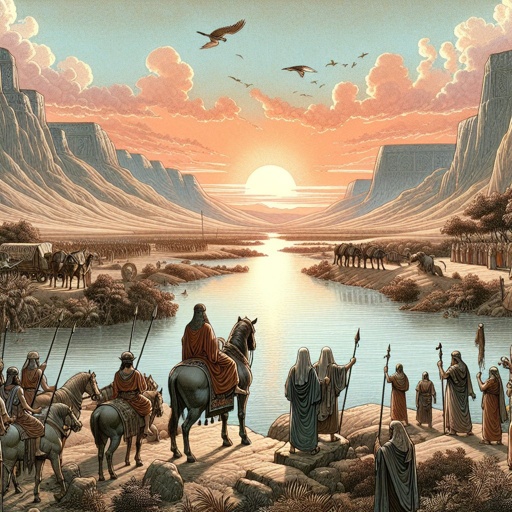
Artwork for Genesis 36:28

Genesis 36:28 - "The children of Dishan are these; Uz, and Aran."

"The children of Dishan are these; Uz, and Aran." - Genesis 36:28

Genesis 36:36 - "And Hadad died, and Samlah of Masrekah reigned in his stead."

Genesis 24:36

Genesis 19-36

Exodus 36:28 - "And two boards made he for the corners of the tabernacle in the two sides."

Job 36:28 - "Which the clouds do drop and distil upon man abundantly."

"And Hadad died, and Samlah of Masrekah reigned in his stead." - Genesis 36:36

Genesis 36:27 - "The children of Ezer are these; Bilhan, and Zaavan, and Akan."

Genesis 36:19 - "These are the sons of Esau, who is Edom, and these are their dukes."

Genesis 36:3 - "And Bashemath Ishmael's daughter, sister of Nebajoth."

Genesis 36:1 - "Now these are the generations of Esau, who is Edom."

Genesis 36:26 - "And these are the children of Dishon; Hemdan, and Eshban, and Ithran, and Cheran."

Genesis 36:42 - "Duke Kenaz, duke Teman, duke Mibzar,"

Genesis 36:9 - "¶ And these are the generations of Esau the father of the Edomites in mount Seir:"

Genesis 36:41 - "Duke Aholibamah, duke Elah, duke Pinon,"

Genesis 19:36 - "Thus were both the daughters of Lot with child by their father."

Genesis 36:8 - "Thus dwelt Esau in mount Seir: Esau is Edom."

Genesis 36:25 - "And the children of Anah were these; Dishon, and Aholibamah the daughter of Anah."

Genesis 36:4 - "And Adah bare to Esau Eliphaz; and Bashemath bare Reuel;"

Exodus 28:36 - "¶ And thou shalt make a plate of pure gold, and grave upon it, like the engravings of a signet, HOLINESS TO THE LORD."

Genesis 36:11 - "And the sons of Eliphaz were Teman, Omar, Zepho, and Gatam, and Kenaz."

Genesis 36:23 - "And the children of Shobal were these; Alvan, and Manahath, and Ebal, Shepho, and Onam."

Genesis 36:34 - "And Jobab died, and Husham of the land of Temani reigned in his stead."

Genesis 36:22 - "And the children of Lotan were Hori and Hemam; and Lotan's sister was Timna."
Genesis 36:37 - "And Samlah died, and Saul of Rehoboth by the river reigned in his stead."

Genesis 28-15

Genesis 28-22

Genesis 28-12

Genesis 28-21