The Legacy of Dinhabah: A Reflection on Leadership and Heritage
“And Bela the son of Beor reigned in Edom: and the name of his city was Dinhabah.” — Genesis 36:32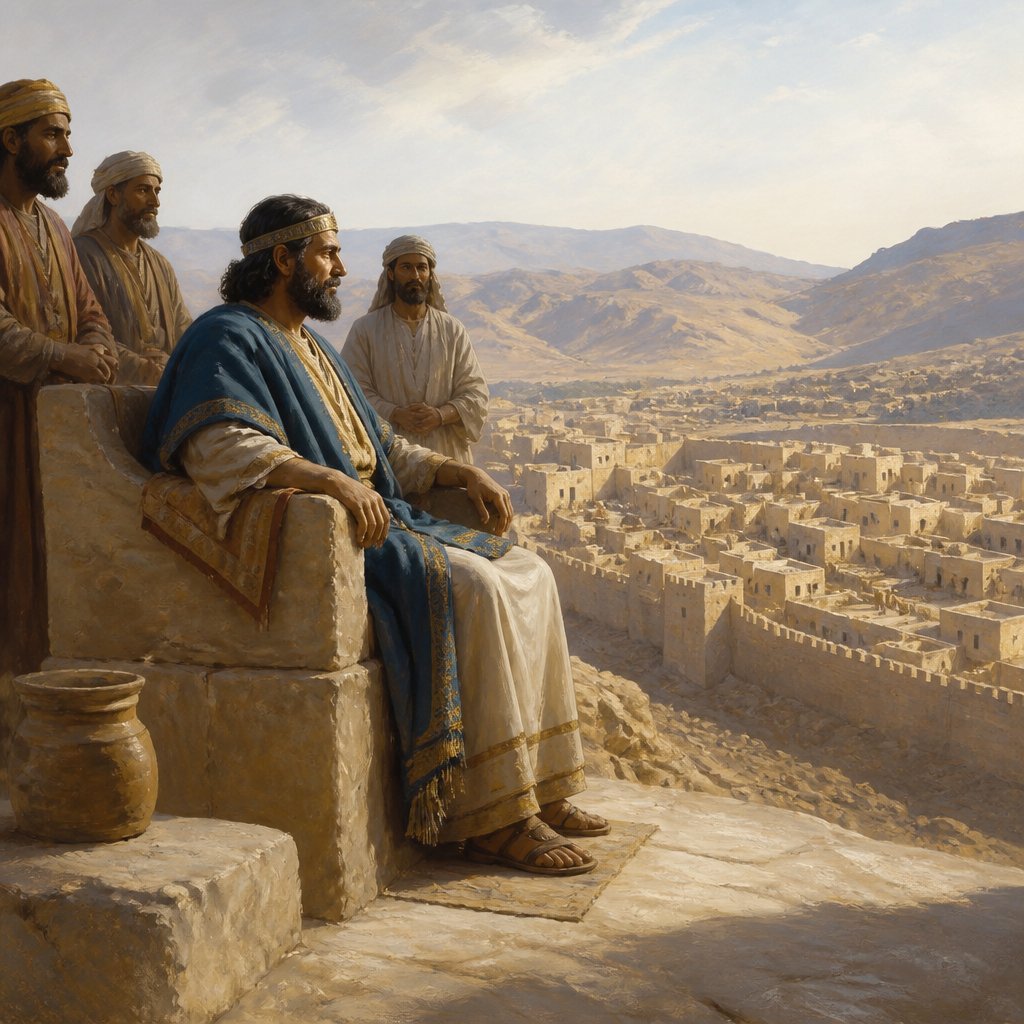
In the grand tapestry of Scripture, even the seemingly mundane details bear profound lessons. Genesis 36:32 states: "And Bela the son of Beor reigned in Edom: and the name of his city was Dinhabah." At first glance, this verse may appear to be a simple historical fact embedded in a genealogical list. However, when we delve deeper, we discover valuable truths concerning leadership, heritage, and our role in God’s unfolding plan.
First, let us consider the figure of Bela, the son of Beor. Bela's rise to leadership in Edom signifies more than political authority; it depicts the responsibility and influence that come with leadership roles. He was not the son of a king but was chosen to reign nonetheless, revealing an essential principle: God often elevates individuals based on His own criteria, not human standards. The realms of our lives—whether it be our families, workplaces, or community groups—present us with opportunities to lead. Like Bela, our leaders will be scrutinized by history, and thus it is incumbent upon us to lead with righteousness and integrity. This can evoke a moment of self-reflection: How are we poised to lead where God has placed us? Are we embodying the virtues of love, kindness, and justice?
The city named Dinhabah signifies ‘a place of knowledge’ or ‘a place of wealth’ depending on textual interpretations. This city serves as a backdrop to Bela’s reign, symbolizing the importance of our surroundings in shaping our leadership and community. The cities we inhabit or influence are not just mere geographical locations; they are the environments in which we express our faith and ethics. Dinhabah, as a city flourishing under Bela’s rule, challenges us to evaluate how the places we inhabit reflect the values we profess as followers of Christ. Are our communities flourishing? Are we contributing to a culture that encourages learning and growth, the hallmark of any flourishing city?
Furthermore, we can glean insights from the name Dinhabah itself. In the Bible, names often hold significance, reflecting character and purpose. Dinhabah can remind us that the legacy we leave behind is tied to our actions and decisions today. Bela, by leading from a city that signifies knowledge, demonstrates the intrinsic value of education, wisdom, and the pursuit of understanding. This reminds us of Proverbs 3:13 which states, "Happy is the man that findeth wisdom, and the man that getteth understanding." As leaders in our contemporary circumstances, are we instilling the quest for wisdom in those we guide? Do we value knowledge that leads not just to prosperity but to spiritual enlightenment?
Moreover, Edom, a region fraught with strife and rivalry with Israel, signifies that leadership also comes with ease and difficulty. The narrative in Genesis shows how relationships and allegiances can impact our legacies. Bela, though reigning in Edom, represents the complexities of leading in a world filled with challenges and adversities. As we strive to build our legacies, we must remember that faith and resilience serve as cornerstones. How do we maintain our integrity and focus on God amidst distractions and opposition?
Ultimately, Genesis 36:32 invites us to reflect on our spiritual legacies that extend beyond individual achievements to encompass the collective health and wisdom of those we lead. As leaders, whether in our families, workplaces, or faith communities, let us reign like Bela in our "Dinhabah"—committed to the pursuit of wisdom, aware of our influence, and maintaining the integrity of our character. May we remember that every moment we lead others is a divine appointment to shape histories and legacies that honor God and serve humanity.
Get our apps


Artwork for Genesis 36:32

Genesis 36:32 - "And Bela the son of Beor reigned in Edom: and the name of his city was Dinhabah."
"And Bela the son of Beor reigned in Edom: and the name of his city was Dinhabah." - Genesis 36:32

Genesis 36:36 - "And Hadad died, and Samlah of Masrekah reigned in his stead."

Numbers 32:36 - "And Beth-nimrah, and Beth-haran, fenced cities: and folds for sheep."

Job 36:32 - "With clouds he covereth the light; and commandeth it not to shine by the cloud that cometh betwixt."

Genesis 24:36

Genesis 19-36

Exodus 36:32 - "And five bars for the boards of the other side of the tabernacle, and five bars for the boards of the tabernacle for the sides westward."

Genesis 19-32

Genesis 36:28 - "The children of Dishan are these; Uz, and Aran."

Genesis 27:32

Genesis 25-32

Genesis 18-32

Genesis 24-32
Genesis 21-32

"And Hadad died, and Samlah of Masrekah reigned in his stead." - Genesis 36:36

Genesis 36:27 - "The children of Ezer are these; Bilhan, and Zaavan, and Akan."

Genesis 36:19 - "These are the sons of Esau, who is Edom, and these are their dukes."

Genesis 36:3 - "And Bashemath Ishmael's daughter, sister of Nebajoth."

Genesis 36:1 - "Now these are the generations of Esau, who is Edom."

Genesis 36:26 - "And these are the children of Dishon; Hemdan, and Eshban, and Ithran, and Cheran."

Genesis 36:42 - "Duke Kenaz, duke Teman, duke Mibzar,"

Genesis 36:9 - "¶ And these are the generations of Esau the father of the Edomites in mount Seir:"

Genesis 36:41 - "Duke Aholibamah, duke Elah, duke Pinon,"

Genesis 19:36 - "Thus were both the daughters of Lot with child by their father."

Genesis 36:8 - "Thus dwelt Esau in mount Seir: Esau is Edom."

Genesis 36:25 - "And the children of Anah were these; Dishon, and Aholibamah the daughter of Anah."

Genesis 36:4 - "And Adah bare to Esau Eliphaz; and Bashemath bare Reuel;"

Genesis 36:11 - "And the sons of Eliphaz were Teman, Omar, Zepho, and Gatam, and Kenaz."

Genesis 36:23 - "And the children of Shobal were these; Alvan, and Manahath, and Ebal, Shepho, and Onam."