Legacy of Lineage: The Spiritual Significance of Family Heritage
“And Adah bare to Esau Eliphaz; and Bashemath bare Reuel;” — Genesis 36:4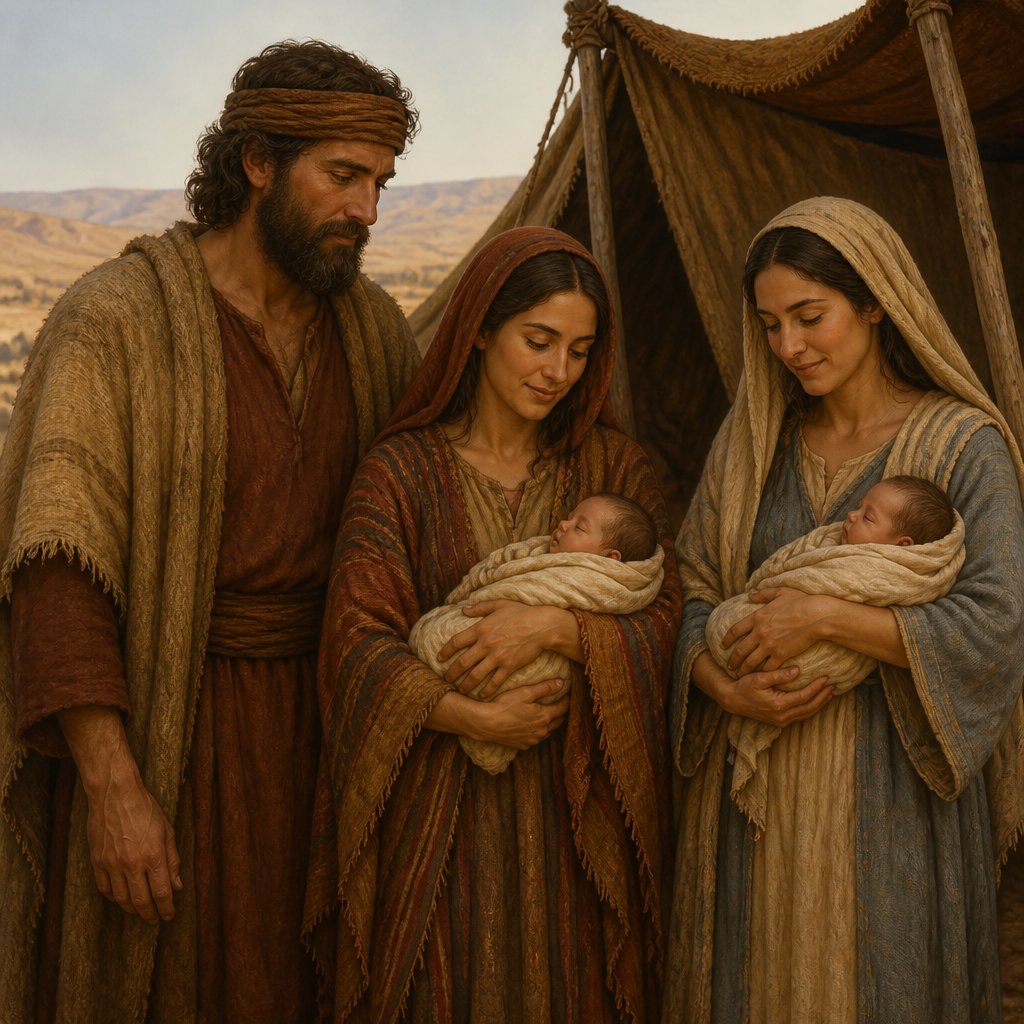
The genealogies found in the Bible, particularly in the book of Genesis, often bring forth names that might seem irrelevant at first glance. Yet, as we delve into Genesis 36:4, we discover a cherished glimpse into the ancestral lines that shaped the destiny of nations: "And Adah bare to Esau Eliphaz; and Bashemath bare Reuel." This verse encapsulates the importance of legacy, identity, and the choices we make in the context of our families.
Esau, the elder son of Isaac and Rebekah, took a different path than his brother Jacob. While Jacob followed God’s covenant, Esau, often characterized as the man of the world, married two Canaanite women, Adah and Bashemath, and established a lineage that would later be significant in the history of the Edomites. In reflecting on this, we can admire the accuracy of the Scripture—that the names and the lineage of Esau are carefully recorded. This careful documentation highlights not just the personalities involved, but their impact on God's larger story of redemption.
When we investigate the names of Esau's children, we find rich meanings. Eliphaz, meaning "God is fine gold," gives us insight into the character of this firstborn son. It evokes thoughts of worth and divine favor. We can ponder how Eliphaz, although he originates from Esau, carries within his name a reminder of God’s presence in the midst of earthly pursuits. In our own lives, how often do we look at our circumstances and forget that God's hand is over us, working through our heritage and experiences?
Reuel, the second son born to Esau through Bashemath, means "friend of God." The juxtaposition of these names speaks volumes. Here, we have a tension within family definitions. Esau, a man whose life choices reflected temporal pursuits, bore sons whose names suggest varying levels of divine connection. This encourages us to reflect critically on the spiritual legacy we are leaving. Are we passing down a heritage that values the artwork of relationships with God, or are we merely perpetuating the rhythms dictated by worldly measures?
In this present age, many strive to carve out a name for themselves, to etch their legacy into the very fabric of society. In light of Genesis 36:4, however, we are reminded that our greatest legacy is not in our achievements or our fame, but in the spiritual trajectory we set for our children and anyone who comes after us. Families serve as the first arenas where faith is either nurtured or neglected. The actions we take today, the values we instill in our children will echo through generations.
As we contemplate our own lineage, we should ask ourselves some pivotal questions: What stories are we telling? What life patterns are we demonstrating? Are we demonstrating a deep-seated love for God, encouraging our families to know Him personally? The very act of noting who begat whom in Scriptures serves a dual purpose—it illustrates familial ties while simultaneously grounding us in a narrative of divine purpose.
Moreover, our decision to walk in faith and integrity can enable our loved ones—like Eliphaz and Reuel—to frame their identities around a robust relationship with God. In some ways, our lives may be a foretaste of the faith they will someday embrace or reject. This is both a privilege and a responsibility that we should not take lightly.
As we leave this devotional, let's challenge ourselves. May we aspire to exemplify faithfulness, generosity, and grace. Let our legacy not only include our relation to earthly kin but also our deep ties to the heavenly Father. Just as Esau had the opportunity to build a legacy in spite of his choices, may we be encouraged that no matter where we find ourselves in life, we can choose to honor God and influence our families positively.
Thus, let us lift our hearts in prayer, seeking guidance to be the kind of bearers of legacy, filling our lives with faith that resonates eternally. For in the end, holiness and relationship with God are the true markers of our heritage.
Get our apps


Artwork for Genesis 36:4

Genesis 36:4 - "And Adah bare to Esau Eliphaz; and Bashemath bare Reuel;"
"And Adah bare to Esau Eliphaz; and Bashemath bare Reuel;" - Genesis 36:4

Genesis 36:36 - "And Hadad died, and Samlah of Masrekah reigned in his stead."

Genesis 24:36

Genesis 19-36

Genesis 36:28 - "The children of Dishan are these; Uz, and Aran."

"And Hadad died, and Samlah of Masrekah reigned in his stead." - Genesis 36:36

Genesis 36:27 - "The children of Ezer are these; Bilhan, and Zaavan, and Akan."

Genesis 36:19 - "These are the sons of Esau, who is Edom, and these are their dukes."

Genesis 36:3 - "And Bashemath Ishmael's daughter, sister of Nebajoth."

Genesis 36:1 - "Now these are the generations of Esau, who is Edom."

Genesis 36:26 - "And these are the children of Dishon; Hemdan, and Eshban, and Ithran, and Cheran."

Genesis 36:42 - "Duke Kenaz, duke Teman, duke Mibzar,"

Genesis 36:9 - "¶ And these are the generations of Esau the father of the Edomites in mount Seir:"

Genesis 36:41 - "Duke Aholibamah, duke Elah, duke Pinon,"

Genesis 19:36 - "Thus were both the daughters of Lot with child by their father."

Genesis 36:8 - "Thus dwelt Esau in mount Seir: Esau is Edom."

Genesis 36:25 - "And the children of Anah were these; Dishon, and Aholibamah the daughter of Anah."

Genesis 36:11 - "And the sons of Eliphaz were Teman, Omar, Zepho, and Gatam, and Kenaz."

Genesis 36:23 - "And the children of Shobal were these; Alvan, and Manahath, and Ebal, Shepho, and Onam."

Genesis 36:34 - "And Jobab died, and Husham of the land of Temani reigned in his stead."

Genesis 36:22 - "And the children of Lotan were Hori and Hemam; and Lotan's sister was Timna."
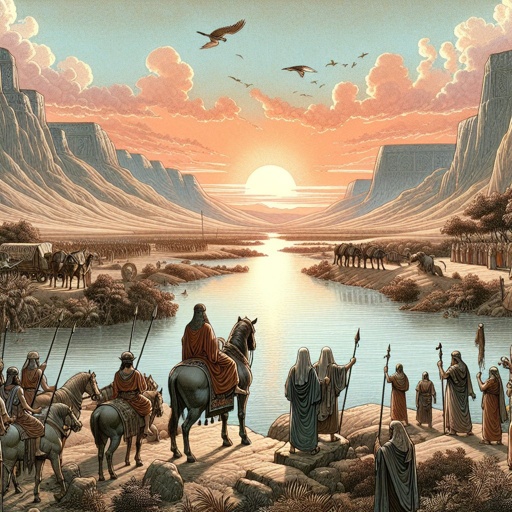
Genesis 36:37 - "And Samlah died, and Saul of Rehoboth by the river reigned in his stead."

Genesis 36:33 - "And Bela died, and Jobab the son of Zerah of Bozrah reigned in his stead."

Genesis 36:38 - "And Saul died, and Baal-hanan the son of Achbor reigned in his stead."

Mark 4:36-37

Mark 4:36-37

Genesis 36:21 - "And Dishon, and Ezer, and Dishan: these are the dukes of the Horites, the children of Seir in the land of Edom."

Genesis 36:32 - "And Bela the son of Beor reigned in Edom: and the name of his city was Dinhabah."

"The children of Dishan are these; Uz, and Aran." - Genesis 36:28