Heritage and Identity: Lessons from Esau and Edom
“Duke Magdiel, duke Iram: these be the dukes of Edom, according to their habitations in the land of their possession: he is Esau the father of the Edomites.” — Genesis 36:43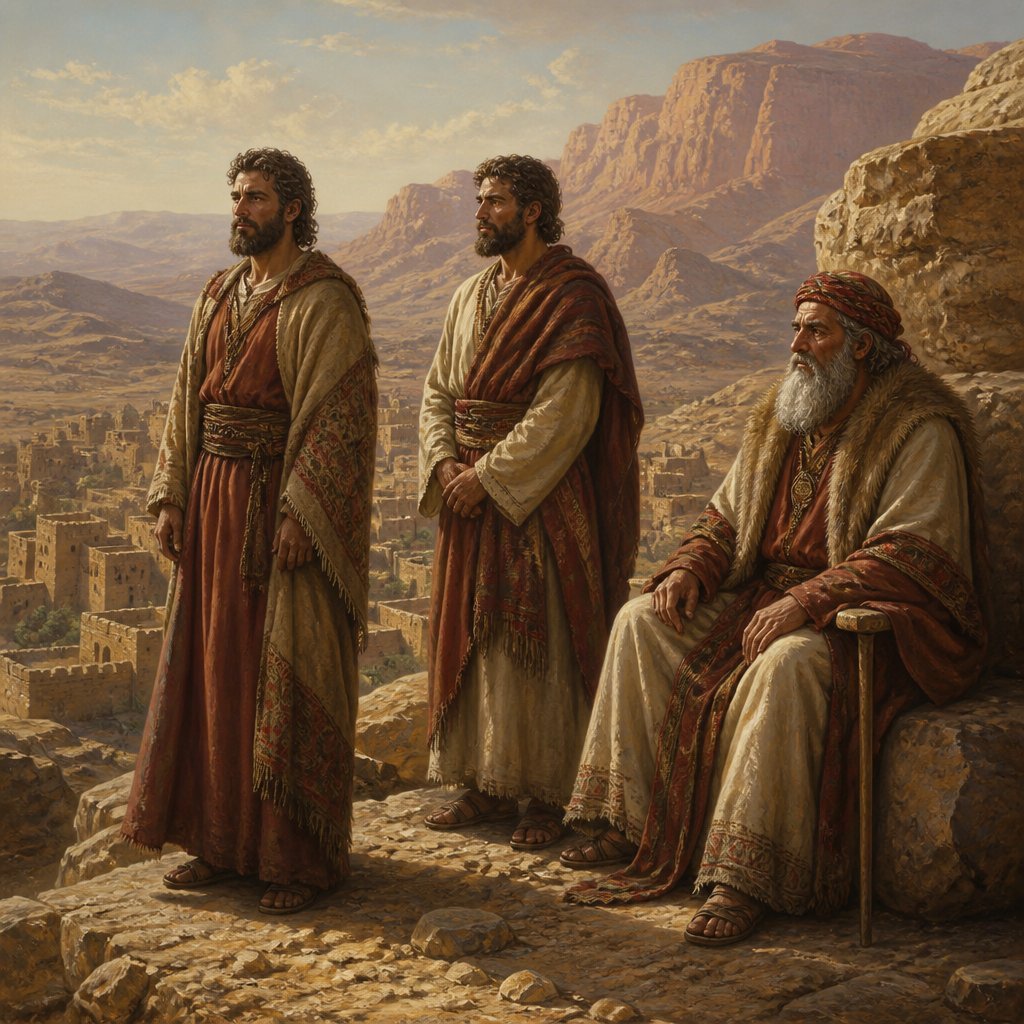
As we delve into Genesis 36:43, which reads, "Duke Magdiel, duke Iram: these be the dukes of Edom, according to their habitations in the land of their possession: he is Esau the father of the Edomites," we find a passage that may initially seem to lack the depth and drama of other biblical narratives. At first glance, we encounter a listing of names and titles that can easily be set aside as mere genealogy. However, the significance of these names and what they represent can lead us to profound insights about identity, heritage, and our own place in God’s unfolding story.
The passage introduces us to Duke Magdiel and Duke Iram and identifies Esau as the father of the Edomites. This is more than just a list—it is a statement about lineage and belonging. Each of these dukes represents not just an individual leader, but a lineage of clans that descended from Esau. In ancient Israel, genealogies were of utmost importance, as they provided a sense of identity, heritage, and purpose. Families were often recognized by the tribes or nations from which they sprang, giving a foundation of belonging that carried spiritual, social, and cultural significance.
Esau, the twin brother of Jacob, is a complex figure in biblical history. Known for his impulsive nature and estrangement from his brother, he nonetheless becomes a patriarch of a significant group of people, the Edomites. In reflecting on his identity as the father of Edom, we consider how a person's choices can shape their legacy. Esau chose immediate satisfaction over long-term blessing when he sold his birthright for a bowl of stew (Genesis 25:29-34). This decision illustrates a critical theme in the biblical narrative: our present choices can have lasting implications not only for ourselves but for generations to come.
Thus, as we consider the phrase "the dukes of Edom, according to their habitations," we are encouraged to contemplate where we have established our own habitations—spiritually, emotionally, and relationally. Edom represents a land that was both a physical domain and a metaphor for identity and belonging. In our lives, where do we establish our sense of "home"? Do we dwell in peace-oriented spaces that reflect God’s kingdom, or do we find ourselves entrenched in places of conflict, strife, or despair?
This passage also teaches us that our heritage—whether we embrace it or attempt to redefine it—forms a crucial part of who we are. For the Edomites, their identity was closely tied to Esau. In our contemporary society, we cannot ignore the importance of our own heritage. It influences our values, our relationships, and our communities. As followers of Christ, we might carry the legacy of our families, yet we are also called to establish a new legacy through our faith. Paul reminds us in 2 Corinthians 5:17 that "if any man be in Christ, he is a new creature: old things are passed away; behold, all things are become new." Our identity in Christ transcends our earthly heritage, inviting us to create a legacy marked by love, grace, and truth.
Moreover, the very notion of being "dukes" underscores authority and leadership. As Christians, we are called to be leaders in the spheres where God has placed us—leading lives that reflect His attributes. How we choose to live out our identity can influence others, just as the dukes of Edom would have impacted their communities. It is a powerful reminder that our faith and actions carry weight; we have the potential to guide others toward the truth of God’s love and His kingdom.
Therefore, as we reflect on Genesis 36:43, let us embrace our God-given identity, recognizing that our heritage—as complex as it may be—serves as a platform for God’s work in and through us. We may not be dukes of Edom, but as children of the King, we are called to live as leaders, authors, and stewards of legacy, grace, and truth in this world.
Get our apps


Artwork for Genesis 36:43

Genesis 36:43 - "Duke Magdiel, duke Iram: these be the dukes of Edom, according to their habitations in the land of their possession: he is Esau the father of the Edomites."
"Duke Magdiel, duke Iram: these be the dukes of Edom, according to their habitations in the land of their possession: he is Esau the father of the Edomites." - Genesis 36:43

Genesis 24-43

Genesis 43:1 - "And the famine was sore in the land."

Genesis 36:36 - "And Hadad died, and Samlah of Masrekah reigned in his stead."

Genesis 24:36

Genesis 19-36

"And the famine was sore in the land." - Genesis 43:1

Genesis 43:19 - "And they came near to the steward of Joseph's house, and they communed with him at the door of the house,"

Genesis 43:13 - "Take also your brother, and arise, go again unto the man:"

Genesis 43:17 - "And the man did as Joseph bade; and the man brought the men into Joseph's house."

Genesis 36:28 - "The children of Dishan are these; Uz, and Aran."

"And Hadad died, and Samlah of Masrekah reigned in his stead." - Genesis 36:36

Genesis 43:20 - "And said, O sir, we came indeed down at the first time to buy food:"

Genesis 43:25 - "And they made ready the present against Joseph came at noon: for they heard that they should eat bread there."

Genesis 36:27 - "The children of Ezer are these; Bilhan, and Zaavan, and Akan."

Genesis 30:43 - "And the man increased exceedingly, and had much cattle, and maidservants, and menservants, and camels, and asses."

Genesis 36:19 - "These are the sons of Esau, who is Edom, and these are their dukes."

Genesis 36:3 - "And Bashemath Ishmael's daughter, sister of Nebajoth."

Genesis 36:1 - "Now these are the generations of Esau, who is Edom."

Genesis 43:4 - "If thou wilt send our brother with us, we will go down and buy thee food:"

Genesis 36:26 - "And these are the children of Dishon; Hemdan, and Eshban, and Ithran, and Cheran."

Genesis 36:42 - "Duke Kenaz, duke Teman, duke Mibzar,"

Genesis 36:9 - "¶ And these are the generations of Esau the father of the Edomites in mount Seir:"

Genesis 43:10 - "For except we had lingered, surely now we had returned this second time."

Genesis 43:31 - "And he washed his face, and went out, and refrained himself, and said, Set on bread."

Genesis 36:41 - "Duke Aholibamah, duke Elah, duke Pinon,"

Genesis 19:36 - "Thus were both the daughters of Lot with child by their father."

Genesis 36:8 - "Thus dwelt Esau in mount Seir: Esau is Edom."

Genesis 36:25 - "And the children of Anah were these; Dishon, and Aholibamah the daughter of Anah."