Communion at the Door: A Journey of Trust and Vulnerability
“And they came near to the steward of Joseph’s house, and they communed with him at the door of the house,” — Genesis 43:19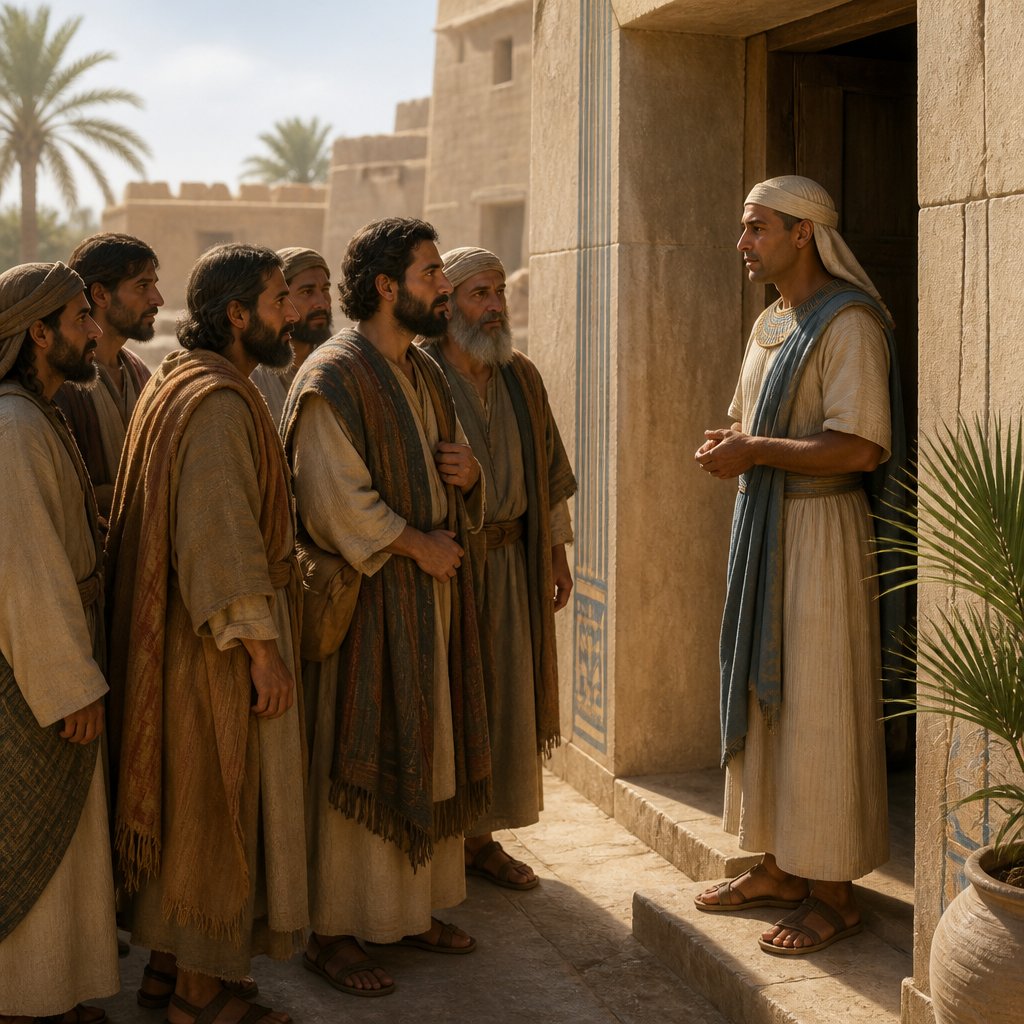
In Genesis 43:19, we read, "And they came near to the steward of Joseph's house, and they communed with him at the door of the house." This passage may seem simple, but within it lies profound lessons about trust, vulnerability, and the divine orchestration of events in our lives.
To understand the significance of this moment, we must remember the backstory. Joseph, once sold into slavery by his own brothers, had risen to power in Egypt. His brothers, unaware of his identity, found themselves returning to the land of their youth, burdened with fear and guilt. They had previously traveled to Egypt for food during a severe famine, and the encounter with the powerful man who had sold them grain was laden with tension. This second journey was fraught with dread because they had to return with Benjamin, their youngest brother, who was now a matter of life or death.
As they approached Joseph’s steward—the one person somewhat removed from the direct power of Joseph—they stood before him at the door of the house. The door symbolizes a threshold, a liminal space between fear and faith, between past sins and future redemption. Here, they were entering a realm of unknown outcomes, where their past actions could manifest in judgment or grace.
The act of communing with the steward is also significant. The Hebrew word for "communed" suggests a deep, intimate conversation. This wasn’t just a transaction; it was a moment where the brothers sought understanding, clarity, and perhaps mercy. Their admission of guilt for their prior actions, an essential aspect of seeking forgiveness, began here at the doorstep of Joseph’s house.
Life often brings us to similar doors—places where we need to confront our fears, seek forgiveness, or muster the courage to face someone we’ve wronged or been wronged by. The intensity of their situation resonates with our own experiences. We may stand at metaphorical doors, whether they are relationships we have neglected, opportunities we have squandered, or even the presence of God in our lives we have ignored. The discomfort we feel when approaching these situations echoes the brothers' trepidation.
Consider the journey of each brother. They left Canaan bearing the weight of their past. On their way to Egypt, they likely reminisced about the pain they had inflicted upon their father and each other when they sold Joseph. How often do we carry guilt on our journeys? Often, we allow our past failures to loom larger than life over our future hopes. But communing with God, as the brothers did with the steward, is essential to know how to move forward.
Joseph’s steward, unbeknownst to the brothers, is an extension of Joseph’s mercy—as is God in our own lives. Although the brothers were fearful of the consequences of their actions, they were entering a space that would reveal Joseph’s heart of forgiveness. At every door we approach, there’s the potential for redemption, grace, and a turning point. Even when we feel unworthy to knock, we must remember that God stands ready to engage with us about our burdens and our brokenness.
Moreover, this story teaches us about the importance of stepping out of our comfort zones. The brothers could have easily avoided their responsibility to bring Benjamin back. Instead, they chose to face the unknown, an act that reflected both dependence on one another and on something greater than themselves.
In life, we might have to return to the scenes of our sorrows—places marked by grief, regret, and fear. But at these doorways, God invites us into communion, just as the brothers stood at the door, ready to make peace with their past.
As we ponder this moment in Scripture, let us reflect on the doors we are standing before today. Do we need to confess, seek forgiveness, or simply acknowledge our failings? The invitation to commune awaits us. With God, there is always hope at the door, enabling us to emerge renewed and reconciled from the shadows of our past.
Get our apps


Artwork for Genesis 43:19

Genesis 43:19 - "And they came near to the steward of Joseph's house, and they communed with him at the door of the house,"
"And they came near to the steward of Joseph's house, and they communed with him at the door of the house," - Genesis 43:19

Isaiah 43:19

Genesis 24-43

Isaiah 43:19

Joshua 19:43 - "And Elon, and Thimnathah, and Ekron,"

Isaiah 43:18-19

Isaiah 43:18-19

Genesis 43:1 - "And the famine was sore in the land."

"And Elon, and Thimnathah, and Ekron," - Joshua 19:43

"And the famine was sore in the land." - Genesis 43:1

Genesis 43:13 - "Take also your brother, and arise, go again unto the man:"

Genesis 43:17 - "And the man did as Joseph bade; and the man brought the men into Joseph's house."

Genesis 43:20 - "And said, O sir, we came indeed down at the first time to buy food:"

Genesis 43:25 - "And they made ready the present against Joseph came at noon: for they heard that they should eat bread there."

Genesis 30:43 - "And the man increased exceedingly, and had much cattle, and maidservants, and menservants, and camels, and asses."

Genesis 43:4 - "If thou wilt send our brother with us, we will go down and buy thee food:"

Genesis 43:10 - "For except we had lingered, surely now we had returned this second time."

Genesis 43:31 - "And he washed his face, and went out, and refrained himself, and said, Set on bread."

Genesis 43:24 - "And the man brought the men into Joseph's house, and gave them water, and they washed their feet; and he gave their asses provender."

Genesis 36:43 - "Duke Magdiel, duke Iram: these be the dukes of Edom, according to their habitations in the land of their possession: he is Esau the father of the Edomites."

Genesis 19-19

Genesis 43:6 - "And Israel said, Wherefore dealt ye so ill with me, as to tell the man whether ye had yet a brother?"

Genesis 27:43 - "Now therefore, my son, obey my voice; and arise, flee thou to Laban my brother to Haran;"

Genesis 43:26 - "¶ And when Joseph came home, they brought him the present which was in their hand into the house, and bowed themselves to him to the earth."

Genesis 43:33 - "And they sat before him, the firstborn according to his birthright, and the youngest according to his youth: and the men marvelled one at another."

Genesis 43:28 - "And they answered, Thy servant our father is in good health, he is yet alive. And they bowed down their heads, and made obeisance."

Genesis 43:12 - "And take double money in your hand; and the money that was brought again in the mouth of your sacks, carry it again in your hand; peradventure it was an oversight:"

Genesis 43:27 - "And he asked them of their welfare, and said, Is your father well, the old man of whom ye spake? Is he yet alive?"

Genesis 43:15 - "And the men took that present, and they took double money in their hand, and Benjamin; and rose up, and went down to Egypt, and stood before Joseph."