Coming Home: A Journey of Reunion and Redemption
“And Joseph said unto his brethren, and unto his father’s house, I will go up, and shew Pharaoh, and say unto him, My brethren, and my father’s house, which were in the land of Canaan, are come unto me;” — Genesis 46:31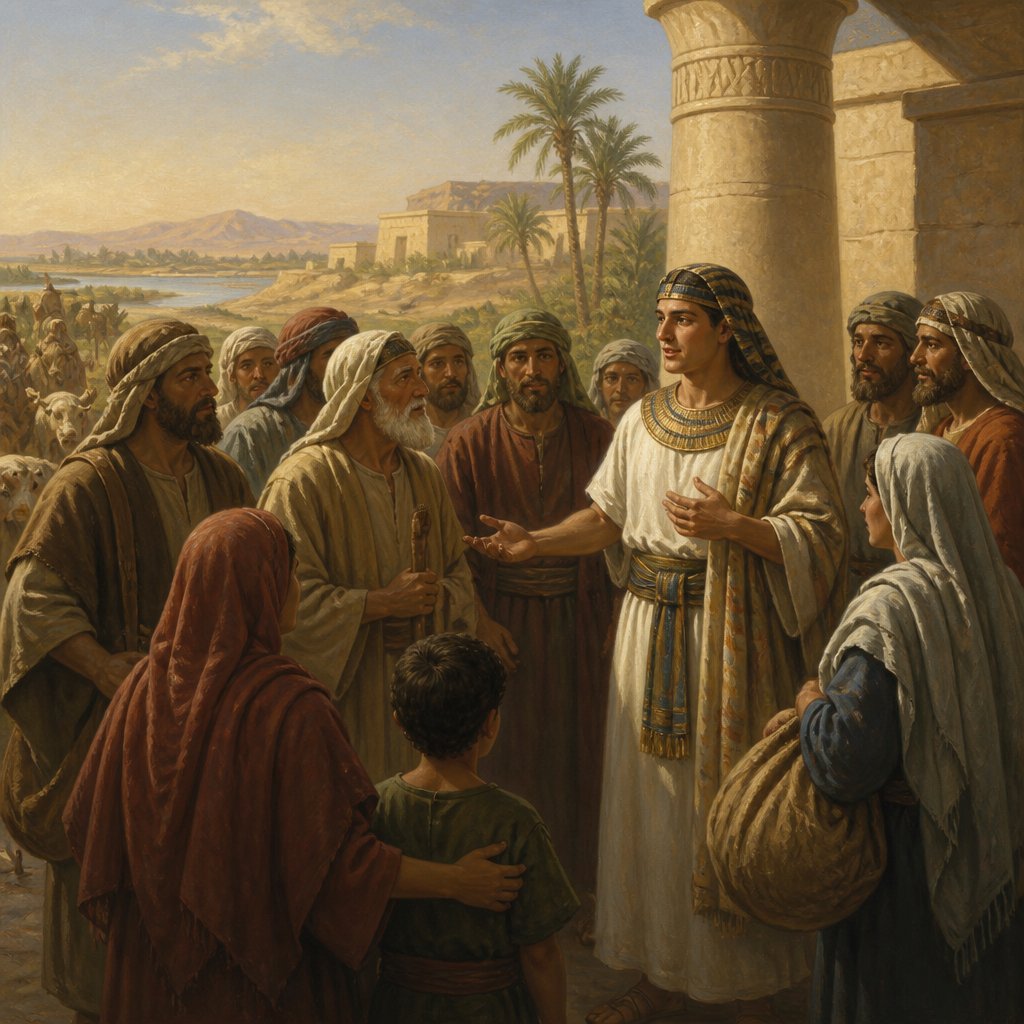
In Genesis 46:31, Joseph, who has risen to prominence in Egypt, stands at a crossroads that not only signifies personal reunion but also the restoration of his family's legacy. "And Joseph said unto his brethren, and unto his father's house, I will go up, and shew Pharaoh, and say unto him, My brethren, and my father's house, which were in the land of Canaan, are come unto me;" (KJV). This moment is pivotal, marking a profound shift in Joseph's life. It embodies themes of forgiveness, family, and divine purpose that resonate throughout the Scriptures and in our lives today.
Joseph's declaration comes after years of separation, betrayal, and personal hardship. His dreams had set him apart from his brothers, fueling their jealousy and leading them to commit unspeakable acts. Yet, even in the depths of his trials—being sold into slavery and wrongfully imprisoned—God's hand was upon him, guiding him towards his ultimate destiny. This verse is the culmination of years of God’s faithfulness, demonstrating how struggle and strife can lead to reconciliation and restoration.
When Joseph says, "I will go up," it is more than just a physical journey; it symbolizes a spiritual ascent. Joseph, now a ruler in Egypt, recognizes that his success is not merely for personal gain, but serves a greater purpose: to bring his family—his father's house—out of famine and into safety. His willingness to advocate for his brothers, who once sought to harm him, reflects the heart of Christ, who intercedes for us despite our failings.
In our lives, we often face situations where forgiveness and reconciliation seem impossible. We may grapple with painful memories of betrayal, disappointment, or abandonment. Yet, through Joseph's actions, we see a powerful example of loving one's enemies and being willing to bridge gaps caused by sin. The act of going to Pharaoh is an important representation of Joseph's desire not only to reclaim his family but to acknowledge his need for them. In demonstrating love to those who have wronged us, we can experience healing and wholeness.
Moreover, Joseph's journey is a reminder to us of the importance of family and community. The phrase "my brethren, and my father's house" emphasizes the ties that bind us. Joseph does not seek to separate himself from his roots; instead, he recognizes the value of family connections. In a world where individualism often overshadows communal bonds, this verse calls us back to the significance of our familial relationships. It invites us to consider how we can extend grace to those in our families and communities who may feel estranged.
As we reflect on Joseph's willingness to go to Pharaoh, we, too, are called to advocate for others—especially those who may feel marginalized or forgotten. When we see someone in need, whether in our families or communities, we are urged to act, to speak up, and to show compassion. In doing so, we reflect the character of God, who seeks to redeem and restore.
Additionally, Joseph's confidence in presenting his family to Pharaoh serves as a lesson in trusting God’s sovereignty. He steps forward with assurance that God has orchestrated every step of his journey. Even when faced with uncertainty, he remains committed to God’s purpose. Our plans may not always unfold as we envision, but like Joseph, we are encouraged to trust that God remains at work behind the scenes. Despite any fears or doubts we may harbor, we can take comfort in knowing that God’s plans for us and our loved ones are good, meant for our ultimate welfare and not for calamity.
In conclusion, Genesis 46:31 is an invitation to reunite with the parts of our lives that have become fragmented, whether through disunity in families or discord in relationships. Like Joseph, we are called to rise above past grievances, extend grace, and initiate healing conversations. May we embrace our journeys, acknowledging that every step leads us closer to fulfilling God’s purpose as we bring our families under His loving wings.
Get our apps


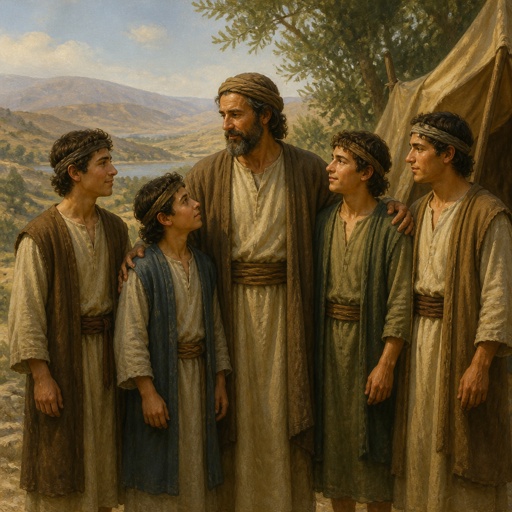
Artwork for Genesis 46:31

Genesis 46:31 - "And Joseph said unto his brethren, and unto his father's house, I will go up, and shew Pharaoh, and say unto him, My brethren, and my father's house, which were in the land of Canaan, are come unto me;"
"And Joseph said unto his brethren, and unto his father's house, I will go up, and shew Pharaoh, and say unto him, My brethren, and my father's house, which were in the land of Canaan, are come unto me;" - Genesis 46:31

Genesis 31:46 - "And Jacob said unto his brethren, Gather stones; and they took stones, and made an heap: and they did eat there upon the heap."

Numbers 31:46 - "And sixteen thousand persons;)"

"And sixteen thousand persons;)" - Numbers 31:46
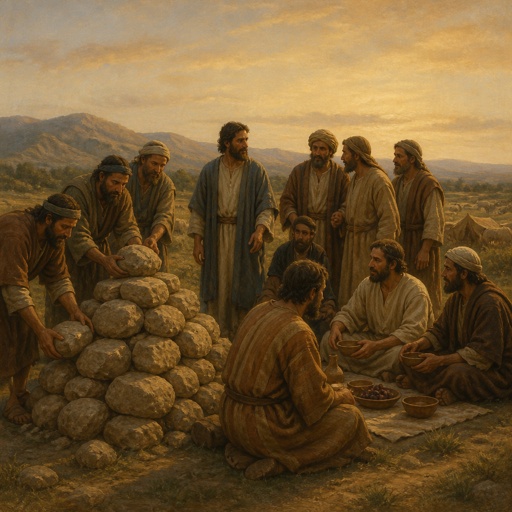
"And Jacob said unto his brethren, Gather stones; and they took stones, and made an heap: and they did eat there upon the heap." - Genesis 31:46

Genesis 46:23 - "¶ And the sons of Dan; Hushim."

Genesis 24-46

Genesis 46:9 - "And the sons of Reuben; Hanoch, and Phallu, and Hezron, and Carmi."

Genesis 46:11 - "¶ And the sons of Levi; Gershon, Kohath, and Merari."

Genesis 46:14 - "¶ And the sons of Zebulun; Sered, and Elon, and Jahleel."

Genesis 46:24 - "¶ And the sons of Naphtali; Jahzeel, and Guni, and Jezer, and Shillem."

Genesis 46:13 - "¶ And the sons of Issachar; Tola, and Phuvah, and Job, and Shimron."

Genesis 46:19 - "The sons of Rachel Jacob's wife; Joseph, and Benjamin."

Genesis 46:22 - "These are the sons of Rachel, which were born to Jacob: all the souls were fourteen."
"¶ And the sons of Dan; Hushim." - Genesis 46:23

Genesis 46:16 - "¶ And the sons of Gad; Ziphion, and Haggi, Shuni, and Ezbon, Eri, and Arodi, and Areli."

Genesis 46:21 - "¶ And the sons of Benjamin were Belah, and Becher, and Ashbel, Gera, and Naaman, Ehi, and Rosh, Muppim, and Huppim, and Ard."

"¶ And the sons of Issachar; Tola, and Phuvah, and Job, and Shimron." - Genesis 46:13
"¶ And the sons of Naphtali; Jahzeel, and Guni, and Jezer, and Shillem." - Genesis 46:24

"The sons of Rachel Jacob's wife; Joseph, and Benjamin." - Genesis 46:19

Genesis 46:10 - "¶ And the sons of Simeon; Jemuel, and Jamin, and Ohad, and Jachin, and Zohar, and Shaul the son of a Canaanitish woman."

Genesis 46:2 - "And God spake unto Israel in the visions of the night, and said, Jacob, Jacob. And he said, Here am I."

Genesis 21-31

Genesis 18-31

Genesis 31:35

Genesis 19-31

Genesis 24-31

"¶ And the sons of Levi; Gershon, Kohath, and Merari." - Genesis 46:11

"¶ And the sons of Zebulun; Sered, and Elon, and Jahleel." - Genesis 46:14