Emerging Anew: The Promise of New Beginnings
“Every beast, every creeping thing, and every fowl, and whatsoever creepeth upon the earth, after their kinds, went forth out of the ark.” — Genesis 8:19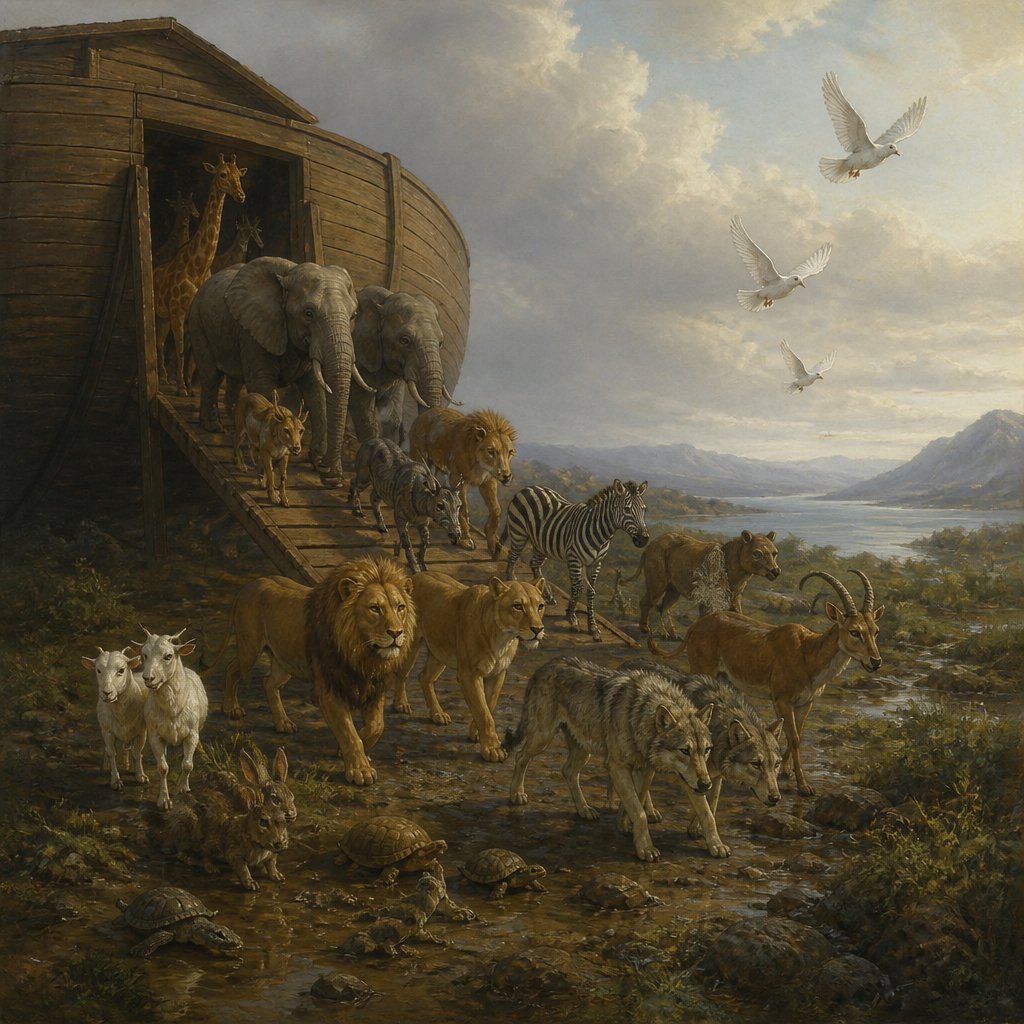
As we turn our hearts and minds to Genesis 8:19, we encounter a profound moment in biblical history: "Every beast, every creeping thing, and every fowl, and whatsoever creepeth upon the earth, after their kinds, went forth out of the ark." This simple phrase encapsulates not only a physical emergence from the ark but also a symbolic resurrection of the world itself after a period of trial and turmoil.
The context of Genesis 8:19 is critical. After the flood, which served as both a divine judgment and a cleansing, Noah and his family, along with every living creature, were confined within the ark. For what must have felt like an eternity, they weathered each storm, each day filled with uncertainty and fear. It’s easy to imagine the emotional weight of both the humans and the animals, held captive by the relentless waters that blotted out the earth. But God had a plan. He had promised Noah that he would spare him—and he did.
As the floodwaters receded and the sun finally kissed the earth once more, a new chapter began. The phrase "after their kinds" speaks volumes about God’s intentionality in creation. Each creature was preserved according to its design, a divine assurance that life would continue in its unique form. This brings us to a critical truth in our spiritual journey: God is a God of order, purpose, and renewal. Just as every creature had its place and significance, so do we.
Emerging from the ark represents more than just physical liberation; it is a metaphor for spiritual rebirth. In our own lives, we often face floods of adversity—whether they be trials of faith, emotional struggles, or personal challenges. During these times, it can feel as though we are confined in our own proverbial ark, waiting for the storms to pass. Yet, like Noah, we are called to trust in God's promises. His faithfulness assures us that there is an after; an emergence that follows the storm.
As the creatures stepped onto the new earth, they did more than merely exist; they were reintroduced to the beauty of life. Nature, once plunged into chaos, now offered hope and renewal. This moment challenges us to consider how we respond when the storms of life cease. Do we emerge refreshed, ready to appreciate the world around us? Or do we continue to carry the burdens of our past experiences, groaning under the weight of what has been?
Noah, upon emerging, did not just let the animals roam aimlessly; he and his family were charged with the responsibility to steward this new world. As new creations in Christ, we find ourselves with a similar charge. 2 Corinthians 5:17 reminds us that "If any man be in Christ, he is a new creature: old things are passed away; behold, all things are become new." Our faith should compel us toward action, a call to live in a way that honors the fresh start we've been given. Rather than retreating back into the safety of the ark, we are to venture forth—taking risks, exploring the depths of what God has in store.
As we reflect on the significance of Genesis 8:19, we are reminded that after every storm, God provides a way for us to emerge anew. The invitation now is to step forth with courage and to embrace a fresh beginning. Our past trials can fuel our dependence on God’s promises and can empower us to live intentionally and purposefully.
Ultimately, as we venture out into our own lives following storms, let us be the faithful custodians of God’s creation, living joyfully in the expansion of His kingdom. In doing so, we exemplify gratitude to God for delivering us from the floodwaters of our challenges and troubles. The world awaits our response—let us emerge anew and embrace the roles we’re called to play in God’s beautiful narrative.
Get our apps


Artwork for Genesis 8:19

Genesis 8:19 - "Every beast, every creeping thing, and every fowl, and whatsoever creepeth upon the earth, after their kinds, went forth out of the ark."
"Every beast, every creeping thing, and every fowl, and whatsoever creepeth upon the earth, after their kinds, went forth out of the ark." - Genesis 8:19

Genesis 19-8

Genesis 19-19

Genesis 15:19

Genesis 23-19

Genesis 19-26

Genesis 19-13

Genesis 28-19

Genesis 19-31

Genesis 19-2

Genesis 19-29

Genesis 19-7

Genesis 19-1

Genesis 19-36

Genesis 19-4

Genesis 19-17

Genesis 19-28

Genesis 18-19

Genesis 19-12

Genesis 24-19

Genesis 19-34

Genesis 19-24

Genesis 22:19

Genesis 19-9

Genesis 19-25

Genesis 19-11

Genesis 21-19

Genesis 19-32

Genesis 19-38