Understanding Grief and Strife Through God's Lens
“Why dost thou shew me iniquity, and cause me to behold grievance? for spoiling and violence are before me: and there are that raise up strife and contention.” — Habakkuk 1:3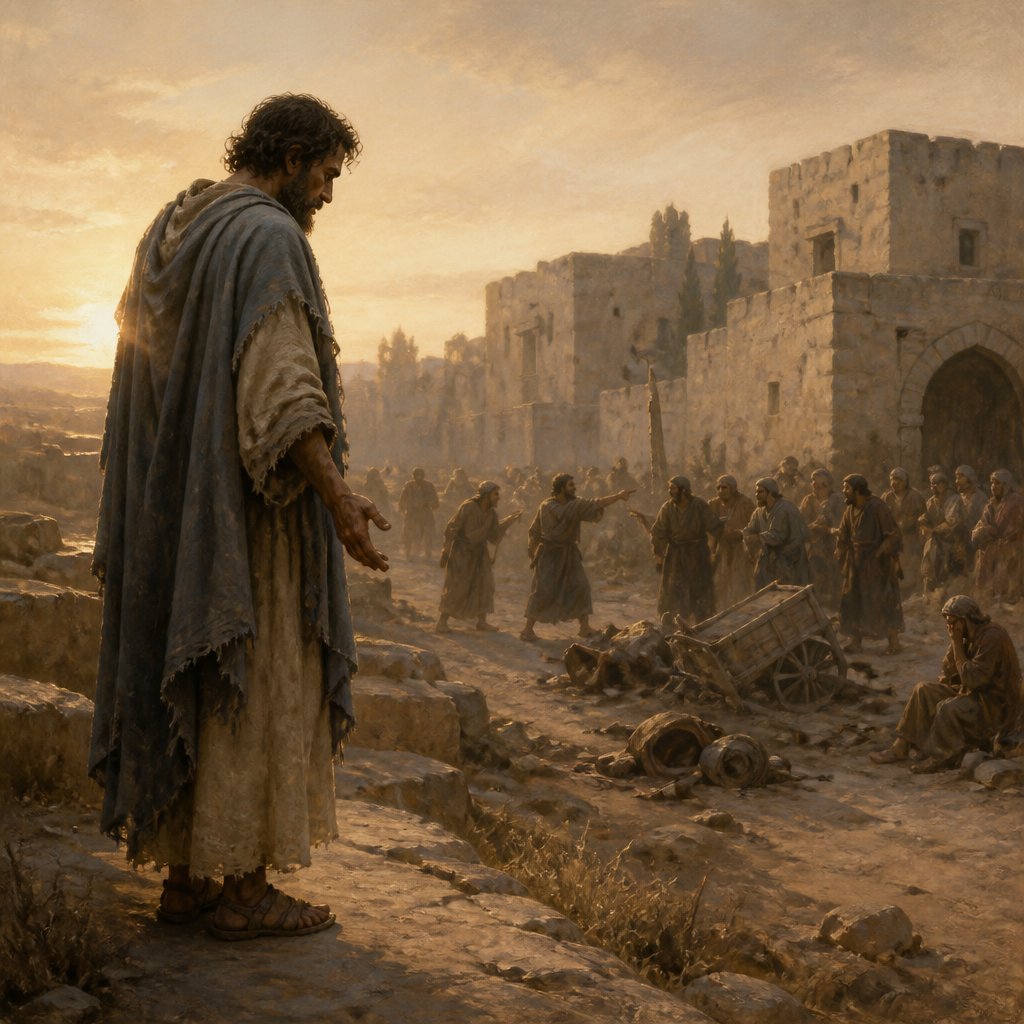
In the book of Habakkuk, we encounter a profound moment in the life of the prophet, encapsulated succinctly yet powerfully in Habakkuk 1:3, which states, "Why dost thou shew me iniquity, and cause me to behold grievance? for spoiling and violence are before me: and there are that raise up strife and contention." This verse leads us into the heart of a struggle many believers face—the problem of evil and suffering in a world created by a good God.
Habakkuk's lament stems from a deep anguish over the sinfulness that surrounds him. He expresses his confusion and frustration on a personal level as he observes the moral decay and violence present in Israel. His cries are not just to address the circumstances; they reach broader themes of justice, righteousness, and divine oversight. Here, the prophet’s words echo the sentiments of many today. How many of us have looked around at the world—from household issues to societal unrest—and echoed in our hearts a similar question? “Why God? Why must I see such wickedness and hurt?”
This introspection reveals something profoundly human: a desire for justice and a yearning for God to act in the midst of chaos. Like Habakkuk, we often find ourselves burdened by what we see—injustice in our communities, violence that shatters peace, and strife that displaces joy. This experience fosters in us feelings of helplessness but also points towards a greater understanding.
God's response, which unfolds in later verses, reminds us that the seemingly unchecked iniquities of the world are seen by Him. He assures Habakkuk that He is not indifferent to these matters—even when it feels like He is silent. In essence, God invites us to trust Him, urging us to lift our gaze from the brokenness of the world and to align our vision with His divine perspective.
In examining why the prophet feels the need to articulate such a lament, we uncover that it is crucial to address our fears and doubts rather than suppress them. Like Habakkuk, acknowledging the reality of our situation is the first step towards engaging with God’s truth. Denying our anger or sorrow can lead to a deeper despair, whereas voicing our struggles invites us into a dialogue with God.
Additionally, strife and contention, as Habakkuk points out, are often manifestations of deeper societal issues. The sin of individuals contributes to collective sin. When people ‘raise up strife,’ they ignore the teachings of God, manifesting a broken relationship with Him and with one another. As followers of Christ, we are called to be agents of peace and reconciliation, mirroring the hope that is found in the depths of God’s character.
As we meditate on this verse, let us also seek the steps to actively respond to the iniquities we observe around us. We are not called to be passive spectators but to engage in the transformative work of the Gospel. As our eyes are opened to the issues that cause us sorrow, let our hearts be moved to compassion, prompting us to support those who are oppressed and advocate for justice. The challenge lies in taking our grief and turning it into action, fuelling a desire for change that aligns with God’s will.
In conclusion, Habakkuk 1:3 serves as an invitation to acknowledge the complexities of life in a fallen world while trusting wholeheartedly in a sovereign God, who sees and permits the unfolding of history according to His divine plan. It reassures us that our questions are valid but encourages us to walk forward in faith—embracing the mystery of His ways, praying for wisdom, and working towards the restoration of peace and righteousness in our spheres of influence. Let us, therefore, be both sensitive to our own grief and responsive to God’s calling imbued with hope in our communities.
Get our apps


Artwork for Habakkuk 1:3

Habakkuk 1:3 - "Why dost thou shew me iniquity, and cause me to behold grievance? for spoiling and violence are before me: and there are that raise up strife and contention."
"Why dost thou shew me iniquity, and cause me to behold grievance? for spoiling and violence are before me: and there are that raise up strife and contention." - Habakkuk 1:3

Habakkuk 3:1 - "A prayer of Habakkuk the prophet upon Shigionoth."

"A prayer of Habakkuk the prophet upon Shigionoth." - Habakkuk 3:1

"A prayer of Habakkuk the prophet upon Shigionoth." - Habakkuk 3:1

Habakkuk 2:1-3

Habakkuk 1:1 - "The burden which Habakkuk the prophet did see."

"The burden which Habakkuk the prophet did see." - Habakkuk 1:1
![For the vision [is] yet for an appointed time, but at the end it shall speak, and not lie: though it tarry, wait for it; because it will surely come, it will not tarry.
Habakkuk 2:3
https://bible.art/verse/habakkuk-2:3](https://media.bible.art/d8f47f50-dcfd-4ed4-802f-e18a941d0e1c-thumbnail.jpg)
For the vision [is] yet for an appointed time, but at the end it shall speak, and not lie: though it tarry, wait for it; because it will surely come, it will not tarry. Habakkuk 2:3 https://bible.art/verse/habakkuk-2:3

Habakkuk 3:18 - "Yet I will rejoice in the LORD, I will joy in the God of my salvation."

Habakkuk 3:12 - "Thou didst march through the land in indignation, thou didst thresh the heathen in anger."

"God came from Teman, and the Holy One from mount Paran. Selah. His glory covered the heavens, and the earth was full of his praise." - Habakkuk 3:3

Habakkuk 3:7 - "I saw the tents of Cushan in affliction: and the curtains of the land of Midian did tremble."

Habakkuk 3:5 - "Before him went the pestilence, and burning coals went forth at his feet."

Habakkuk 3:11 - "The sun and moon stood still in their habitation: at the light of thine arrows they went, and at the shining of thy glittering spear."

Habakkuk 3:15 - "Thou didst walk through the sea with thine horses, through the heap of great waters."

Habakkuk 1:7 - "They are terrible and dreadful: their judgment and their dignity shall proceed of themselves."

Habakkuk 3:3 - "God came from Teman, and the Holy One from mount Paran. Selah. His glory covered the heavens, and the earth was full of his praise."

Habakkuk 2:3 - "For the vision is yet for an appointed time, but at the end it shall speak, and not lie: though it tarry, wait for it; because it will surely come, it will not tarry."

Habakkuk 3:4 - "And his brightness was as the light; he had horns coming out of his hand: and there was the hiding of his power."
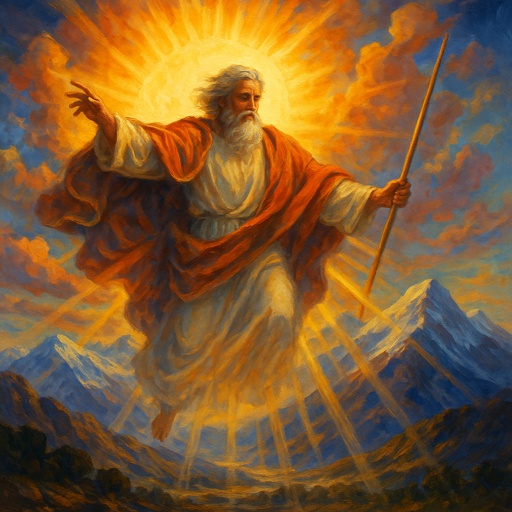
"God came from Teman, and the Holy One from mount Paran. Selah. His glory covered the heavens, and the earth was full of his praise." - Habakkuk 3:3

Habakkuk 3:10 - "The mountains saw thee, and they trembled: the overflowing of the water passed by: the deep uttered his voice, and lifted up his hands on high."

Habakkuk 3:9 - "Thy bow was made quite naked, according to the oaths of the tribes, even thy word. Selah. Thou didst cleave the earth with rivers."

Habakkuk 1:17 - "Shall they therefore empty their net, and not spare continually to slay the nations?"

habakkuk 3:15 You walked through the sea with Your horses, Through the heap of great waters.

"The sun and moon stood still in their habitation: at the light of thine arrows they went, and at the shining of thy glittering spear." - Habakkuk 3:11

"The sun and moon stood still in their habitation: at the light of thine arrows they went, and at the shining of thy glittering spear." - Habakkuk 3:11

Habakkuk 1:14 - "And makest men as the fishes of the sea, as the creeping things, that have no ruler over them?"
![For the vision [is] yet for an appointed time, but at the end it shall speak, and not lie: though it tarry, wait for it; because it will surely come, it will not tarry.
Habakkuk 2:3](https://media.bible.art/8c6c47fe-57af-44d1-9c6f-b7f140aa16bb-thumbnail.jpg)
For the vision [is] yet for an appointed time, but at the end it shall speak, and not lie: though it tarry, wait for it; because it will surely come, it will not tarry. Habakkuk 2:3

Habakkuk 3:14 - "Thou didst strike through with his staves the head of his villages: they came out as a whirlwind to scatter me: their rejoicing was as to devour the poor secretly."