The Limits of Holiness: Understanding Haggai 2:12
“If one bear holy flesh in the skirt of his garment, and with his skirt do touch bread, or pottage, or wine, or oil, or any meat, shall it be holy? And the priests answered and said, No.” — Haggai 2:12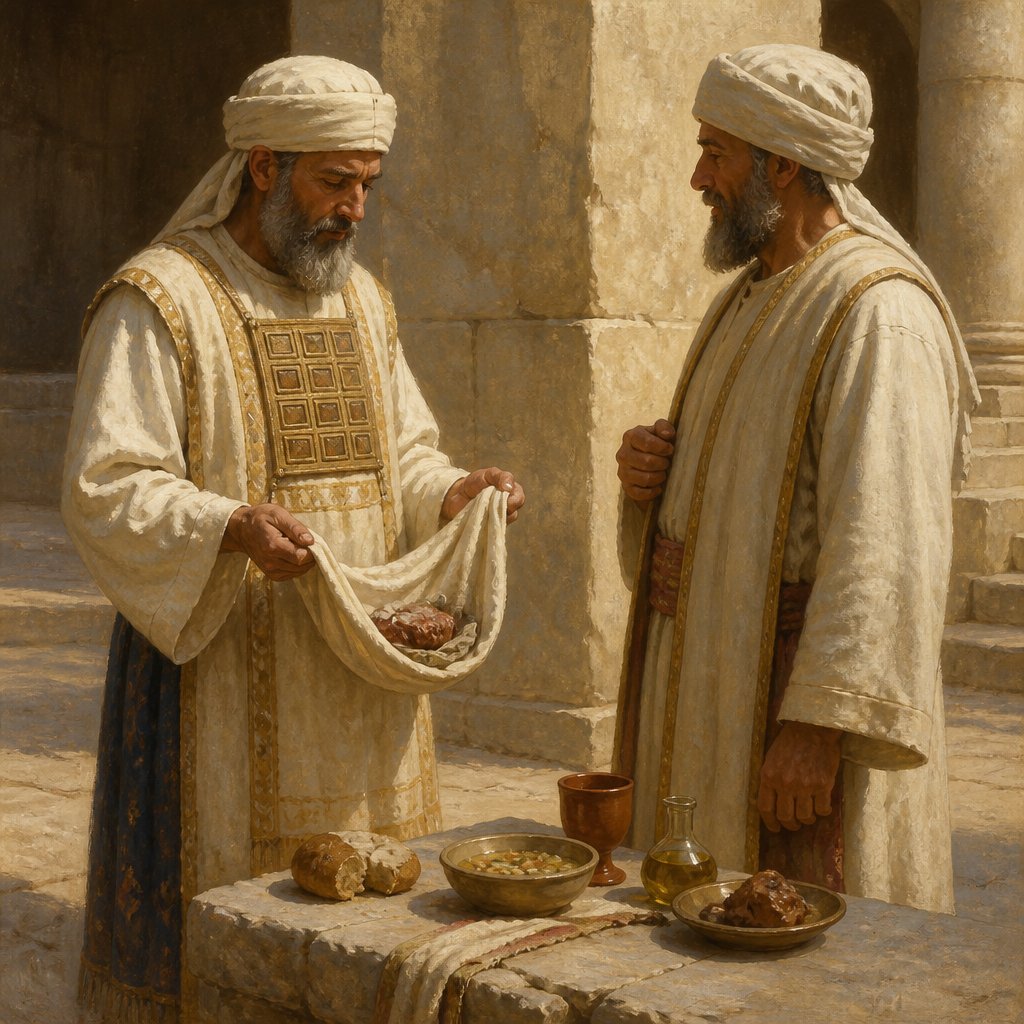
In Haggai 2:12, the prophet asks a thought-provoking question: "If one bear holy flesh in the skirt of his garment, and with his skirt do touch bread, or pottage, or wine, or oil, or any meat, shall it be holy? And the priests answered and said, No." This profound exchange between Haggai and the priests unveils deep truths about holiness, influence, and the nature of our relationship with God.
At first glance, it appears that this verse is merely discussing a ritualistic or ceremonial issue, analyzing whether or not holiness can be transmitted in the way that sin or impurity can be. The answer given by the priests serves to reinforce the reality that holiness is not something that can be passed inadvertently. This leads us to a vital understanding: holiness must be actively sought after, not assumed or inherited.
In biblical times, the concept of 'holy flesh' referred to meat that had been set apart for God’s purposes, often an offering or sacrifice made in accordance with the covenant between God and His people. Haggai is illustrating that merely touching holy things does not make other things holy. This echoes the notion found throughout the Scriptures that one's state of holiness is not determined by physical proximity to ritual objects or sacred spaces, but rather by the inner condition of one’s heart and their relationship with God.
This prompts us to reflect on our own lives. In our desires to embody holiness and righteousness, how often do we uncritically assume that our presence or participation in Christian rituals automatically sanctifies our actions and our surroundings? It is easy to fall into the trap of thinking that being in a holy environment – like a church – or participating in sacred practices guarantees a holy outcome. However, much like the priests’ answer, we must confront the reality that proximity to holiness does not equate to holiness itself.
As we delve deeper into the implications of Haggai 2:12, we are reminded that our spiritual influence is a reciprocal relationship. Just as holiness cannot be transmitted passively, neither can spiritual contamination. The next verse, Haggai 2:13, tells us, "Then said Haggai, If one that is unclean by a dead body touch any of these, shall it be unclean? And the priests answered and said, It shall be unclean." This juxtaposition shows that while holiness cannot be passed accidentally, unholiness certainly can.
In our lives, we must be vigilant about the influences we allow in. The people we associate with, the media we consume, and the thoughts we entertain can all affect our spiritual state. In the New Testament context, this principle is echoed in 1 Corinthians 15:33, which reminds us that "evil communications corrupt good manners." Just as uncleanliness spreads, so too does our own pursuit of holiness require intentionality.
For us as Christians, the call to holiness is an active one. Peter exhorts us in his first letter to be holy because God Himself is holy (1 Peter 1:16). This is not a passive affirmation but a call to action. To pursue holiness means we must engage in the practices of prayer, study, community, and service, continually seeking to align our lives with the character of Christ.
Moreover, we must remember that holiness doesn’t hinge on ritual alone, but on relationship. It is through a personal relationship with Christ that we find transformation, enabling us to move progressively toward holiness. This means that we must examine our hearts, asking whether we are investing in the things that lead to godliness. Are the items and activities in our lives reflective of our commitment to Christ?
As we reflect on Haggai 2:12, let us approach the idea of holiness with renewed diligence. Instead of merely touching the holy, let us seek to embody it. Let’s cultivate a life that is deliberately aligned with God’s spirit, recognizing that true holiness is a matter of the heart. It requires an ongoing relationship, sincere repentance, and a determined pursuit of Christ-likeness, honoring the profound truth that we are called not just to be near holiness, but to become holy ourselves.
Get our apps


Artwork for Haggai 2:12

Haggai 2:12 - "If one bear holy flesh in the skirt of his garment, and with his skirt do touch bread, or pottage, or wine, or oil, or any meat, shall it be holy? And the priests answered and said, No."
"If one bear holy flesh in the skirt of his garment, and with his skirt do touch bread, or pottage, or wine, or oil, or any meat, shall it be holy? And the priests answered and said, No." - Haggai 2:12

Haggai 2:20 - "¶ And again the word of the LORD came unto Haggai in the four and twentieth day of the month, saying,"

Haggai 2:1 - "In the seventh month, in the one and twentieth day of the month, came the word of the LORD by the prophet Haggai, saying,"

Haggai 2:14 - "Then answered Haggai, and said, So is this people, and so is this nation before me, saith the LORD; and so is every work of their hands; and that which they offer there is unclean."

Haggai 2:10 - "¶ In the four and twentieth day of the ninth month, in the second year of Darius, came the word of the LORD by Haggai the prophet, saying,"

Haggai 2:13 - "Then said Haggai, If one that is unclean by a dead body touch any of these, shall it be unclean? And the priests answered and said, It shall be unclean."

Haggai 2:9

Haggai 1:12 - "¶ Then Zerubbabel the son of Shealtiel, and Joshua the son of Josedech, the high priest, with all the remnant of the people, obeyed the voice of the LORD their God, and the words of Haggai the prophet, as the LORD their God had sent him, and the people did fear before the LORD."
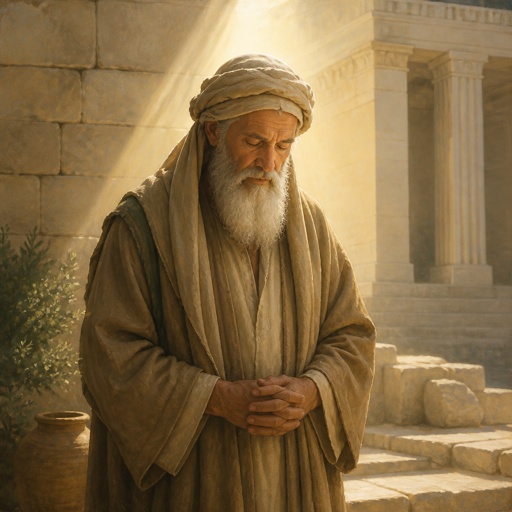
"¶ And again the word of the LORD came unto Haggai in the four and twentieth day of the month, saying," - Haggai 2:20

Haggai 2:8 - "The silver is mine, and the gold is mine, saith the LORD of hosts."

Haggai 2:11 - "Thus saith the LORD of hosts; Ask now the priests concerning the law, saying,"

Haggai 2:2 - "Speak now to Zerubbabel the son of Shealtiel, governor of Judah, and to Joshua the son of Josedech, the high priest, and to the residue of the people, saying,"
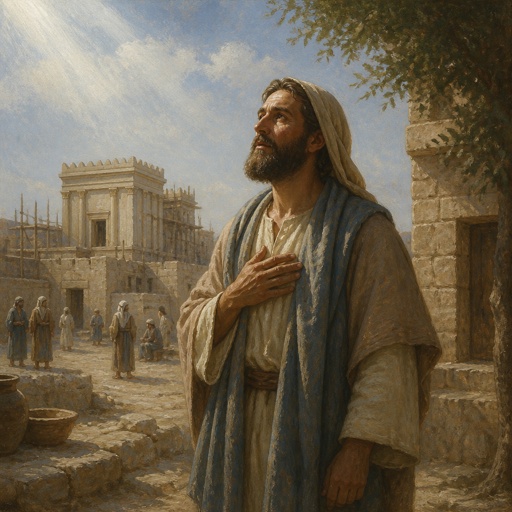
"In the seventh month, in the one and twentieth day of the month, came the word of the LORD by the prophet Haggai, saying," - Haggai 2:1

Haggai 2:14 Then Haggai answered and said, “ ‘So is this people, and so is this nation before Me,’ says the LORD, ‘and so is every work of their hands; and what they offer there is unclean.

Haggai 2:14 Then Haggai answered and said, “ ‘So is this people, and so is this nation before Me,’ says the LORD, ‘and so is every work of their hands; and what they offer there is unclean.
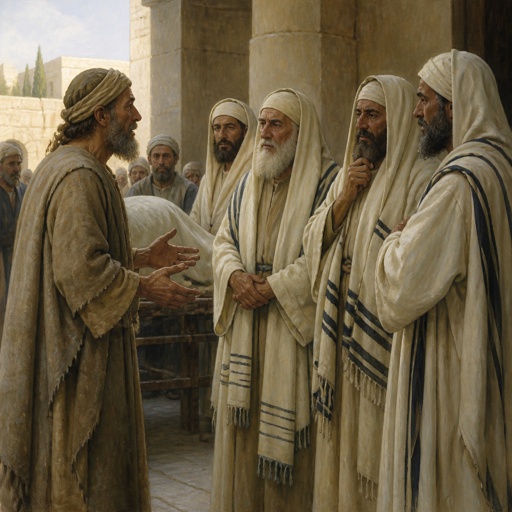
"Then said Haggai, If one that is unclean by a dead body touch any of these, shall it be unclean? And the priests answered and said, It shall be unclean." - Haggai 2:13

Haggai 2:21 - "Speak to Zerubbabel, governor of Judah, saying, I will shake the heavens and the earth;"
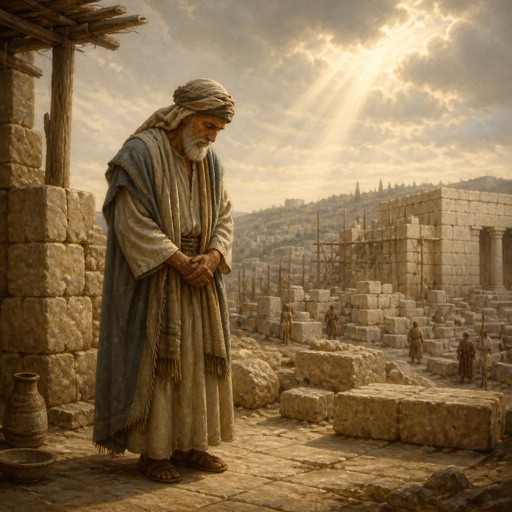
"¶ In the four and twentieth day of the ninth month, in the second year of Darius, came the word of the LORD by Haggai the prophet, saying," - Haggai 2:10
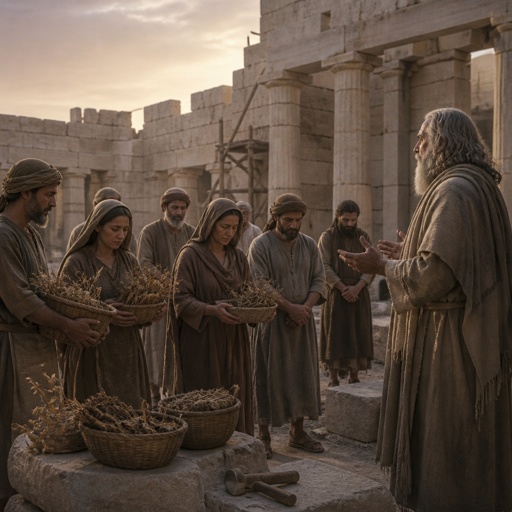
"Then answered Haggai, and said, So is this people, and so is this nation before me, saith the LORD; and so is every work of their hands; and that which they offer there is unclean." - Haggai 2:14

Haggai 2:17 - "I smote you with blasting and with mildew and with hail in all the labours of your hands; yet ye turned not to me, saith the LORD."

Haggai 1:2 - "Thus speaketh the LORD of hosts, saying, This people say, The time is not come, the time that the LORD'S house should be built."

Haggai 2:3 - "Who is left among you that saw this house in her first glory? and how do ye see it now? is it not in your eyes in comparison of it as nothing?"

Haggai 2:5 - "According to the word that I covenanted with you when ye came out of Egypt, so my spirit remaineth among you: fear ye not."

Haggai 2:6 - "For thus saith the LORD of hosts; Yet once, it is a little while, and I will shake the heavens, and the earth, and the sea, and the dry land;"

Haggai 2:6-7 – "This is what the Lord Almighty says: 'In a little while I will once more shake the heavens and the earth, the sea and the dry land.'"

Haggai 2:18 - "Consider now from this day and upward, from the four and twentieth day of the ninth month, even from the day that the foundation of the LORD'S temple was laid, consider it."
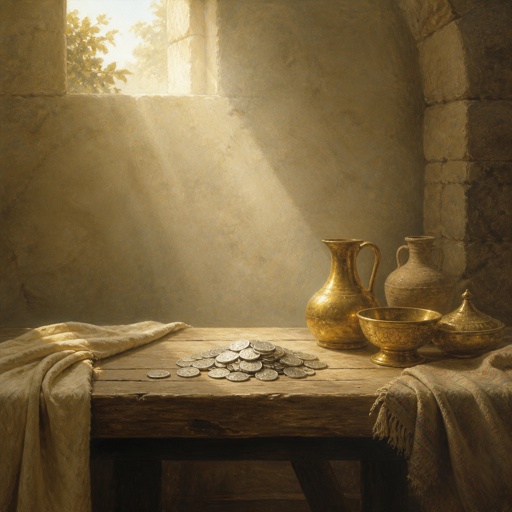
"The silver is mine, and the gold is mine, saith the LORD of hosts." - Haggai 2:8
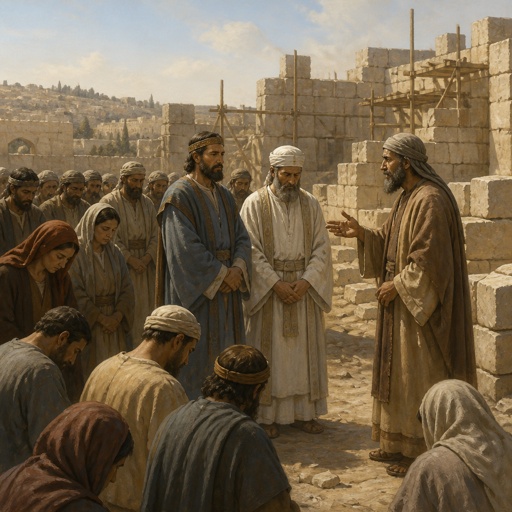
"¶ Then Zerubbabel the son of Shealtiel, and Joshua the son of Josedech, the high priest, with all the remnant of the people, obeyed the voice of the LORD their God, and the words of Haggai the prophet, as the LORD their God had sent him, and the people did fear before the LORD." - Haggai 1:12

Haggai 2:15 - "And now, I pray you, consider from this day and upward, from before a stone was laid upon a stone in the temple of the LORD:"