Compassion Through Infirmity: Understanding Hebrews 5:2
“Who can have compassion on the ignorant, and on them that are out of the way; for that he himself also is compassed with infirmity.” — Hebrews 5:2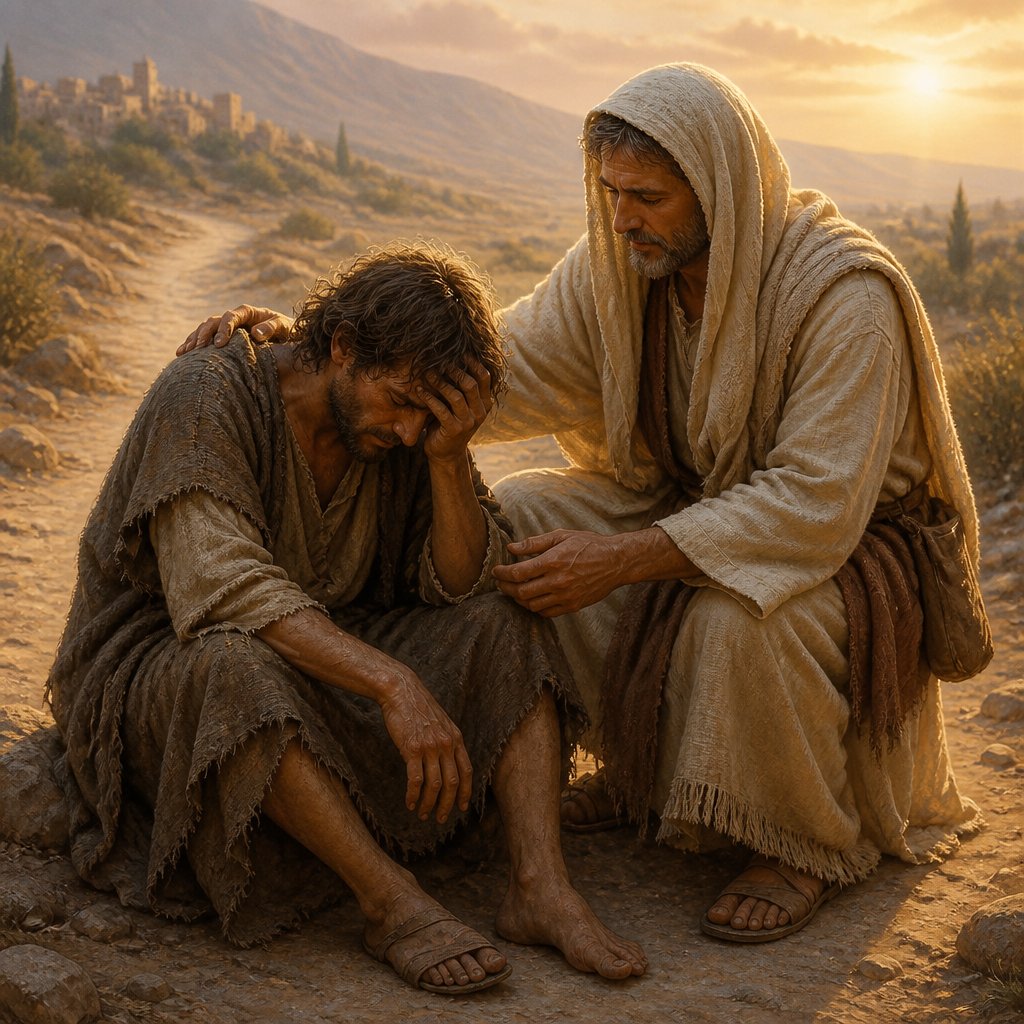
The verse from Hebrews 5:2 (KJV) states, "Who can have compassion on the ignorant, and on them that are out of the way; for that he himself also is compassed with infirmity." This scripture encapsulates a profound truth about the nature of compassion, especially as it relates to our own human condition.
To understand the depth of this verse, we must first consider the context in which it was written. The author of Hebrews is addressing the nature of the priesthood, emphasizing that a priest should have the ability to empathize with those he serves. The phrase "compassed with infirmity" indicates that a priest, or anyone in a position of leadership, is not alien to weakness but is rather acquainted with it. The author is echoing the heart of God towards humanity, demonstrating how God’s compassion is rooted in His understanding of our struggles.
**Understanding Compassion**
Compassion is more than sympathy; it is a deep awareness of the suffering of another coupled with the desire to alleviate that suffering. In this light, it becomes clear why the author refers to those who are "ignorant" or "out of the way." Ignorance may not imply malice but a lack of understanding or knowledge. Likewise, those who are “out of the way” may have strayed from the path of righteousness, perhaps due to circumstances or temptations beyond their control. Compassionate leaders are those who see the struggle of others through the lens of their shared frailty.
**The Role of Infirmity**
This verse makes a profound declaration about human experience: all people, including leaders and teachers, are fallible. The term "infirmity" can be understood in various ways—physical, emotional, spiritual, or relational. We all carry burdens; this shared condition of vulnerability is a critical element in developing genuine compassion. It is through our own experiences of weakness, and sometimes failure, that we can relate to the challenges and hardships that others face. Whether it be the overwhelming exhaustion of a single parent, the despair of addiction, or the heartache of loss, understanding our infirmities helps us to minister to others effectively.
**Reflections of Jesus**
When contemplating this verse, the ultimate example of compassion is found in Jesus Christ. Throughout His ministry, He consistently demonstrated a tender heart towards the weary and lost. Matthew 11:28 encourages us to come to Him when we are burdened, for He offers rest. Instead of condemnation, Jesus extended grace. He taught that such openness to people’s faults does not come from a place of judgment but rather understanding borne of experience.
Hebrews 5:2 reminds us of our gracious High Priest who, as told in later verses, was tempted in all ways yet without sin (Hebrews 4:15). His compassion extended to those who were ignorant and wayward because He could sympathize with their struggles. As believers, we are called to follow this example, to become vessels of grace and compassion.
**Application in Daily Life**
How, then, can we apply this verse to our lives? When we encounter ignorance or someone who seems lost in sin, let’s take a moment to remember that we, too, have walked in dark places. Instead of responding with frustration or judgment, let us strive to respond with the same compassion we have received. Consider the individuals in your life currently facing challenges; whether a colleague struggling with work, a family member choosing a path contrary to God’s ways, or a friend trapped in addiction, approach them with empathy. Your understanding of your own battle with infirmity can become a bridge of hope for them.
In closing, let us embrace our human condition, understanding that while we may be compassed with infirmities, God equips us with compassion to reach out to those in need. This is the heart of the Gospel: to love, serve, and uplift one another in times of trial, reflecting the love of Christ in all situations.
Get our apps


Artwork for Hebrews 5:2

Hebrews 5:2 - "Who can have compassion on the ignorant, and on them that are out of the way; for that he himself also is compassed with infirmity."
"Who can have compassion on the ignorant, and on them that are out of the way; for that he himself also is compassed with infirmity." - Hebrews 5:2

Hebrews 2:5 - "For unto the angels hath he not put in subjection the world to come, whereof we speak."

Hebrews 8:5

John 5:2 - "Now there is at Jerusalem by the sheep market a pool, which is called in the Hebrew tongue Bethesda, having five porches."

Hebrews 8:1-5

Hebrews 10:5-10

Hebrews 10:5-10

"For unto the angels hath he not put in subjection the world to come, whereof we speak." - Hebrews 2:5

Hebrews 4:5 - "And in this place again, If they shall enter into my rest."

Hebrews 5:10 - "Called of God an high priest after the order of Melchisedec."

Hebrews 6:5 - "And have tasted the good word of God, and the powers of the world to come,"

Philippians 3:5 - "Circumcised the eighth day, of the stock of Israel, of the tribe of Benjamin, an Hebrew of the Hebrews; as touching the law, a Pharisee;"

Hebrews 5:13 - "For every one that useth milk is unskilful in the word of righteousness: for he is a babe."

Hebrews 5:4 - "And no man taketh this honour unto himself, but he that is called of God, as was Aaron."

Hebrews 5:3 - "And by reason hereof he ought, as for the people, so also for himself, to offer for sins."

Hebrews 9:5 - "And over it the cherubims of glory shadowing the mercyseat; of which we cannot now speak particularly."

Hebrews 5:5 - "So also Christ glorified not himself to be made an high priest; but he that said unto him, Thou art my Son, to day have I begotten thee."

Hebrews 5:8 - "Though he were a Son, yet learned he obedience by the things which he suffered;"

Hebrews 5:6 - "As he saith also in another place, Thou art a priest for ever after the order of Melchisedec."

Hebrews 5:11 - "Of whom we have many things to say, and hard to be uttered, seeing ye are dull of hearing."

Hebrews 11:2 - "For by it the elders obtained a good report."

Hebrews 5:9 - "And being made perfect, he became the author of eternal salvation unto all them that obey him;"

Hebrews 2:2 - "For if the word spoken by angels was stedfast, and every transgression and disobedience received a just recompence of reward;"

Hebrews 3:5 - "And Moses verily was faithful in all his house, as a servant, for a testimony of those things which were to be spoken after;"

"And in this place again, If they shall enter into my rest." - Hebrews 4:5

Hebrews 10:5 - "Wherefore when he cometh into the world, he saith, Sacrifice and offering thou wouldest not, but a body hast thou prepared me:"

"Now there is at Jerusalem by the sheep market a pool, which is called in the Hebrew tongue Bethesda, having five porches." - John 5:2

"Called of God an high priest after the order of Melchisedec." - Hebrews 5:10

Hebrews 6:2 - "Of the doctrine of baptisms, and of laying on of hands, and of resurrection of the dead, and of eternal judgment."