The Sound of Urgency: A Call to Repentance
“Blow ye the cornet in Gibeah, and the trumpet in Ramah: cry aloud at Beth-aven, after thee, O Benjamin.” — Hosea 5:8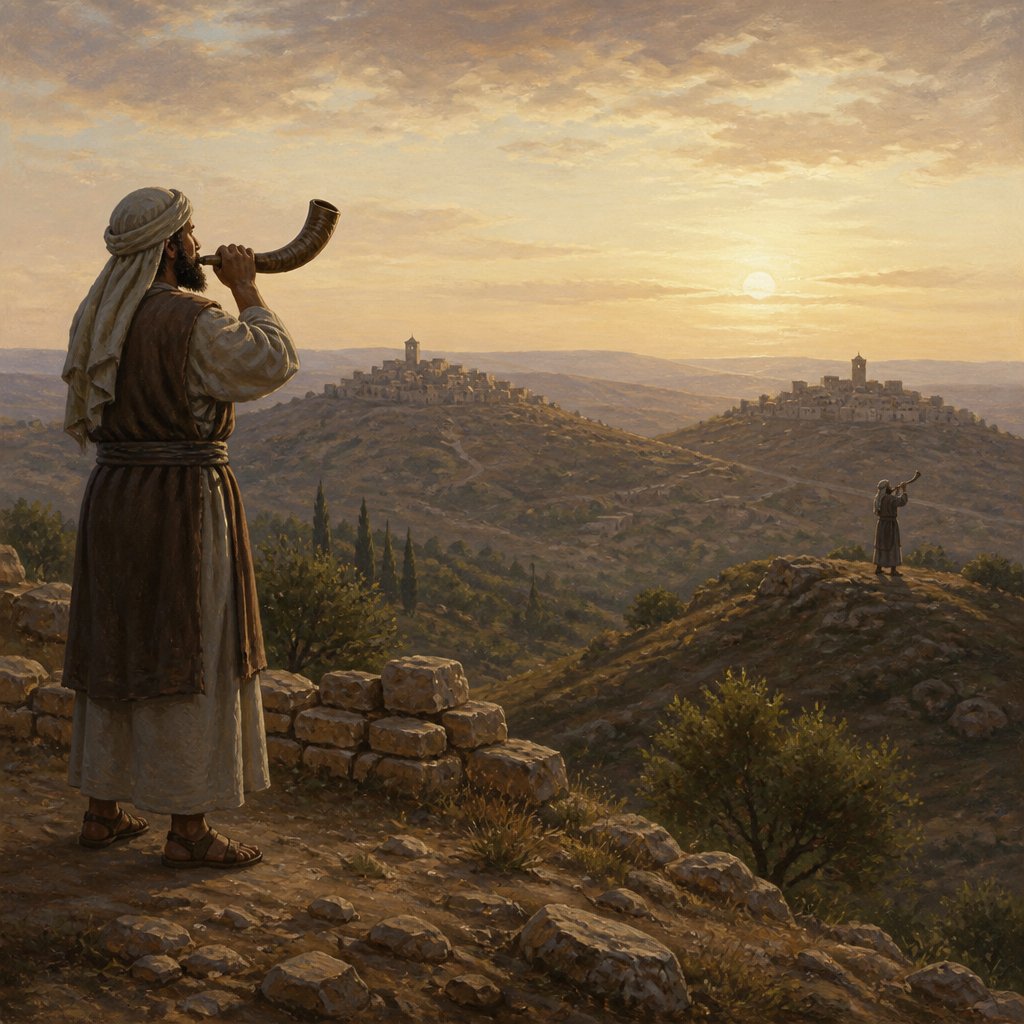
In the book of Hosea, we encounter a heavy blend of warning and mercy directed to the people of Israel. Hosea 5:8 reads, "Blow ye the cornet in Gibeah, and the trumpet in Ramah: cry aloud at Beth-aven, after thee, O Benjamin" (KJV). This verse encapsulates a clarion call to the nation, signifying more than mere sound; it heralds a desperate plea for attention and repentance from a people teetering on the edge of destruction due to their unfaithfulness to God.
To fully appreciate the weight of this scripture, we must first understand the historical and spiritual context. Gibeah and Ramah were significant cities in the territory of Benjamin. They were meant to be fortified regions, places of strength and stability, yet they became symbols of apostasy and corruption. The call to blow the cornet and trumpet is not just a traditional announcement; it represents an urgent summons to heed God's message and direction—an alarm meant to awaken the spiritually lethargic.
A cornet (or horn) and trumpet have long been instruments of proclamation, celebration, and warning. Historically, these instruments were used in Israel to signal important events, whether the mobilization of armies or the summons for divine observances and gatherings. Here, the sound signifies impending judgment and a call for the people to rally—not against an external enemy but internally, to confront their own unfaithfulness.
"Cry aloud at Beth-aven, after thee, O Benjamin" invites us to dig deeper into God's heart for His people. The term 'Beth-aven' translates to 'House of Vanity,' a stark contrast to its original designation, which means 'House of God.' This name change reflects the moral decay of the people. God’s warning through Hosea serves as a prophetic indictment, denouncing the empty rituals and idolatrous practices that had overtaken the spiritual landscape of Israel. It’s as if God is saying, ‘You have replaced me with vanity; let the sound be heard that confronts this emptiness.’
To hear the trumpet's call in our context today, we must reflect on the significance of what it means to be called out from our own ‘Beth-aven’—the vanity and distractions that can capture our hearts, akin to the spiritual waywardness that Israel experienced. As Christians, we are continually challenged to examine the idols in our life: ambition, comfort, the pursuit of wealth, or any number of distractions that lead us away from God. How often do we need a spiritual ‘horn’ blaring in our lives, a reminder that we are called to a higher purpose? It resonates deeply when we recognize that God desires genuine relationship over religious performance.
This call to action is not only for the ancient Israelites but particularly relevant for us today. The verse is a reminder of the grace of God that urges His people back to Himself. When we hear the cornet blow, we are invited to repent and turn around—to seek the Lord afresh and allow His Spirit to revive our hearts. In doing so, we echo the sentiments of 2 Chronicles 7:14: "If my people, which are called by my name, shall humble themselves, and pray, and seek my face, and turn from their wicked ways; then will I hear from heaven, and will forgive their sin, and will heal their land."
Consider this: What "sounds of urgency" is God blowing in your life today? Where is He calling you back from the distractions of modernity that have led to spiritual emptiness? Listen for the trumpet, hear the cry! Let us not remain comfortable in our complacency but respond with repentance, knowing that as we turn back to God, He promises renewal and restoration.
Thus, let us allow the sound of the cornet and trumpet to resonate in our hearts. May we embrace this moment of divine urgency, acknowledging our vulnerabilities, and turning to our loving Savior who is always longing to restore us.
Get our apps


Artwork for Hosea 5:8

Hosea 5:8 - "Blow ye the cornet in Gibeah, and the trumpet in Ramah: cry aloud at Beth-aven, after thee, O Benjamin."
"Blow ye the cornet in Gibeah, and the trumpet in Ramah: cry aloud at Beth-aven, after thee, O Benjamin." - Hosea 5:8

Hosea 8:5 - "¶ Thy calf, O Samaria, hath cast thee off; mine anger is kindled against them: how long will it be ere they attain to innocency?"

Hosea 3:1-5

Hosea 8:8 - "Israel is swallowed up: now shall they be among the Gentiles as a vessel wherein is no pleasure."

Hosea 12:5 - "Even the LORD God of hosts; the LORD is his memorial."

Hosea 6:8 - "Gilead is a city of them that work iniquity, and is polluted with blood."

Hosea 1:2-11;2:14;3:5

Hosea 5:12 - "Therefore will I be unto Ephraim as a moth, and to the house of Judah as rottenness."

Hosea 13:5 - "¶ I did know thee in the wilderness, in the land of great drought."

Hosea 14:5-6 – "I will be like the dew to Israel; he will blossom like a lily."

Hosea 4:8 - "They eat up the sin of my people, and they set their heart on their iniquity."

Hosea 9:5 - "What will ye do in the solemn day, and in the day of the feast of the LORD?"

Hosea 8:3 - "Israel hath cast off the thing that is good: the enemy shall pursue him."

Hosea 7:8 - "Ephraim, he hath mixed himself among the people; Ephraim is a cake not turned."
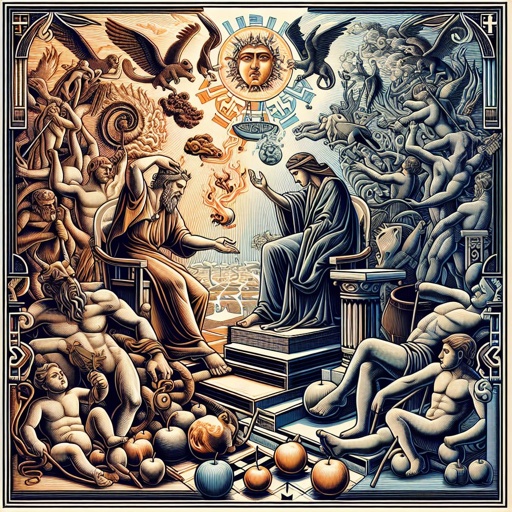
Hosea 5:5 - "And the pride of Israel doth testify to his face: therefore shall Israel and Ephraim fall in their iniquity; Judah also shall fall with them."

Hosea 1:5 - "And it shall come to pass at that day, that I will break the bow of Israel in the valley of Jezreel."

Hosea 1:8 - "¶ Now when she had weaned Lo-ruhamah, she conceived, and bare a son."

Hosea 8:2 - "Israel shall cry unto me, My God, we know thee."

Hosea 5:11 - "Ephraim is oppressed and broken in judgment, because he willingly walked after the commandment."

Hosea 5:2 - "And the revolters are profound to make slaughter, though I have been a rebuker of them all."

Hosea 8:11 - "Because Ephraim hath made many altars to sin, altars shall be unto him to sin."

Hosea 8:6 - "For from Israel was it also: the workman made it; therefore it is not God: but the calf of Samaria shall be broken in pieces."

Hosea 8:9 - "For they are gone up to Assyria, a wild ass alone by himself: Ephraim hath hired lovers."

Hosea 8:12 - "I have written to him the great things of my law, but they were counted as a strange thing."

Hosea 11:5 - "¶ He shall not return into the land of Egypt, but the Assyrian shall be his king, because they refused to return."
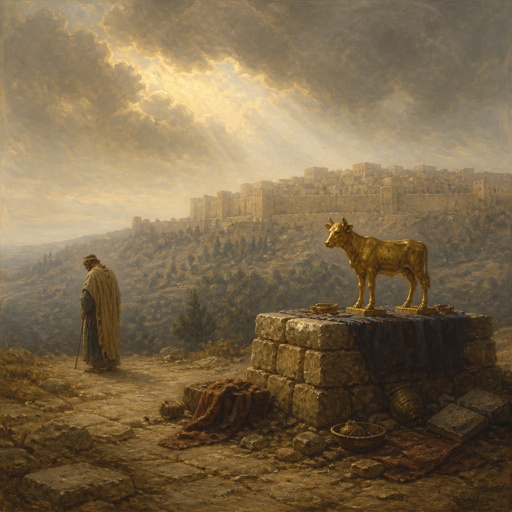
"¶ Thy calf, O Samaria, hath cast thee off; mine anger is kindled against them: how long will it be ere they attain to innocency?" - Hosea 8:5

Hosea 9:8 - "The watchman of Ephraim was with my God: but the prophet is a snare of a fowler in all his ways, and hatred in the house of his God."

Hosea 14:5 - "I will be as the dew unto Israel: he shall grow as the lily, and cast forth his roots as Lebanon."
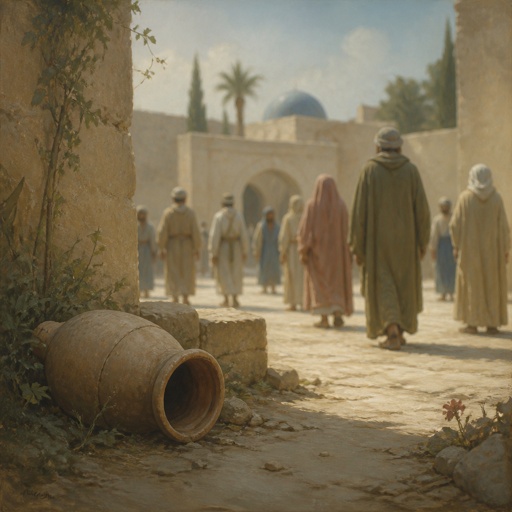
"Israel is swallowed up: now shall they be among the Gentiles as a vessel wherein is no pleasure." - Hosea 8:8