Healing the Land: Recognizing Our Wounds
“From the sole of the foot even unto the head there is no soundness in it; but wounds, and bruises, and putrifying sores: they have not been closed, neither bound up, neither mollified with ointment.” — Isaiah 1:6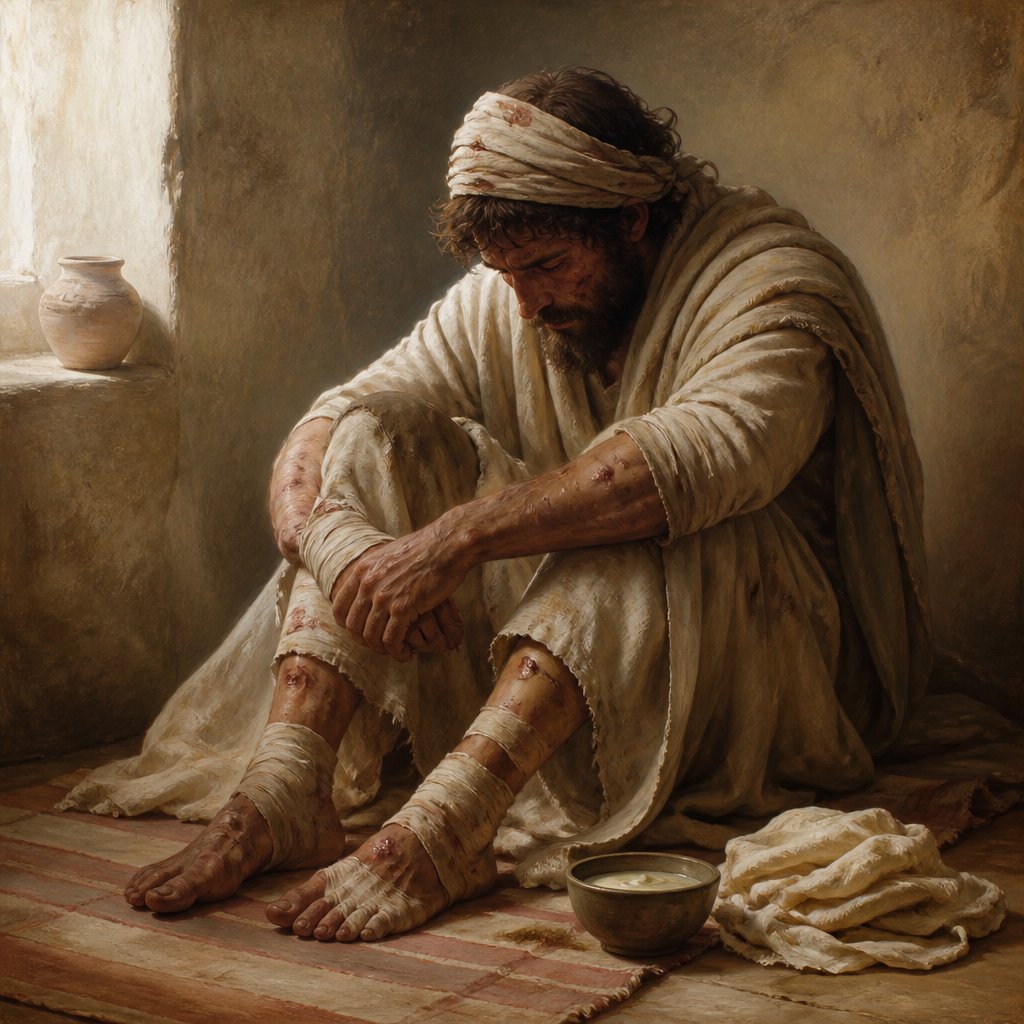
When we turn our attention to Isaiah 1:6, which states, "From the sole of the foot even unto the head there is no soundness in it; but wounds, and bruises, and putrifying sores: they have not been closed, neither bound up, neither mollified with ointment," we enter into a somber yet critical examination of the condition of both the people of Israel and our own hearts.
The Prophet Isaiah speaks poignantly about the state of a nation, rich in history and divine heritage, yet suffering from deep spiritual and physical wounds. This verse grips us with its vivid imagery; it portrays a body that is morbidly afflicted, with every part suffering from various ailments. The language Isaiah employs is powerful—"no soundness," "wounds," "bruises," "putrifying sores." It’s a desperate image of a people broken, yet oblivious or unwilling to seek healing.
As we reflect upon this verse, it beckons us to probe the condition of our own souls in a world that's increasingly marked by moral decay and disconnection from God. Just like the Israelites, we tend to accumulate wounds—those hurtful experiences that pierce our hearts, bruises from betrayals or disappointments, and putrefying sores that fester in the absence of healing grace. Humanity’s collective pain serves as a stark reminder that we are not as whole as we might portray to the world.
The scale of the affliction in Isaiah’s imagery extends from the sole of the foot to the head—there is no part of the body unscathed. The absence of soundness indicates a critical lack of health and harmony. In our spiritual life, we often experience this imbalance; certain areas might be flourishing, while others are deeply wounded, neglected, and in desperate need of attention. This can manifest in various ways: a hardened heart due to past trauma, an anxious mind preoccupied with insecurities, or even weary spirits shaped by burdens too heavy to bear.
Isaiah’s observation, however, does not stop at the diagnosis of wounds and bruises; it emphasizes an alarming reality: “they have not been closed, neither bound up, neither mollified with ointment.” Here lies the crux of our reflection—acknowledgment without action leads to deeper suffering. Just as the body requires care, so do our souls. The metaphor of unaddressed wounds illuminates how we often neglect our spiritual health in pursuits of busyness, status, or shallow pleasures.
Is it not striking how we can become numb to our wounds? We become so accustomed to discomfort that we forget there’s a remedy. Just like the people Isaiah addressed, we may ignore the call to seek healing because it requires vulnerability, investment, and sometimes, the confrontation of painful truths. The reality is, until we allow God to address our wounds—through confession, prayer, and community—we will remain trapped in a cycle of pain.
Yet, here’s where hope arises! The very essence of our faith is rooted in redemption and healing. Jesus, the Great Physician, came into this world to mend the brokenhearted and to bring healing to our wounded spirits. The Gospel reminds us that through Christ, our wounds can be not only acknowledged but transformed into testimonies of grace. Our bruises and open sores can be anointed with His balm of compassion, love, and mercy if we come forth, unbind our hearts, and present our afflictions to Him.
In closing, Isaiah 1:6 serves as both a warning and a call to action. Recognize your wounds and acknowledge them. Do not hide them in shame; instead, expose them to the light of God’s love. Allow the Holy Spirit to work within you, closing wounds, binding up bruises, and soothing sores with divine ointment. Embrace the healing available in Christ, and let us collectively pursue soundness in every area of our lives. May we no longer remain as a fractured body but rise as a whole, united in the love and grace of our Savior.
Let us pray for healing today, acknowledging the wounds we carry, and trusting in God for restoration.
Get our apps


Artwork for Isaiah 1:6
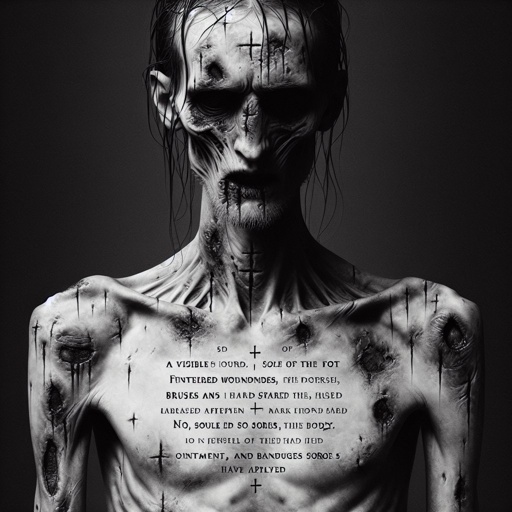
Isaiah 1:6 - "From the sole of the foot even unto the head there is no soundness in it; but wounds, and bruises, and putrifying sores: they have not been closed, neither bound up, neither mollified with ointment."
"From the sole of the foot even unto the head there is no soundness in it; but wounds, and bruises, and putrifying sores: they have not been closed, neither bound up, neither mollified with ointment." - Isaiah 1:6

Isaiah 6:1-5

Isaiah 6:1-5

Isaiah 6:1-5

Isaiah 6:1-5

Isaiah 6:1

Isaiah 6:1-3

Isaiah 6:1-3

Isaiah 6:1-3

Isaiah 6 chapter 1 to 10

Isaiah 6:1-4. Do not depict God's face.

Isaiah 6:1-4. Do not depict God's face.

Isaiah 6:1-4. Do not depict God's face.

isaiah 6:6
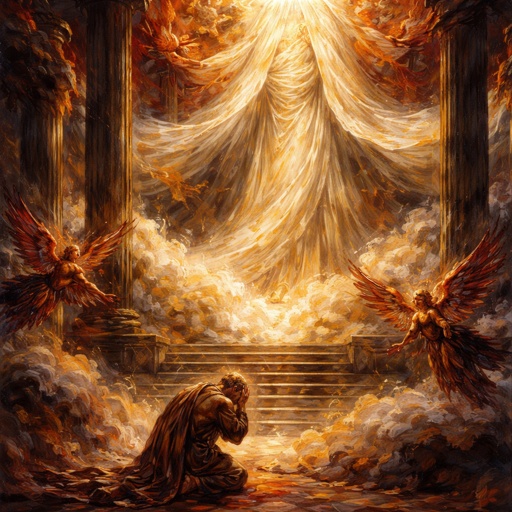
Isaiah 6:1-4. Only seeing the robe of God and not his upper body or face.

Isaiah 6:1-4. Only seeing the robe of God and not his upper body or face.
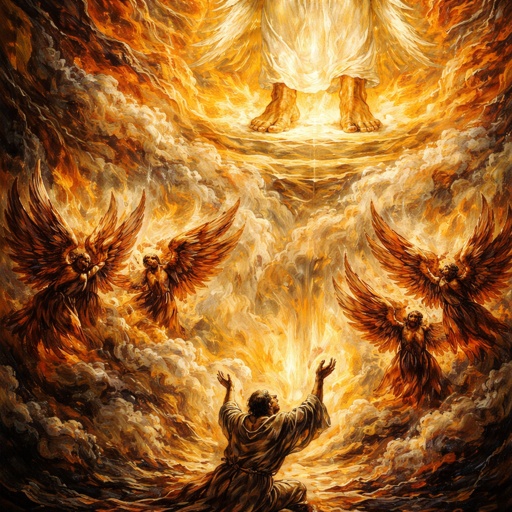
Isaiah 6:1-4. Only seeing the feet of God and not his upper body or face.

Isaiah 6:1-4. Only seeing the robe of God and not his upper body or face.

Isaiah 6:1-4. Only seeing the robe of God and not his upper body or face.

Isaiah 6:1-4. Only seeing the feet of God and not his upper body or face.

Isaiah 6:1 - "In the year that king Uzziah died I saw also the Lord sitting upon a throne, high and lifted up, and his train filled the temple."

Isaiah 6

Isaiah 6

isaiah 6:7
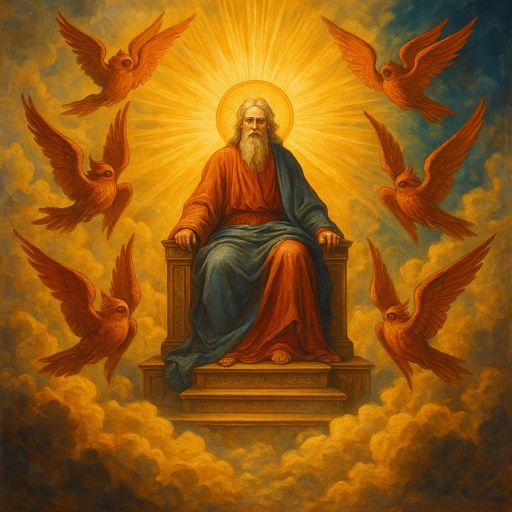
"In the year that king Uzziah died I saw also the Lord sitting upon a throne, high and lifted up, and his train filled the temple." - Isaiah 6:1

Isaiah 9:6

Isaiah 9:6

Isaiah 9:6

isaiah 6:7