The Remnant of Hope: A Reflection on God’s Faithfulness
“Except the LORD of hosts had left unto us a very small remnant, we should have been as Sodom, and we should have been like unto Gomorrah.” — Isaiah 1:9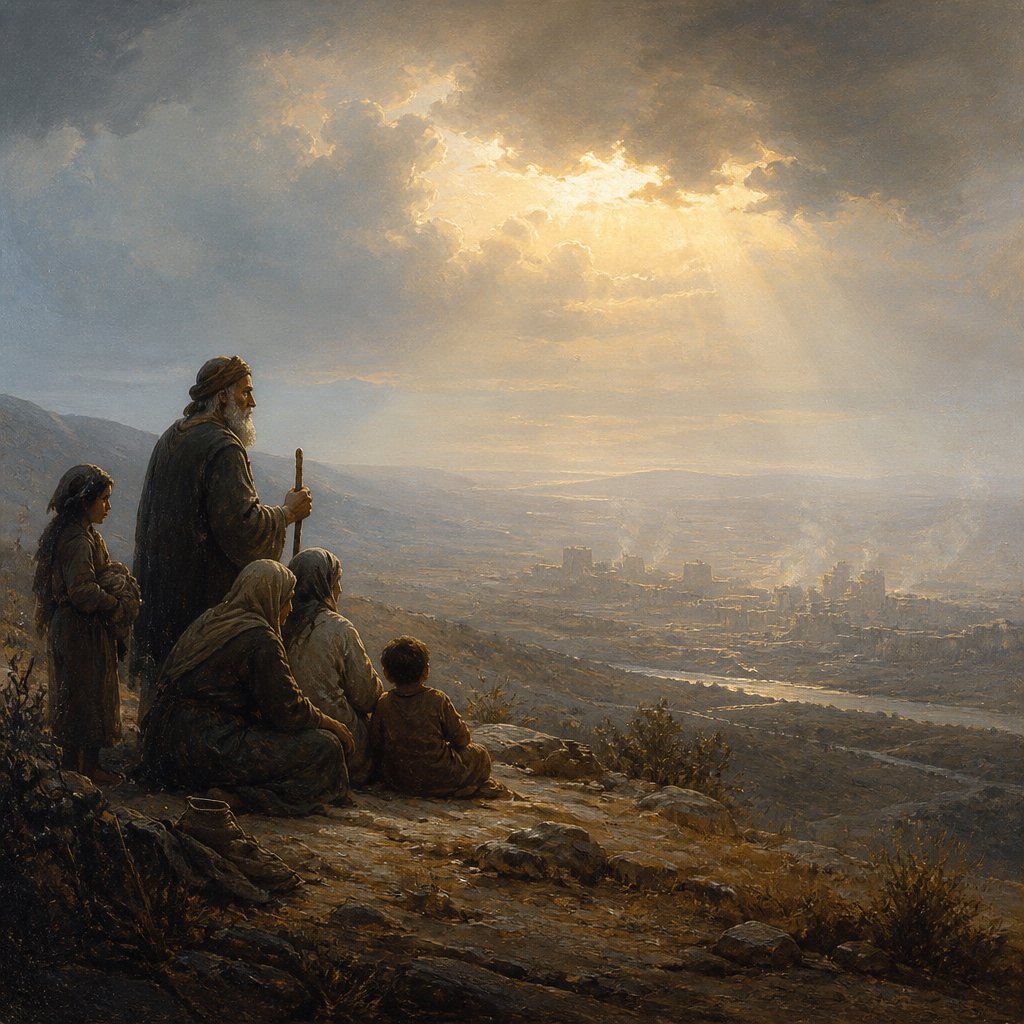
Isaiah 1:9 (KJV) states, "Except the LORD of hosts had left unto us a very small remnant, we should have been as Sodom, and we should have been like unto Gomorrah." In this somber yet profound observation, the prophet Isaiah presents a stark picture of the consequences of human disobedience and the sheer grace of God that intervenes to save a remnant from destruction.
To grasp the depths of this verse, we must first consider the historical and theological context. Sodom and Gomorrah were notorious biblical cities, their names synonymous with moral decay and divine judgment. The graphic accounts of their destruction serve as chilling reminders of the seriousness of sin and its capacity to corrupt lives and societies. Isaiah declares that, had it not been for the merciful intervention of God, the fate of Judah would mirror that of these infamous cities. The stark reality is that judgment looms over those who forsake God's ways. Yet amidst this dark backdrop, Isaiah reveals a glimmer of hope: a remnant—a small group preserved by divine grace.
What is a remnant? In biblical terms, a remnant refers to a group of people who remain after the majority have fallen away or faced judgment. This notion of a remnant signifies God’s unwavering commitment to his covenant. Through the ages, God has maintained a group of faithful followers, despite overwhelming evil or apostasy surrounding them. Understanding this concept invites us to reflect on our current society—filled with chaos, division, and moral ambiguity. The question arises: where do we find ourselves amidst cultural decay?
The divine mercy depicted in our scripture serves two critical purposes. First, it underscores God’s desire for relationship. It may seem that God is distant or indifferent to our struggles, but the truth lies in the fact that He actively seeks those who are faithful—those who cling to His promises. The remnant represents hope, a realization that God remains steadfast and committed to His people even when they stray. In our own lives, we can take comfort in knowing that we are never entirely lost; God preserves a remnant of truth and love within us.
Second, the existence of the remnant calls us to action. As believers, we are part of that very remnant set apart by God. He calls us to be influencers, to shine His light in a world darkened by sin, to reflect His character amidst trials, and to share His love with a lost and dying world. Matthew 5:14 reminds us, "Ye are the light of the world. A city that is set on a hill cannot be hid." When faced with moral dilemmas or spiritual complacency, we must recognize our role as God’s agents in a fractured world. The remnant isn't merely a passive group; it's a powerful collective poised to challenge injustice and exemplify righteousness.
Furthermore, maintaining our identity as part of the remnant demands vigilance and devotion. The sacrifices of the remnant are often steep. In a culture that strives to normalize what God deems unacceptable, it takes courage to stand apart. But this rendering of separation is not rooted in elitism; rather, it is encapsulated in a profound understanding of God’s grace. We can stand firm in faith, not because of our strength but by the grace that allows us to endure amid chaos.
Ultimately, Isaiah 1:9 reminds us that judgment is not only a reality but a divine necessity that purifies and redefines. While we can acknowledge the plight of our world, we must also celebrate our identity as part of God’s remnant. In our daily walk, let us be mindful of the hope that lies within us—a hope that, despite overwhelming challenges, God remains sovereign and ever-present. We are not left alone in despair but are surrounded by a community of believers who share our commitment to live as a beacon of what it means to be set apart for God’s glory. Thus, let us proclaim with confidence, "We are the remnant, and we honor the LORD of hosts who preserves us for such a time as this."
Get our apps


Artwork for Isaiah 1:9

Isaiah 1:9 - "Except the LORD of hosts had left unto us a very small remnant, we should have been as Sodom, and we should have been like unto Gomorrah."
"Except the LORD of hosts had left unto us a very small remnant, we should have been as Sodom, and we should have been like unto Gomorrah." - Isaiah 1:9

Isaiah 11:1-9

Isaiah 11:1-9

Isaiah 9:1-4

Isaiah 11:1-9

Isaiah 9:6

Isaiah 9:6

Isaiah 9:6

Isaiah 9:6

Isaiah 50:7–9

Isaiah 9:9 - "And all the people shall know, even Ephraim and the inhabitant of Samaria, that say in the pride and stoutness of heart,"

Isaiah 9:1 - "Nevertheless the dimness shall not be such as was in her vexation, when at the first he lightly afflicted the land of Zebulun and the land of Naphtali, and afterward did more grievously afflict her by the way of the sea, beyond Jordan, in Galilee of the nations."

Isaiah 10:9 - "Is not Calno as Carchemish? is not Hamath as Arpad? is not Samaria as Damascus?"

Isaiah 30:9 - "That this is a rebellious people, lying children, children that will not hear the law of the LORD:"

Isaiah 9:16 - "For the leaders of this people cause them to err; and they that are led of them are destroyed."

Isaiah 19:9 - "Moreover they that work in fine flax, and they that weave networks, shall be confounded."

Isaiah 9:8 - "¶ The Lord sent a word into Jacob, and it hath lighted upon Israel."

Isaiah 9:15 - "The ancient and honourable, he is the head; and the prophet that teacheth lies, he is the tail."

Isaiah 24:9 - "They shall not drink wine with a song; strong drink shall be bitter to them that drink it."

Isaiah 56:9 - "¶ All ye beasts of the field, come to devour, yea, all ye beasts in the forest."

Isaiah 9:13 - "¶ For the people turneth not unto him that smiteth them, neither do they seek the LORD of hosts."

Isaiah 2:9 - "And the mean man boweth down, and the great man humbleth himself: therefore forgive them not."

Isaiah 2:1 - "The word that Isaiah the son of Amoz saw concerning Judah and Jerusalem."

Isaiah 1:1 - "The vision of Isaiah the son of Amoz, which he saw concerning Judah and Jerusalem in the days of Uzziah, Jotham, Ahaz, and Hezekiah, kings of Judah."

Isaiah 9:14 - "Therefore the LORD will cut off from Israel head and tail, branch and rush, in one day."

Isaiah 38:9 - "¶ The writing of Hezekiah king of Judah, when he had been sick, and was recovered of his sickness:"

Isaiah 29:9 - "¶ Stay yourselves, and wonder; cry ye out, and cry: they are drunken, but not with wine; they stagger, but not with strong drink."

Isaiah 9:5 - "For every battle of the warrior is with confused noise, and garments rolled in blood; but this shall be with burning and fuel of fire."

Isaiah 13:1 - "The burden of Babylon, which Isaiah the son of Amoz did see."