Altar and Pillar: The Divine Presence in Desolate Lands
“In that day shall there be an altar to the LORD in the midst of the land of Egypt, and a pillar at the border thereof to the LORD.” — Isaiah 19:19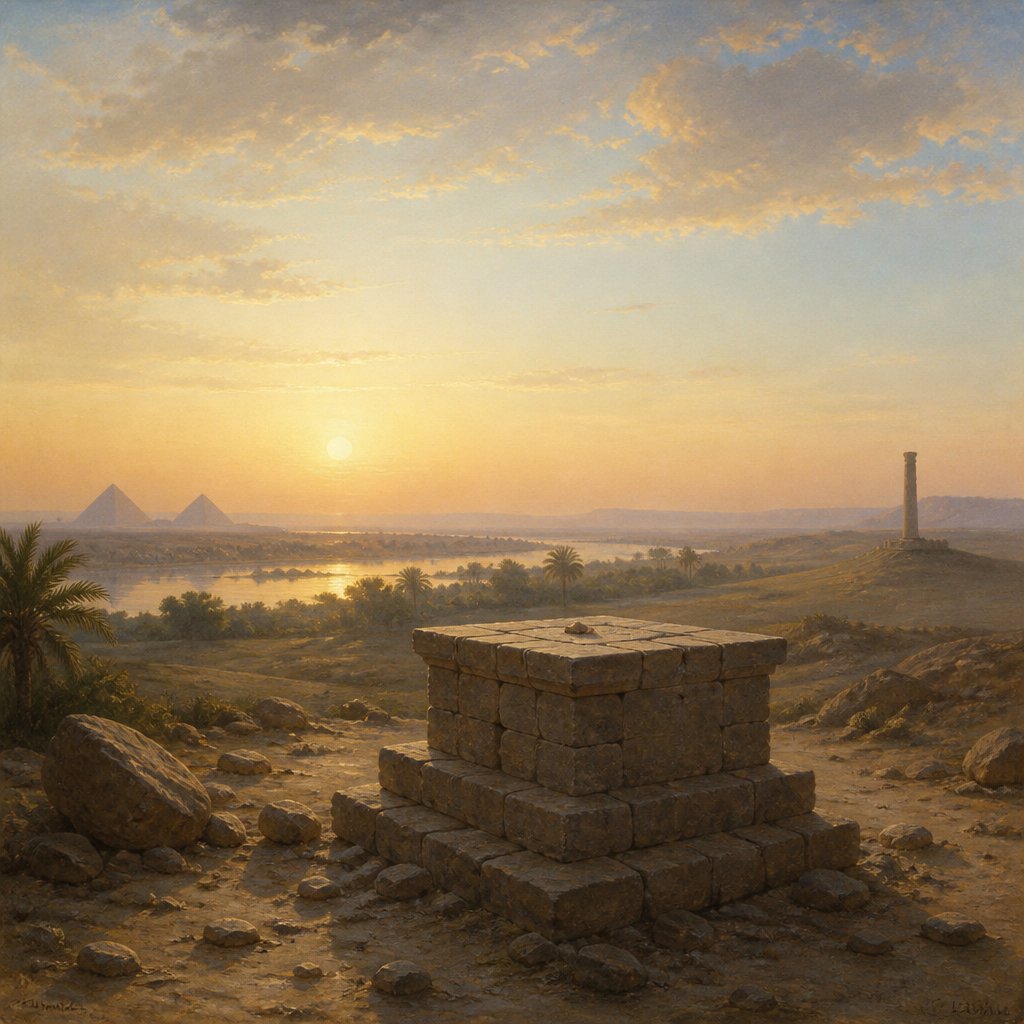
Isaiah 19:19 presents a profound image of divine presence amidst uncertainty and turmoil: "In that day shall there be an altar to the LORD in the midst of the land of Egypt, and a pillar at the border thereof to the LORD." This prophecy, rich with meaning, invites us to consider the implications of establishing an altar in a land like Egypt, known in biblical times for its idolatry and pagan worship. The profound importance of this verse reveals God's unwavering desire for locality—not just in sacred spaces but in the hearts of nations and people.
Historically, Egypt symbolized oppression for God’s people. It was where the Israelites languished under harsh slavery; a land that had little regard for the God of Israel. Yet, even as God pronounces judgment on Egypt through the entire chapter, the promise of an altar arises—a prophetic declaration of reconnection. What does it mean for there to be an altar 'in the midst of the land of Egypt'? It signifies that no place is beyond God's reach or his ability to redeem the lost souls within it.
An altar in biblical terms is a place of sacrifice, worship, and communion with God. It is often a physical manifestation of a spiritual reality, where believers bring their hearts and lives to experience God's presence. Here in Isaiah, God is promising that despite Egypt's historical rejection of Him, there will emerge a space for restoration—to worship, to repent, and to commune with the Creator. This speaks to God's merciful and forgiving heart.
The instruction that there will also be 'a pillar at the border thereof to the LORD' adds another layer of significance to the verse. A pillar often serves as a marker or a point of reference and can represent a testimony of faith. As people journey through the borders—whether physical or metaphorical—they will encounter symbolized moments of God’s presence. The border here is critical; it marks a transition zone, perhaps a separation between what was and what is to come. It potentially signifies that as one moves away from pagan practices and idolatry, there arises a new beginning defined by the presence of God.
In our contemporary context, we too can relate to the altars and pillars in our lives. We might find ourselves in environments where faith is marginalized or even actively suppressed. We witness how secularism influences our communities, much like Egypt's ancient allure to Israel. Yet, Isaiah’s vision offers hope. Where burdens seem heavy, God can establish altars of worship—places where we can encounter His presence, even amid chaos.
Each of us is called to be a living altar to God. In our homes, workplaces, and communities, we can establish environments that foster worship and reflection. We can become pillars of righteousness, representing Christ wherever we find ourselves. Through acts of kindness, expressions of faith, and a steadfast commitment to God’s Word, we can create altars of hope that pierce the darkness around us.
Moreover, the idea of God desiring an altar in the midst of Egypt speaks of reconciliation and unity. It reflects God’s intention for all humankind, regardless of their backgrounds or former allegiances. Similarly, we are called to engage our world—to be conduits of grace and ambassadors of peace, much like the altar and pillar that signify God’s presence and invitation.
Let us reflect on what it means to establish altars in our lives and communities. Where can we intentionally sow seeds of worship? How can we create points of reference for those around us to encounter God’s love? In this day, let us not forget that even in the most unlikely places, God's presence can flourish, and through our lives, an altar can rise, embodying hope, transformation, and divine communion.
Get our apps


Artwork for Isaiah 19:19

Isaiah 19:19 - "In that day shall there be an altar to the LORD in the midst of the land of Egypt, and a pillar at the border thereof to the LORD."
"In that day shall there be an altar to the LORD in the midst of the land of Egypt, and a pillar at the border thereof to the LORD." - Isaiah 19:19

Isaiah 41, 19

Isaiah 19:8

Isaiah 43:19

Isaiah 19:1

Isaiah 43:19

Isaiah 43:18-19

Isaiah 3:19 - "The chains, and the bracelets, and the mufflers,"

Isaiah 43:18-19

Isaiah 3:19 - "The chains, and the bracelets, and the mufflers,"

"The chains, and the bracelets, and the mufflers," - Isaiah 3:19

2 Kings 19:5 - "So the servants of king Hezekiah came to Isaiah."

Isaiah 1:19 - "If ye be willing and obedient, ye shall eat the good of the land:"

Joshua 1:9

Daniel 1:9

James 1:9

Jude 1:9

Isaiah 11:1-9

Numbers 7:1-9

Isaiah 11:1-9

Isiah 42 1-9

Isaiah 3:19 - "The chains, and the bracelets, and the mufflers,"

Isaiah 19:9 - "Moreover they that work in fine flax, and they that weave networks, shall be confounded."

Isaiah 11:1-9

mat 17:1-9

1 John 1:9

Isaiah 19:10 - "And they shall be broken in the purposes thereof, all that make sluices and ponds for fish."

Isaiah 10:19 - "And the rest of the trees of his forest shall be few, that a child may write them."

Job 1:9 no words