The Cry of the Earth: A Call to Covenant Living
“The earth also is defiled under the inhabitants thereof; because they have transgressed the laws, changed the ordinance, broken the everlasting covenant.” — Isaiah 24:5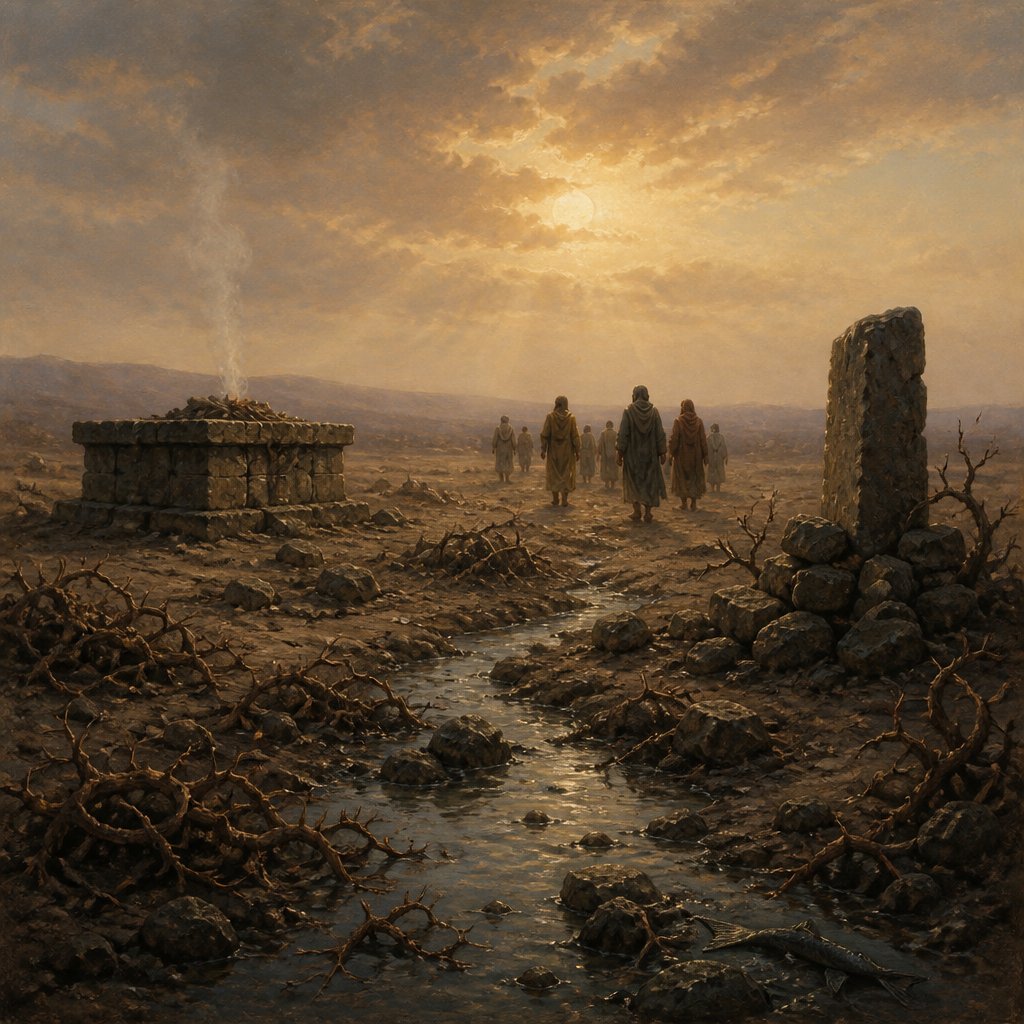
As we turn our hearts toward Isaiah 24:5, we encounter a poignant lamentation regarding the state of creation and the grave responsibility of humanity: "The earth also is defiled under the inhabitants thereof; because they have transgressed the laws, changed the ordinance, broken the everlasting covenant" (KJV). This verse serves as a somber reminder of the consequences our choices have on the very fabric of the world in which we live.
The profundity of this message resonates with the reality we see today. Isaiah paints a vivid picture: the earth is not merely a backdrop for human activity; it is a living testimony of our actions and a reflection of our spiritual health. Each decision we make, each law we transgress, reverberates through creation itself. The phrase "defiled under the inhabitants thereof" denotes that it is not merely the earth that suffers; it is the creatures and systems that dwell within it, including humanity itself.
What we learn from this verse is twofold: first, the consequences of disobedience are not isolated; they extend beyond individual choices into the broader health of our environment. The laws referred to here are not arbitrary but rooted in God's wise and loving order for all of creation. When these laws are disregarded, the world bears the heavy burdens of sin. We see this manifest in environmental degradation, social injustice, and the erosion of community. Every act of greed or selfishness defiles the earth further, leading it to cry out under the weight of our transgressions.
Secondly, we are confronted with the essence of the "everlasting covenant" mentioned in the verse. This covenant is more than a mere agreement; it represents a sacred commitment between God and humanity, established to ensure flourishing relationships with Him, with one another, and with creation. When we break this covenant, we break the bonds that God has put in place for mutual care and stewardship. The "ordinance" that has been changed implies a deliberate alteration of God’s design, a deviation that leads not just to spiritual consequences but tangible, physical ones, as evidenced by the environmental crises we face.
Reflecting on our current world, from climate change to social inequities, we can resonate deeply with the theme of this passage. It calls us to examine our lives honestly: In what ways are we contributing to the corruption of God's creation? Are we stewards or destroyers? Are we fulfilling our roles as caretakers as laid out in Genesis, or are we rather indulging in lifestyles that violate this divine responsibility?
Understanding our part in this cosmic drama is crucial. The transgressions of the inhabitants do not describe the actions of an abstract evil; they can be traced back to our thoughts, our habits, our consumerist lifestyles. It is a call to repentance, to return to the paths that honor God’s creation. It is about aligning our lives with God's desires and intentions.
As followers of Christ, we have been given the capacity not only to be aware of these truths but to act upon them. We are called to be agents of reconciliation, to restore what has been broken, to speak to the earth as we would a friend. This calling requires a deep commitment to live out the principles of stewardship, mercy, and justice. Each time we choose to serve rather than exploit, to heal rather than harm, we participate in the restoration and renewal of both creation and our own hearts.
Ultimately, let us remember that God longs for reconciliation—not just with humanity, but with all of creation. In Christ, we are empowered to embody the principles of the everlasting covenant, striving to live in ways that reflect His love and care for every part of His handiwork. May we rise to the challenge, making choices that honor both our Creator and the beautiful earth He has entrusted to us.
Get our apps


Artwork for Isaiah 24:5

Isaiah 24:5 - "The earth also is defiled under the inhabitants thereof; because they have transgressed the laws, changed the ordinance, broken the everlasting covenant."
"The earth also is defiled under the inhabitants thereof; because they have transgressed the laws, changed the ordinance, broken the everlasting covenant." - Isaiah 24:5

Isaiah 5:24 - "Therefore as the fire devoureth the stubble, and the flame consumeth the chaff, so their root shall be as rottenness, and their blossom shall go up as dust: because they have cast away the law of the LORD of hosts, and despised the word of the Holy One of Israel."

Isaiah 24:1

Isaiah 24:1

Isaiah 37:5 - "So the servants of king Hezekiah came to Isaiah."

Isaiah 24:12 - "In the city is left desolation, and the gate is smitten with destruction."

Isaiah 39:5 - "Then said Isaiah to Hezekiah, Hear the word of the LORD of hosts:"

Isaiah 5:21

Isaiah 53:5

Isaiah 5:21

Isaiah 6:1-5

Isaiah 6:1-5

Genesis 24:5

Galatians 5:24

Isaiah 6:1-5

Isaiah 6:1-5

Isaiah 24:17 - "Fear, and the pit, and the snare, are upon thee, O inhabitant of the earth."

Isaiah 49:24 - "¶ Shall the prey be taken from the mighty, or the lawful captive delivered?"

Isaiah 48:5

isaiah 5:14

Isaiah 48:5

Isaiah 24:11 - "There is a crying for wine in the streets; all joy is darkened, the mirth of the land is gone."

Isaiah 24:7 - "The new wine mourneth, the vine languisheth, all the merryhearted do sigh."

Isaiah 48:5

Isaiah 6:5

Isaiah 6:5

Isaiah 48:5

Isaiah 24:9 - "They shall not drink wine with a song; strong drink shall be bitter to them that drink it."

Isaiah 19:24 - "In that day shall Israel be the third with Egypt and with Assyria, even a blessing in the midst of the land:"