Standing at the Crossroads: Lessons from King Hezekiah's Encounter
“And the king of Assyria sent Rabshakeh from Lachish to Jerusalem unto king Hezekiah with a great army. And he stood by the conduit of the upper pool in the highway of the fuller’s field.” — Isaiah 36:2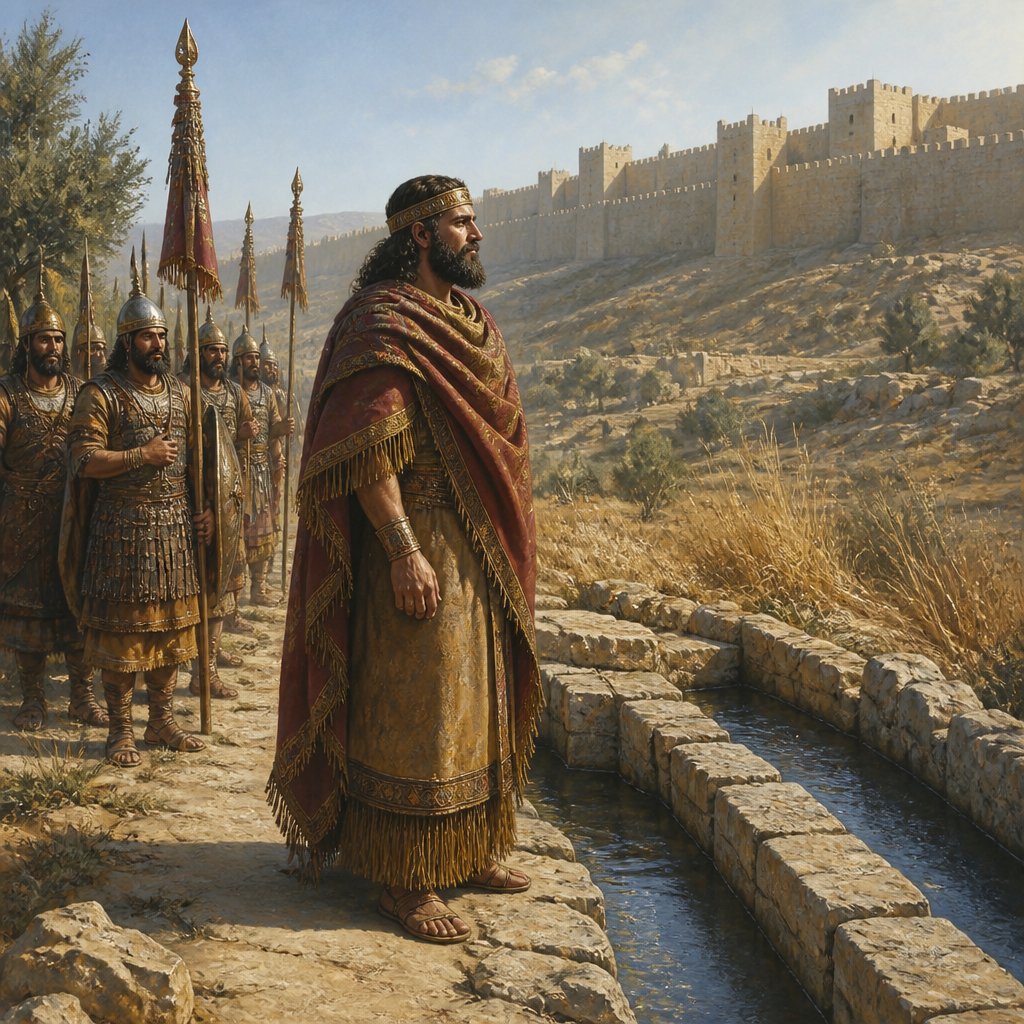
In Isaiah 36:2, we find a pivotal moment in the history of Israel: "And the king of Assyria sent Rabshakeh from Lachish to Jerusalem unto king Hezekiah with a great army. And he stood by the conduit of the upper pool in the highway of the fuller's field." This verse sets the stage for a profound lesson, not only about the tumultuous history of Israel but about faith, resilience, and divine assistance in times of despair.
At first glance, this moment appears grim. King Hezekiah, a righteous ruler who tirelessly sought to restore the worship of Yahweh among his people, found himself standing on the brink of devastation. The Assyrian army, a ruthless force of power and terror, was surrounding Jerusalem, and the intimidating figure of Rabshakeh was sent as a representative to deliver a harsh message. This scenario mirrors many experiences in our lives, where we find ourselves confronted by overwhelming circumstances, doubts, and fears.
The significance of the place where Rabshakeh stood—"by the conduit of the upper pool in the highway of the fuller's field"—is abundant with meaning. Water sources in ancient towns were crucial; they represented life, sustenance, and safety. The upper pool not only supplied physical water but also symbolized a place of prayer, reflection, and divine assistance. In biblical times, just as King Hezekiah had access to this vital water source, so do we have access to the Living Water that Christ offers. This encourages us that even when our circumstances seem dire, we can turn to God for refreshment and strength.
The location also signifies a crossroads. When we face insurmountable challenges, it often feels like we are standing at a crossroads, unsure which path to take. Thus, Rabshakeh's presence is more than just an announcement of war; it offers us a choice. We can either succumb to fear and doubt or stand firm in faith. King Hezekiah's decision at this moment was crucial—he could either trust the strength of his own army or depend on the might of the Lord Almighty.
As followers of God, we are often faced with messages that echo Rabshakeh's threats. We may hear voices that question our faith, undermine our hope, and inflate our fears. Yet, we see through Hezekiah’s life that proclaiming our trust in God is paramount. Shortly after this confrontation, Hezekiah would seek the prophet Isaiah’s counsel, reminding us that when in crisis, our first response should be to call out for prayer, intercession, and guidance.
In our lives today, we are also equipped to face the "great armies" of our challenges—be they personal struggles, health crises, financial difficulties, or societal tensions. Like Hezekiah, we need to recognize the value of community and divine guidance in navigating through the harsh storms of life. God desires to be approached in our despair and is eager to offer us His peace and resolution.
Finally, this moment in Isaiah teaches us about the assurance and sovereignty of God in the face of trials. As we read later in the chapter, God listens and responds to Hezekiah’s prayers. God did not let His people be consumed by the threats that surrounded them. Just as Hezekiah found deliverance from the Assyrians, so can we find deliverance from our own battles.
As we meditate on this verse, let us remind ourselves of God's unwavering presence. Let our response to tribulation be one of faith—firmly rooted in the knowledge that God is our refuge and strength. In the face of opposition or hopelessness, we aren't alone; we have an ever-present help in our Savior, urging us to trust Him at the crossroads. Even when the forces against us seem daunting, we can stand strong through prayer, community, and unwavering faith.
Get our apps


Artwork for Isaiah 36:2

Isaiah 36:2 - "And the king of Assyria sent Rabshakeh from Lachish to Jerusalem unto king Hezekiah with a great army. And he stood by the conduit of the upper pool in the highway of the fuller's field."
"And the king of Assyria sent Rabshakeh from Lachish to Jerusalem unto king Hezekiah with a great army. And he stood by the conduit of the upper pool in the highway of the fuller's field." - Isaiah 36:2

Isaiah 36:21 - "But they held their peace, and answered him not a word: for the king's commandment was, saying, Answer him not."

Isaiah 36:14 - "Thus saith the king, Let not Hezekiah deceive you: for he shall not be able to deliver you."

Isaiah 36:19 - "Where are the gods of Hamath and Arphad? where are the gods of Sepharvaim? and have they delivered Samaria out of my hand?"

Isaiah 36:13 - "Then Rabshakeh stood, and cried with a loud voice in the Jews' language, and said, Hear ye the words of the great king, the king of Assyria."

Isaiah 36:3 - "Then came forth unto him Eliakim, Hilkiah's son, which was over the house, and Shebna the scribe, and Joah, Asaph's son, the recorder."

Isaiah 36:17 - "Until I come and take you away to a land like your own land, a land of corn and wine, a land of bread and vineyards."

Isaiah 36:20 - "Who are they among all the gods of these lands, that have delivered their land out of my hand, that the LORD should deliver Jerusalem out of my hand?"

Isaiah 36:15 - "Neither let Hezekiah make you trust in the LORD, saying, The LORD will surely deliver us: this city shall not be delivered into the hand of the king of Assyria."

2 Chronicles 36:22

Isaiah 36:9 - "How then wilt thou turn away the face of one captain of the least of my master's servants, and put thy trust on Egypt for chariots and for horsemen?"

Isaiah 36:4 - "¶ And Rabshakeh said unto them, Say ye now to Hezekiah, Thus saith the great king, the king of Assyria, What confidence is this wherein thou trustest?"

Isaiah 36:10 - "And am I now come up without the LORD against this land to destroy it? the LORD said unto me, Go up against this land, and destroy it."

Isaiah 36:1 - "Now it came to pass in the fourteenth year of king Hezekiah, that Sennacherib king of Assyria came up against all the defenced cities of Judah, and took them."

Isaiah 36:22 - "¶ Then came Eliakim, the son of Hilkiah, that was over the household, and Shebna the scribe, and Joah, the son of Asaph, the recorder, to Hezekiah with their clothes rent, and told him the words of Rabshakeh."

Isaiah 36:18 - "Beware lest Hezekiah persuade you, saying, The LORD will deliver us. Hath any of the gods of the nations delivered his land out of the hand of the king of Assyria?"

Isaiah 37:36 - "Then the angel of the LORD went forth, and smote in the camp of the Assyrians a hundred and fourscore and five thousand: and when they arose early in the morning, behold, they were all dead corpses."

Isaiah 36:5 - "I say, sayest thou, (but they are but vain words) I have counsel and strength for war: now on whom dost thou trust, that thou rebellest against me?"

2 kings 9:34-36

Isaiah 36:6 - "Lo, thou trustest in the staff of this broken reed, on Egypt; whereon if a man lean, it will go into his hand, and pierce it: so is Pharaoh king of Egypt to all that trust in him."

2 Samuel 23:36 - "Igal the son of Nathan of Zobah, Bani the Gadite,"

1 Chronicles 2:36 - "And Attai begat Nathan, and Nathan begat Zabad,"

Daniel 2:36 - "¶ This is the dream; and we will tell the interpretation thereof before the king."

"But they held their peace, and answered him not a word: for the king's commandment was, saying, Answer him not." - Isaiah 36:21

Isaiah 36:11 - "¶ Then said Eliakim and Shebna and Joah unto Rabshakeh, Speak, I pray thee, unto thy servants in the Syrian language; for we understand it: and speak not to us in the Jews' language, in the ears of the people that are on the wall."

2 Chronicles 36:2 - "Jehoahaz was twenty and three years old when he began to reign, and he reigned three months in Jerusalem."

Ezra 2:36 - "¶ The priests: the children of Jedaiah, of the house of Jeshua, nine hundred seventy and three."
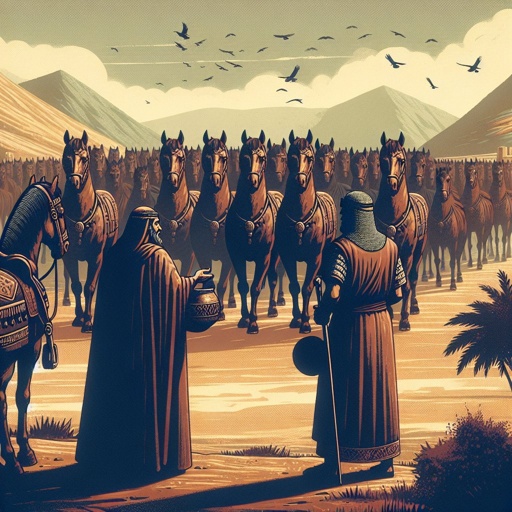
Isaiah 36:8 - "Now therefore give pledges, I pray thee, to my master the king of Assyria, and I will give thee two thousand horses, if thou be able on thy part to set riders upon them."

2 Kings 10:36 - "And the time that Jehu reigned over Israel in Samaria was twenty and eight years."