Trusting in the Right Counsel
“I say, sayest thou, (but they are but vain words) I have counsel and strength for war: now on whom dost thou trust, that thou rebellest against me?” — Isaiah 36:5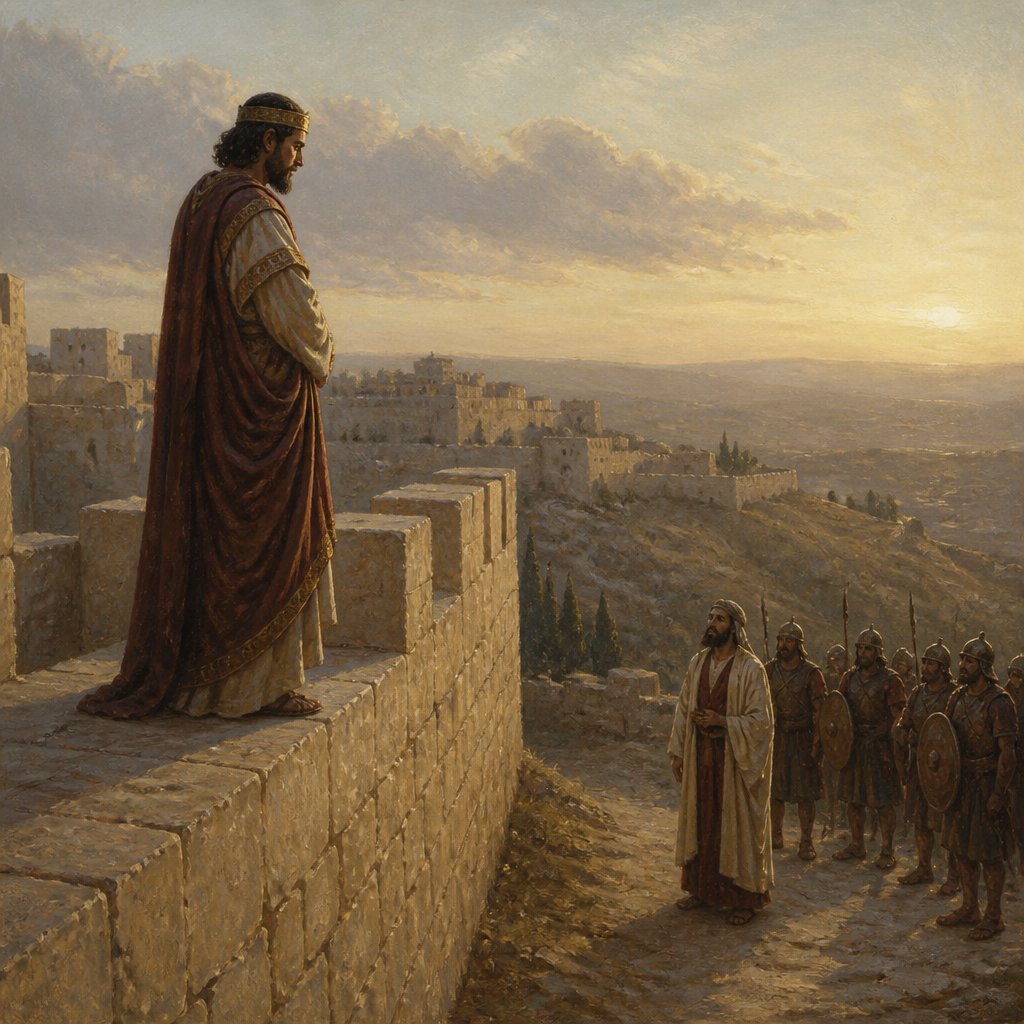
In the annals of history, particularly in periods of conflict, the voices of opposition often rise loud and clear, seeking to undermine the faith of the strong and the resolve of the faithful. The verse Isaiah 36:5 reminds us of such a moment: "I say, sayest thou, (but they are but vain words) I have counsel and strength for war: now on whom dost thou trust, that thou rebellest against me?" These words were spoken by the Rabshakeh, the commander of the Assyrian army, to the people of Jerusalem, attempting to instill fear and doubt.
Let's briefly contextualize this verse. The nation of Judah, under King Hezekiah’s rule, was facing overwhelming threats from the Assyrian empire, a power known for its military might and aggressiveness. The commander, Rabshakeh, delivered a series of taunts, challenging the faith of the people and questioning their allegiance to God. His words, although meant to intimidate, also evoke an important lesson — the nature of trust and the roots of strength.
As Rabshakeh spoke of 'counsel and strength for war', he was portraying an image of self-reliance that many find enticing. After all, who wouldn’t wish to trust in their own abilities and strategies when the battle lines are drawn? However, herein lies a crucial turning point for believers: pride often constructs the illusion of security through self-sufficiency, leaving God out of the equation.
In our lives today, we face a barrage of Rabshakeh-like voices. They may come as societal pressures, doubts sown into our minds, or even through temptations that urge us to lean on our own understanding instead of seeking divine guidance. The question posed within the verse, "now on whom dost thou trust?", carries profound significance: Is our trust in our own perceptions or the wisdom of God?
In moments of turmoil, a natural inclination might lead us to seek counsel from the world around us — friends, social media influencers, financial advisors, or even secular philosophies. Yet, as Rabshakeh noted, such counsel is in vain when it leads us astray from the truth of God's word.
Humility is the antidote to pride. In seeking counsel from God, we must first empty ourselves of the preconceived notions of what strength and victory look like. The psalmist expressed this beautifully in Psalm 147:10-11, stating: "He delighteth not in the strength of the horse: he taketh not pleasure in the legs of a man. The LORD taketh pleasure in them that fear him, in those that hope in his mercy."
When faced with challenges, we must ground ourselves in prayer and scripture, seeking God for true guidance. He is our ever-present help in times of trouble (Psalm 46:1). When God becomes the center of our trust, we transform our perspective from one of fear to one of faith. This shift allows us to see that true strength comes not from robust armies or sophisticated strategies, but from a deep-rooted relationship with the Almighty.
With every conflict we encounter, be it personal, relational, or spiritual, let us always ask ourselves: Who do we trust? If our answer is the Lord, we surrender our battles into His capable hands, recognizing that He is the one who fights for us (Exodus 14:14). Our war is not against flesh and blood, but against the very powers that seek to undermine our faith in God’s promises.
In conclusion, let us heed the lesson from Isaiah 36:5 and filter our counsel through the lens of faith. May we reject the vain words of those who do not acknowledge God's sovereignty and choose instead to wholly trust in Him. As we navigate through life’s challenges, remember that true counsel and strength come from surrendering our struggles to the one who knows the end from the beginning. “Trust in the LORD with all thine heart; and lean not unto thine own understanding” (Proverbs 3:5).
Get our apps


Artwork for Isaiah 36:5

Isaiah 36:5 - "I say, sayest thou, (but they are but vain words) I have counsel and strength for war: now on whom dost thou trust, that thou rebellest against me?"
"I say, sayest thou, (but they are but vain words) I have counsel and strength for war: now on whom dost thou trust, that thou rebellest against me?" - Isaiah 36:5

Luke 5:36

Isaiah 36:21 - "But they held their peace, and answered him not a word: for the king's commandment was, saying, Answer him not."

Isaiah 36:14 - "Thus saith the king, Let not Hezekiah deceive you: for he shall not be able to deliver you."

Isaiah 36:19 - "Where are the gods of Hamath and Arphad? where are the gods of Sepharvaim? and have they delivered Samaria out of my hand?"

Isaiah 36:13 - "Then Rabshakeh stood, and cried with a loud voice in the Jews' language, and said, Hear ye the words of the great king, the king of Assyria."

Job 36:5 - "Behold, God is mighty, and despiseth not any: he is mighty in strength and wisdom."

Isaiah 37:5 - "So the servants of king Hezekiah came to Isaiah."

Psalms 36:5 - "Thy mercy, O LORD, is in the heavens; and thy faithfulness reacheth unto the clouds."

Isaiah 36:3 - "Then came forth unto him Eliakim, Hilkiah's son, which was over the house, and Shebna the scribe, and Joah, Asaph's son, the recorder."

Isaiah 36:17 - "Until I come and take you away to a land like your own land, a land of corn and wine, a land of bread and vineyards."

Isaiah 39:5 - "Then said Isaiah to Hezekiah, Hear the word of the LORD of hosts:"

Isaiah 5:21

Isaiah 53:5

Isaiah 5:21

Isaiah 36:20 - "Who are they among all the gods of these lands, that have delivered their land out of my hand, that the LORD should deliver Jerusalem out of my hand?"

Isaiah 36:15 - "Neither let Hezekiah make you trust in the LORD, saying, The LORD will surely deliver us: this city shall not be delivered into the hand of the king of Assyria."

Isaiah 36:9 - "How then wilt thou turn away the face of one captain of the least of my master's servants, and put thy trust on Egypt for chariots and for horsemen?"

Isaiah 6:1-5

Isaiah 6:1-5

Isaiah 36:4 - "¶ And Rabshakeh said unto them, Say ye now to Hezekiah, Thus saith the great king, the king of Assyria, What confidence is this wherein thou trustest?"

Isaiah 6:1-5

Isaiah 6:1-5

Isaiah 36:10 - "And am I now come up without the LORD against this land to destroy it? the LORD said unto me, Go up against this land, and destroy it."

Isaiah 36:1 - "Now it came to pass in the fourteenth year of king Hezekiah, that Sennacherib king of Assyria came up against all the defenced cities of Judah, and took them."

Isaiah 36:22 - "¶ Then came Eliakim, the son of Hilkiah, that was over the household, and Shebna the scribe, and Joah, the son of Asaph, the recorder, to Hezekiah with their clothes rent, and told him the words of Rabshakeh."

Mark 5:36 - "As soon as Jesus heard the word that was spoken, he saith unto the ruler of the synagogue, Be not afraid, only believe."

Jeremiah 36:5 - "And Jeremiah commanded Baruch, saying, I am shut up; I cannot go into the house of the LORD:"

Isaiah 48:5