Turning Toward the Wall: A Heart Cry of Faith
“Then Hezekiah turned his face toward the wall, and prayed unto the LORD,” — Isaiah 38:2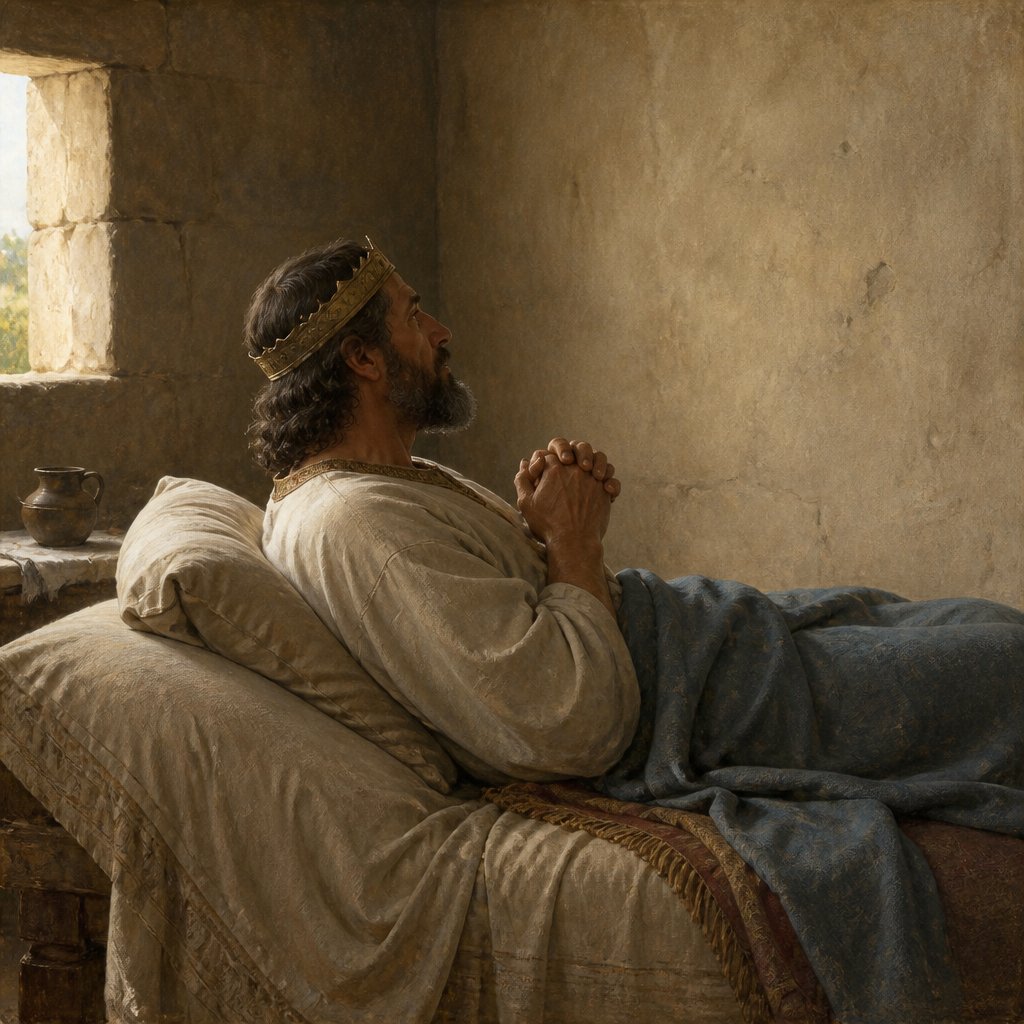
In the heart of a crisis, when hope seems all but lost, how do we respond? Isaiah 38:2 presents us with a profound moment from the life of King Hezekiah, allowing us to glean wisdom for our own spiritual journeys. The King James Version succinctly encapsulates this moment: "Then Hezekiah turned his face toward the wall, and prayed unto the LORD." This passage offers a rich tapestry of insight into prayer, desperation, and divine engagement.
Hezekiah was faced with a life-threatening illness, its gravity echoed in the words of Isaiah the prophet who conveyed God’s message that Hezekiah was to set his house in order because he would die and not live (Isaiah 38:1). This divine message must have been a crushing blow to Hezekiah, a king who had devoted his reign to seeking after the Lord, leading his people in revival and faithfulness. The reality of facing death can elicit a spectrum of reactions; yet Hezekiah chose a path of intimate prayer, turning his face against the wall, symbolic of his personal retreat from the chaos, circumstances, and ultimately, from the dread of his impending death.
The act of turning his face to the wall is significant. A wall is a boundary, a physical and metaphorical space where we come to confront our deepest fears and desires. In turning away from distractions, power, and the expectant gaze of those around him, Hezekiah created a sacred space to engage with God. Hezekiah did not merely seek the ears of others; he sought the heart of God. His heartfelt prayer demonstrates his refusal to accept his fate without seeking divine intervention. Often, we find ourselves in moments where we feel backed into a corner, facing what seems to be insurmountable odds—be it illness, loss, or any life circumstance that feels like a death sentence to our dreams or hopes. We may not physically turn to a wall, but do we have the discipline to turn our hearts toward God in these times?
Hezekiah’s response to the prophetic decree serves as a model for our approach to prayer. His first action was not to lament into despair or to entertain doubt and fear. Instead, he petitions God, fervently reminding Him of the ways he has walked faithfully in the truth (Isaiah 38:3). He reminds God of their relationship, showcasing deep faith and reliance on His mercy, echoing the words of the Psalmist, who says, "In my distress I called upon the LORD, and cried unto my God: he heard my voice out of his temple, and my cry came before him, even into his ears" (Psalm 18:6, KJV).
As we ponder Hezekiah's prayer, we are reminded of the importance of our own communication with God. Are we willing to turn aside from our busy lives, our noise, our pain, and present ourselves authentically before Him? How often do we earnestly pray during our trials, or do we first ruminate on the impossibility of our circumstances? Do we choose to plead to the Lord, recounting His faithfulness, the goodness of His character, and the previous miracles He has performed in our lives? In the silence of our hearts, as we turn ‘toward the wall’, we find both solitude and sanctuary, an opportunity to reset our focus on who God is and on what He can achieve, something always far beyond our own strength.
The beauty of this moment culminates in God's response to Hezekiah. After pouring his heart out, God heard and acknowledged his faith, granting him an extension of life of fifteen more years (Isaiah 38:5). This act of God reiterates foundational truths about prayer—God is engaged, He hears our cries, and He responds in accordance with His purpose and goodness.
As we navigate the walls in our lives, let us remember the lesson of Hezekiah. The act of prayer is not a last resort but a first response. Let us cultivate the discipline of turning toward the Lord in our trials, making space to confront our fears, and expressing our faith, trusting that He hears us and is able to change our circumstances. Instead of leaning on our understanding, let our faces turn toward the spiritual walls in our lives, reminding us that we have a God who listens, heals, and intervenes.
Get our apps


Artwork for Isaiah 38:2

Isaiah 38:2 - "Then Hezekiah turned his face toward the wall, and prayed unto the LORD,"

"Then Hezekiah turned his face toward the wall, and prayed unto the LORD," - Isaiah 38:2

Isaiah 38:2-5 - "Then Hezekiah turned his face toward the wall, and prayed unto the LORD, And said, Remember now, O LORD, I beseeek thee, how I have walked before thee in truth and with a perfect heart, and have done that which is good in thy sight. And Hezekiah wept sore. Then came the word of the LORD to Isaiah, saying, Go, and say to Hezekiah, Thus saith the LORD, the God of David thy father, I have heard thy prayer, I have seen thy tears: behold, I will add unto thy days fifteen years."
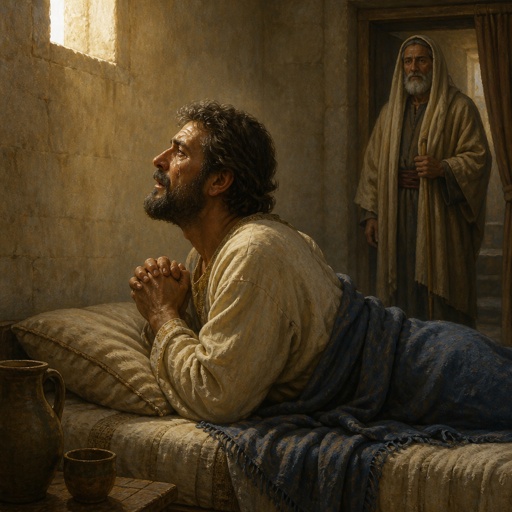
"Then Hezekiah turned his face toward the wall, and prayed unto the LORD, And said, Remember now, O LORD, I beseeek thee, how I have walked before thee in truth and with a perfect heart, and have done that which is good in thy sight. And Hezekiah wept sore. Then came the word of the LORD to Isaiah, saying, Go, and say to Hezekiah, Thus saith the LORD, the God of David thy father, I have heard thy prayer, I have seen thy tears: behold, I will add unto thy days fifteen years." - Isaiah 38:2-5

Isaiah 38:4 - "¶ Then came the word of the LORD to Isaiah, saying,"

Isaiah 38:17

"¶ Then came the word of the LORD to Isaiah, saying," - Isaiah 38:4

Isaiah 38:21 - "For Isaiah had said, Let them take a lump of figs, and lay it for a plaister upon the boil, and he shall recover."

Isaiah 38:6 - "And I will deliver thee and this city out of the hand of the king of Assyria: and I will defend this city."

Isaiah 38:9 - "¶ The writing of Hezekiah king of Judah, when he had been sick, and was recovered of his sickness:"

Isaiah 38:22 - "Hezekiah also had said, What is the sign that I shall go up to the house of the LORD?"

Isaiah 38:7 - "And this shall be a sign unto thee from the LORD, that the LORD will do this thing that he hath spoken;"

Isaiah 38:18 - "For the grave cannot praise thee, death can not celebrate thee: they that go down into the pit cannot hope for thy truth."

Acts 2:38

Acts 2:38

Acts 2:38

Acts 2:38

Acts 2:38

Acts 2:38

Acts 2:38

Acts 2:38

Acts 2:38

Acts 2:38

Acts 2:38

Acts 2:38

Acts 2:38

Acts 2:38

Acts 2:38

Acts 2:38

Acts 2:38