What does Isaiah 38:2 mean?
“Then Hezekiah turned his face toward the wall, and prayed unto the LORD,” — Isaiah 38:2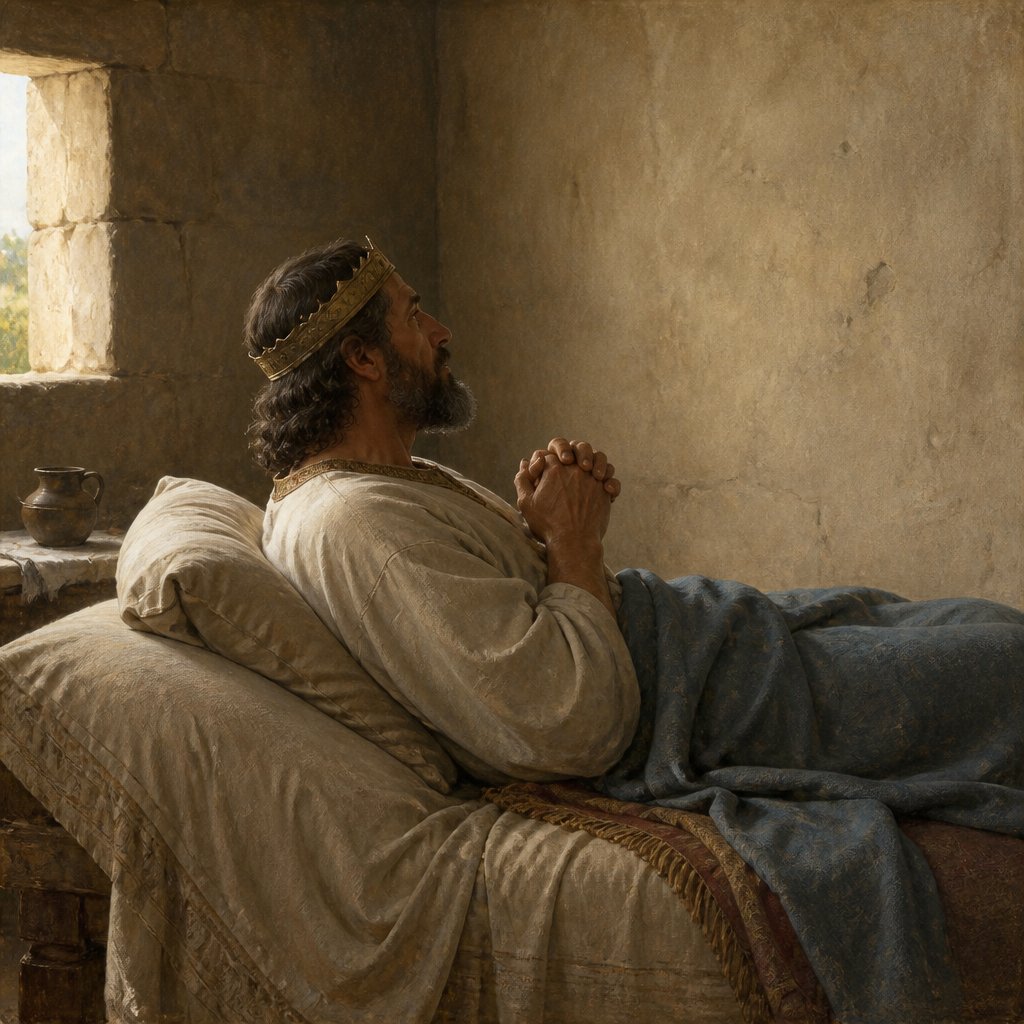
Isaiah 38:2 in the King James Version of the Bible states, "Then Hezekiah turned his face toward the wall, and prayed unto the Lord." This verse is situated within the larger narrative of King Hezekiah's illness and subsequent healing, found in the book of Isaiah.
To fully understand the significance of this verse, it is important to consider the context in which it is situated. King Hezekiah was the son of King Ahaz and the 13th king of Judah. He is remembered as a righteous and devout ruler who sought to bring about religious reform in the kingdom. In the verse prior to 38:2, we learn that Hezekiah fell ill and was near death. This illness was inflicted upon him as punishment for his pride, as it is written, "In those days was Hezekiah sick unto death. And Isaiah the prophet the son of Amoz came unto him, and said unto him, Thus saith the Lord, Set thine house in order: for thou shalt die, and not live" (Isaiah 38:1).
Faced with the prospect of imminent death, Hezekiah's response in turning his face toward the wall and praying to the Lord is significant. It demonstrates his faith in the power of God to intervene and grant him healing. This act of prayer reflects the deep spiritual connection that Hezekiah had with God, as well as his humility in recognizing his own mortality and dependence on the divine.
The theme of repentance and redemption is central to this verse and the surrounding narrative. Hezekiah's illness was a consequence of his pride, and through his prayer and humility, he seeks forgiveness and restoration. This theme aligns with broader biblical teachings on the importance of humility and seeking reconciliation with God. It also serves as a reminder of the transformative power of prayer and the possibility of redemption through faith.
The act of turning his face toward the wall can also be seen as a symbolic gesture of turning away from the distractions of the world and focusing solely on his communication with God. This physical act of turning away from the world and towards God is an embodiment of the spiritual turning of one's heart and mind towards the divine. It signifies a deep introspective and intimate connection with God, as Hezekiah pours out his heart in prayer.
Moreover, the historical context of the Assyrian threat against Judah adds another layer of significance to this verse. As King Hezekiah faced not only physical illness but also threats to the stability and security of his kingdom, his prayer reflects his trust in God's protection and deliverance. The act of prayer in times of distress and uncertainty serves as a timeless example for believers to turn to God in times of trial and to seek His guidance and intervention.
In terms of symbolism, Hezekiah's turning his face toward the wall may be seen as a metaphor for turning inward, for introspection and self-examination. The wall may represent an obstacle or barrier that separates him from the distractions of the external world, allowing him to focus on his conversation with God. This symbolizes the idea of creating a sacred and intimate space for communication with the divine, free from external influences. In a broader sense, it also speaks to the importance of creating a quiet and contemplative environment for prayer and reflection.
In conclusion, Isaiah 38:2 conveys a profound message of faith, humility, and the transformative power of prayer. It serves as a reminder of the redemptive nature of God and the importance of seeking His forgiveness and guidance. It also provides a timeless example for believers to turn to God in times of trial and to trust in His power to bring about healing and deliverance. The act of turning his face toward the wall and praying unto the Lord reflects a deep spiritual connection with God and demonstrates the profound impact of sincere and heartfelt prayer.
Get our apps


Artwork for Isaiah 38:2

Isaiah 38:2 - "Then Hezekiah turned his face toward the wall, and prayed unto the LORD,"

"Then Hezekiah turned his face toward the wall, and prayed unto the LORD," - Isaiah 38:2

Isaiah 38:2-5 - "Then Hezekiah turned his face toward the wall, and prayed unto the LORD, And said, Remember now, O LORD, I beseeek thee, how I have walked before thee in truth and with a perfect heart, and have done that which is good in thy sight. And Hezekiah wept sore. Then came the word of the LORD to Isaiah, saying, Go, and say to Hezekiah, Thus saith the LORD, the God of David thy father, I have heard thy prayer, I have seen thy tears: behold, I will add unto thy days fifteen years."
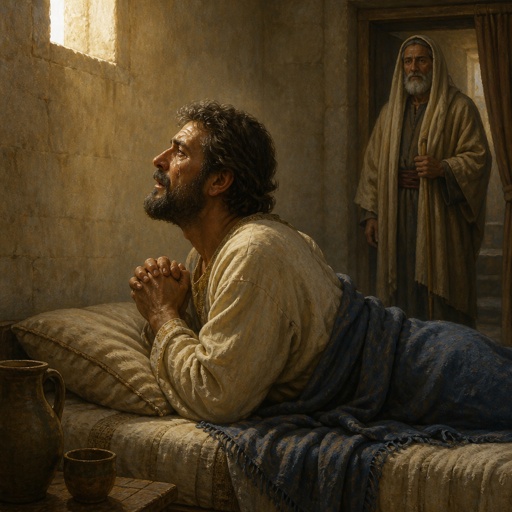
"Then Hezekiah turned his face toward the wall, and prayed unto the LORD, And said, Remember now, O LORD, I beseeek thee, how I have walked before thee in truth and with a perfect heart, and have done that which is good in thy sight. And Hezekiah wept sore. Then came the word of the LORD to Isaiah, saying, Go, and say to Hezekiah, Thus saith the LORD, the God of David thy father, I have heard thy prayer, I have seen thy tears: behold, I will add unto thy days fifteen years." - Isaiah 38:2-5

Isaiah 38:4 - "¶ Then came the word of the LORD to Isaiah, saying,"

Isaiah 38:17

"¶ Then came the word of the LORD to Isaiah, saying," - Isaiah 38:4

Isaiah 38:21 - "For Isaiah had said, Let them take a lump of figs, and lay it for a plaister upon the boil, and he shall recover."

Isaiah 38:6 - "And I will deliver thee and this city out of the hand of the king of Assyria: and I will defend this city."

Isaiah 38:9 - "¶ The writing of Hezekiah king of Judah, when he had been sick, and was recovered of his sickness:"

Isaiah 38:22 - "Hezekiah also had said, What is the sign that I shall go up to the house of the LORD?"

Isaiah 38:7 - "And this shall be a sign unto thee from the LORD, that the LORD will do this thing that he hath spoken;"

Isaiah 38:18 - "For the grave cannot praise thee, death can not celebrate thee: they that go down into the pit cannot hope for thy truth."

Acts 2:38

Acts 2:38

Acts 2:38

Acts 2:38

Acts 2:38

Acts 2:38

Acts 2:38

Acts 2:38

Acts 2:38

Acts 2:38

Acts 2:38

Acts 2:38

Acts 2:38

Acts 2:38

Acts 2:38

Acts 2:38

Acts 2:38