The Silent Suffering of the Innocent One
“And he made his grave with the wicked, and with the rich in his death; because he had done no violence, neither was any deceit in his mouth.” — Isaiah 53:9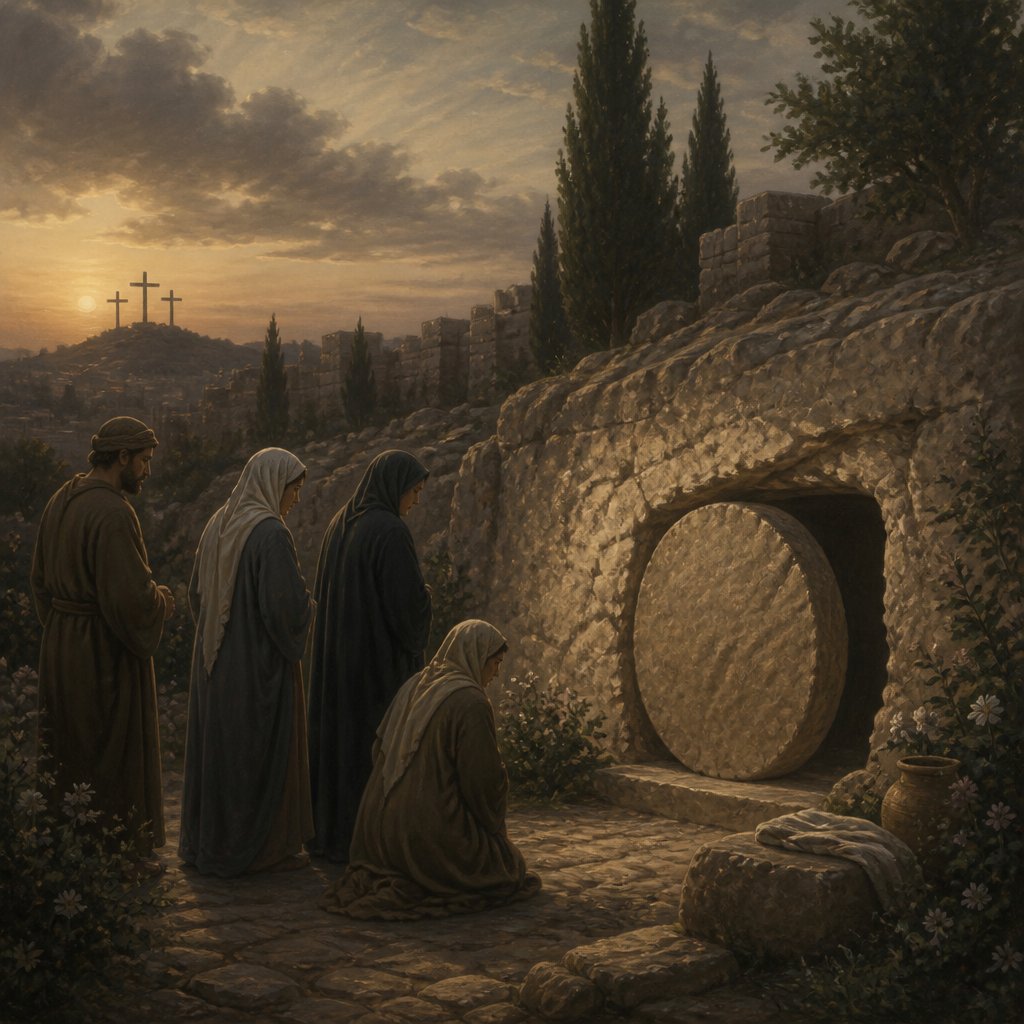
Isaiah 53:9 states: "And he made his grave with the wicked, and with the rich in his death; because he had done no violence, neither was any deceit in his mouth." This profound verse from the book of Isaiah encapsulates the essence of Christ’s sacrificial atonement and speaks volumes about His life, death, and the implications of His righteous suffering.
Throughout the prophetic literature of the Old Testament, we encounter glimpses of the coming Messiah—one who would bear the burdens of humanity. Isaiah 53 stands as a pivotal chapter, often referred to as the 'Suffering Servant' passage. It outlines the vicarious suffering that the Messiah would endure on behalf of humanity, bringing to light the unfathomable depths of divine love and justice. In this context, verse 9 serves as a striking contrast between the wickedness of men and the purity of Christ.
The phrase "made his grave with the wicked" evokes a profound irony. As the One who lived a life of perfect obedience, devoid of violence and deceit, Christ's burial shares space with the wicked who lived in rebellion against God's decrees. We see the fulfillment of this as the Gospels depict Jesus being crucified alongside criminals, one on either side, as He bore the full weight of sin. In that moment, the innocence of Christ juxtaposed against the guilt of sinners illustrates the heart of the Gospel: He, who knew no sin, became sin for us (2 Corinthians 5:21) so that we might be redeemed.
Moreover, Isaiah notes that “with the rich in his death” reflects the burial of Christ by Joseph of Arimathea, a wealthy man who offered his own tomb for the Savior’s body. Here is another layer of irony where the King of Kings is treated at death with the dignity typically reserved for the wealthy. This act of honor, though performed by a rich man, further highlights the stark contrast of Christ's life and mission. Despite being the Son of God, He died without possessions or accolades, embodying the very essence of humility while still being revered in death.
The verse closes with a compelling reason for these strange arrangements: "because he had done no violence, neither was any deceit in his mouth.” This evergreen truth underscores that Jesus was perfect; He lived a life that was devoid of sin and fully aligned with the will of the Father. In the face of injustices, He remained silent, fulfilling the prophecy of a lamb led to slaughter (Isaiah 53:7). His silence in suffering is a powerful testament to His character and divine mission, which culminated at the cross.
For us, these truths lead to deep reflections and poignant applications. Firstly, we are reminded of the gravity of sin and the cost of redemption. The price paid on the cross was heavy, borne by one who was wholly innocent. In recognizing our sin, we can appreciate the magnitude of this sacrifice.
Furthermore, Isaiah 53:9 calls us to a position of humility in our own lives. As followers of Christ, we are to reflect His character amid a world filled with wickedness and deceit. When faced with trials and injustices, we can take comfort in knowing that our Savior understands our suffering and remains our advocate before the Father.
Lastly, we are encouraged to embrace the hope found in the resurrection. Though Christ’s grave was made with the wicked and He departed from this earth in an unjust manner, His story did not end in that tomb. The resurrection stands as glorious proof that death, sin, and the grave do not have the final say. We, like Christ, can live in victory and anticipate our eternal life with Him, liberated from the chains of sin and death.
In closing, let us ponder the depth of Isaiah’s prophecy as it unveils the heart of God’s redemptive plan for humanity. May it stir in us an awe for the Lamb who was slain and inspire us to live lives of integrity, humility, and truth in a world that desperately needs our witness.
Get our apps


Artwork for Isaiah 53:9

Isaiah 53:9 - "And he made his grave with the wicked, and with the rich in his death; because he had done no violence, neither was any deceit in his mouth."
"And he made his grave with the wicked, and with the rich in his death; because he had done no violence, neither was any deceit in his mouth." - Isaiah 53:9

Isaiah 53

Isaiah: 53

Isaiah 53

Isaiah 53

Isaiah 53

Isaiah 53:5

isaiah 53 1

Isaiah 53:2

Isaiah 53 3 illustration

Isaiah 53:1 - "Who hath believed our report? and to whom is the arm of the LORD revealed?"

Isaiah 53:2-3 depiction of Jesus Christ


Luke 9:53 - "And they did not receive him, because his face was as though he would go to Jerusalem."

Judges 9:53 - "And a certain woman cast a piece of a millstone upon Abimelech's head, and all to brake his skull."

Isaiah 53:5 - "But he was wounded for our transgressions, he was bruised for our iniquities: the chastisement of our peace was upon him; and with his stripes we are healed."

Isaiah 53:4 - "¶ Surely he hath borne our griefs, and carried our sorrows: yet we did esteem him stricken, smitten of God, and afflicted."

"Who hath believed our report? and to whom is the arm of the LORD revealed?" - Isaiah 53:1

"For he shall grow up before him as a tender plant, and as a root out of a dry ground: he hath no form nor comeliness; and when we shall see him, there is no beauty that we should desire him." - Isaiah 53:2

"For he shall grow up before him as a tender plant, and as a root out of a dry ground: he hath no form nor comeliness; and when we shall see him, there is no beauty that we should desire him." - Isaiah 53:2

Isaiah 53:11 - "He shall see of the travail of his soul, and shall be satisfied: by his knowledge shall my righteous servant justify many; for he shall bear their iniquities."

Isaiah 53:3 - "He is despised and rejected of men; a man of sorrows, and acquainted with grief: and we hid as it were our faces from him; he was despised, and we esteemed him not."

"But he was wounded for our transgressions, he was bruised for our iniquities: the chastisement of our peace was upon him; and with his stripes we are healed." - Isaiah 53:5

Isaiah 53:6 - "All we like sheep have gone astray; we have turned every one to his own way; and the LORD hath laid on him the iniquity of us all."

Isaiah 53:8 - "He was taken from prison and from judgment: and who shall declare his generation? for he was cut off out of the land of the living: for the transgression of my people was he stricken."

Isaiah 53:7 - "He was oppressed, and he was afflicted, yet he opened not his mouth: he is brought as a lamb to the slaughter, and as a sheep before her shearers is dumb, so he openeth not his mouth."

Isaiah 53:2 - "For he shall grow up before him as a tender plant, and as a root out of a dry ground: he hath no form nor comeliness; and when we shall see him, there is no beauty that we should desire him."

"And they did not receive him, because his face was as though he would go to Jerusalem." - Luke 9:53

Isaiah 53:12 - "Therefore will I divide him a portion with the great, and he shall divide the spoil with the strong; because he hath poured out his soul unto death: and he was numbered with the transgressors; and he bare the sin of many, and made intercession for the transgressors."