Walking the Line: Understanding Temptation and Divine Nature
“Let no man say when he is tempted, I am tempted of God: for God cannot be tempted with evil, neither tempteth he any man:” — James 1:13
In the pursuit of a righteous life, we often encounter the profound complexities of temptation. James 1:13 presents a clarion call to the believer to align their understanding of divine nature with the realities of human experience: "Let no man say when he is tempted, I am tempted of God: for God cannot be tempted with evil, neither tempteth he any man."
The implications of this verse are crucial for our spiritual journey. First, we must grasp the essence of who God is. The phrase "for God cannot be tempted with evil" underscores not only His holiness but His sovereignty over all creation. God, in His purest essence, is devoid of any moral impurity. He stands as the ultimate benchmark of righteousness; unlike humanity, whose hearts are often battlefields for conflicting desires, God is immutable and unapproachable in His sanctity. This truth comforts and enlivens the believer. When faced with heavy trials or dark moments of temptation, understanding the nature of God reassures us that He is purely good—a beacon of light amid our struggles.
However, acknowledging that God does not tempt us brings to light an important distinction. Temptation arises from our personal desires and the external influences around us. James emphatically states, "Let no man say..."—a warning to avoid the pitfall of shifting blame onto God. Often, in our moments of weakness, we might find ourselves whispering to our souls that our struggles are of divine origin, as if God orchestrated our temptations. This thought process can lead to disillusionment and a distorted view of God’s character. God, instead of being the source of our trials, is our advocate and protector through them.
In doing so, we must confront the reality behind temptation. Temptation does not find its roots in our Creator but is born from "our own lusts" as stated in the following verses (James 1:14). Lust can manifest in many forms: the desire for recognition, possessions, pleasure, or even control. These desires are not inherently evil; rather, it is our approach to them that determines the contention we face. God provides the way of escape (1 Corinthians 10:13), giving us the tools necessary to navigate these turbulent waters. Hence, understanding temptation as a byproduct of our fallen nature rather than a divine test helps shift our focus from questioning God to seeking His guidance in overcoming our desires.
Furthermore, it is essential to realize that being tempted is not a sin. Even our Lord Jesus faced temptation, yet He remained blameless. This truth allows believers to speak honestly about their struggles without fear of condemnation. The temptation itself is an opportunity for spiritual growth. It is in these moments we can learn perseverance, deepen our faith, and ultimately draw closer to God, whose grace is sufficient.
As we navigate our daily lives, let us remember that our God does not tempt us, nor does He desire our downfall. Instead, He walks alongside us, urging us to engage our hearts with His Word, the sword of the Spirit, to battle against temptation (Ephesians 6:17). Let us draw strength from prayer, from the fellowship of believers, and the ever-present guidance of the Holy Spirit. In moments of trial, as we endure temptations and navigate through our own desires, let us proclaim victory in Jesus, leaning into His grace and seeking His will in every situation.
Let us then say with confidence that in our times of trial, we are not alone, and we are not forsaken. Let us turn our eyes to the One who is faithful. Hold onto the promise that while we may be tempted, we are continually supported, and through Him, we can emerge victorious.
Get our apps


Artwork for James 1:13

James 1:13 - "Let no man say when he is tempted, I am tempted of God: for God cannot be tempted with evil, neither tempteth he any man:"

James 1:13-15 - "When tempted, no one should say, “God is tempting me.” For God cannot be tempted by evil, nor does he tempt anyone; but each person is tempted when they are dragged away by their own evil desire and enticed. Then, after desire has conceived, it gives birth to sin; and sin, when it is full-grown, gives birth to death."

"Let no man say when he is tempted, I am tempted of God: for God cannot be tempted with evil, neither tempteth he any man:" - James 1:13

"When tempted, no one should say, “God is tempting me.” For God cannot be tempted by evil, nor does he tempt anyone; but each person is tempted when they are dragged away by their own evil desire and enticed. Then, after desire has conceived, it gives birth to sin; and sin, when it is full-grown, gives birth to death." - James 1:13-15

James 1:2-13

James 1:2-13

Acts 1:13 - "And when they were come in, they went up into an upper room, where abode both Peter, and James, and John, and Andrew, Philip, and Thomas, Bartholomew, and Matthew, James the son of Alphaeus, and Simon Zelotes, and Judas the brother of James."

James 1:3 - "Knowing this, that the trying of your faith worketh patience."

"Knowing this, that the trying of your faith worketh patience." - James 1:3

"Knowing this, that the trying of your faith worketh patience." - James 1:3

James 1:1 - "James, a servant of God and of the Lord Jesus Christ, to the twelve tribes which are scattered abroad, greeting."
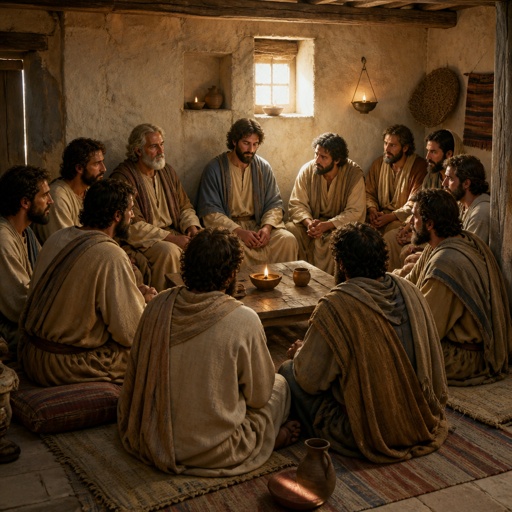
"And when they were come in, they went up into an upper room, where abode both Peter, and James, and John, and Andrew, Philip, and Thomas, Bartholomew, and Matthew, James the son of Alphaeus, and Simon Zelotes, and Judas the brother of James." - Acts 1:13

James

James 1:3-4 - "Because you know that the testing of your faith produces perseverance. Let perseverance finish its work so that you may be mature and complete, not lacking anything."

James 1: 2-4

James 1:2-4

Matthew 13:55 - "Is not this the carpenter's son? is not his mother called Mary? and his brethren, James, and Joses, and Simon, and Judas?"

Acts 15:13 - "¶ And after they had held their peace, James answered, saying, Men and brethren, hearken unto me:"

James 1:17-22

James 1:22

James 1:17

James 1:19

James 1:17

James 1:17

James 1:22

James 1:9

James 1:17

James 1:10

james 1:27

James 1:22