Faith in Action: The Legacy of Rahab
“Likewise also was not Rahab the harlot justified by works, when she had received the messengers, and had sent them out another way?” — James 2:25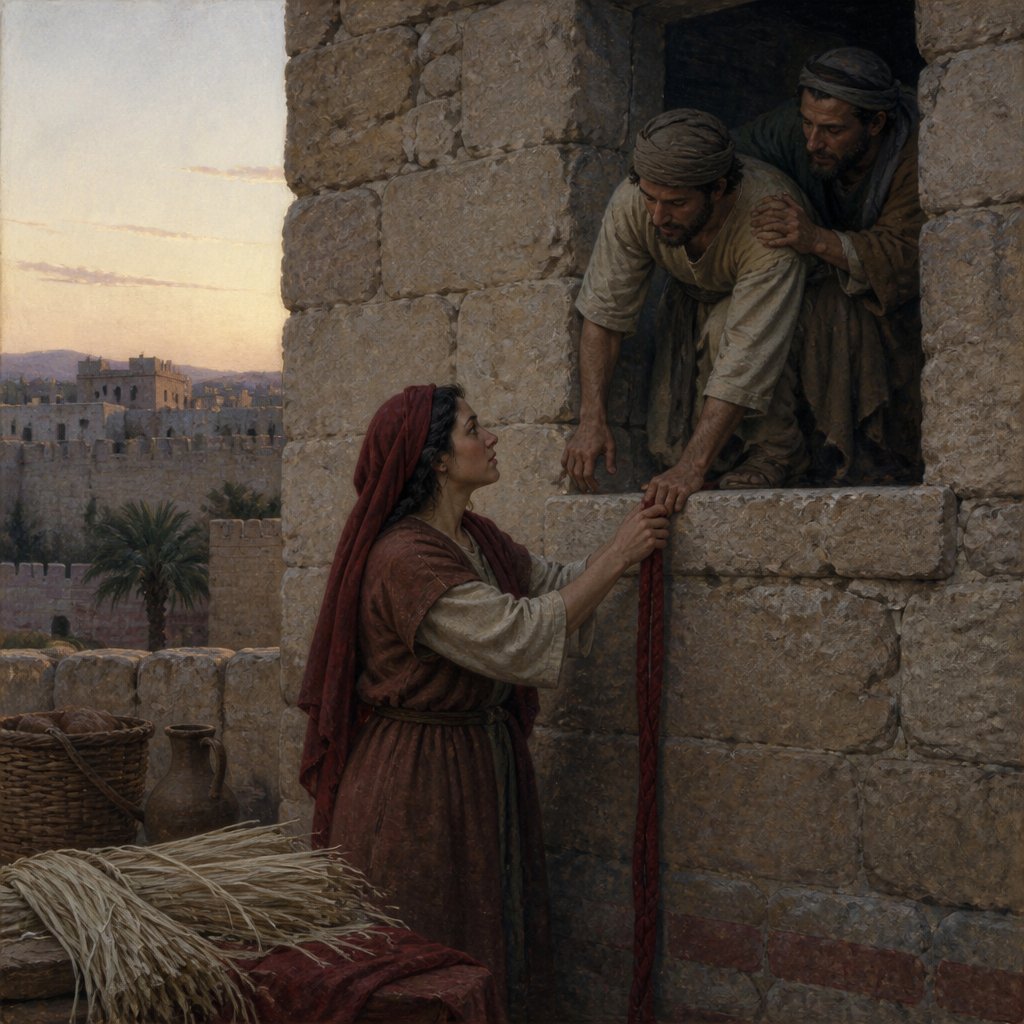
In the epistle of James, chapter 2, verse 25 states, "Likewise also was not Rahab the harlot justified by works, when she had received the messengers, and had sent them out another way?" This powerful scripture draws our attention to the profound truth that faith, when genuine, naturally expresses itself through actions. James provides us with a compelling example through the life of Rahab, a woman whose faith led her to act decisively in a way that changed her life and the lives of others.
Rahab was not just any woman; she was a harlot living in Jericho, a city that was about to face the impending judgment of God. The backdrop of her story is monumental — the Israelites, having wandered forty years in the wilderness, were at the threshold of the Promised Land. They were set to conquer Jericho, the city that had long been a stronghold of sin and idolatry. Yet, amidst the impending doom, Rahab’s actions tell a story of redemption and faithfulness.
When the spies sent by Joshua came to Jericho, they found refuge in Rahab's home. Her immediate acceptance of them was not merely a matter of hospitality; it was an act of faith. Rahab had heard of the God of Israel, the miracles He performed, and His covenant with His people. She recognized that the God of Israel was the one true God, and in that recognition, she placed her trust in Him. Her faith compelled her to take significant risks. If her actions were discovered, she could have faced severe punishment or even death for hiding the spies. However, Rahab’s heart was set not on her past, but on the mercy and hope that came with a faithful God.
By 'justified by works', James highlights that Rahab’s actions corroborated her faith. She did not simply believe that God could save; her faith drove her to act. She cleverly hid the spies on her roof and concocted a plan to deceive the king’s men who were searching for them. Rahab then made a pivotal choice — she sought salvation for herself and her family by asking for a sign, a symbol of her faith: the scarlet cord. In her plea, she demonstrated not only her understanding of the gravity of their situation but also her belief that the God of Israel was capable of saving her.
As we consider Rahab’s story, we see the beautiful interplay of faith and works. Her faith was alive, vibrant, and active. It produced a willingness to risk everything for the sake of the God she had come to trust. James uses Rahab as a prime example to encourage believers to let their faith be evident to the world.
The question we must ask ourselves is, how do our actions reflect our faith? Are we living out our beliefs in ways that honor God and serve others? Our faith should not be a silent witness; it should resonate through our deeds. Can we, like Rahab, rise above our past and trust in the Lord for our future? She teaches us that no background is too tarnished, no sin too great that God’s grace cannot redeem. Just as Rahab was grafted into the lineage of Jesus, so too can we find new identity in Christ, transcending our pasts through faith.
Moreover, Rahab's story serves as a reminder of God’s great mercy and redemptive power. He sees potential where others see past failures and societal labels. Her faith and actions led not only to her salvation but also made her a part of the redemptive narrative of God’s people. In the grand tapestry of scripture, Rahab stands out — not just as a harlot, but as a woman of faith who changed the course of her life and the nation of Israel.
In conclusion, let us be inspired by Rahab’s courage and faith. Let her life challenge us to live in such a way that our faith is evident through our actions. May we embrace the opportunities God places in our paths to demonstrate our trust and reliance on Him, making our faith a living testimony in a world that desperately needs to witness His transformative power.
Get our apps


Artwork for James 2:25

James 2:25 - "Likewise also was not Rahab the harlot justified by works, when she had received the messengers, and had sent them out another way?"
"Likewise also was not Rahab the harlot justified by works, when she had received the messengers, and had sent them out another way?" - James 2:25

James 2:5 - "Hearken, my beloved brethren, Hath not God chosen the poor of this world rich in faith, and heirs of the kingdom which he hath promised to them that love him?"

James 2:2-4

james 2:26

James 1:25 - "But whoso looketh into the perfect law of liberty, and continueth therein, he being not a forgetful hearer, but a doer of the work, this man shall be blessed in his deed."

James 1:2-13

James 1: 2-4

James 1:2-13

James 1:2-4

James 5:2 - "Your riches are corrupted, and your garments are motheaten."

Acts 12:2 - "And he killed James the brother of John with the sword."

James 2:15 - "If a brother or sister be naked, and destitute of daily food,"

James 2:4 - "Are ye not then partial in yourselves, and are become judges of evil thoughts?"

James 2:7 - "Do not they blaspheme that worthy name by the which ye are called?"

James 2:17 - "Even so faith, if it hath not works, is dead, being alone."

James 2:24 - "Ye see then how that by works a man is justified, and not by faith only."

James 2:12 - "So speak ye, and so do, as they that shall be judged by the law of liberty."

James 2:2 - "For if there come unto your assembly a man with a gold ring, in goodly apparel, and there come in also a poor man in vile raiment;"

James 2:26 - "For as the body without the spirit is dead, so faith without works is dead also."

James 1:2 - "My brethren, count it all joy when ye fall into divers temptations;"

James 2:20 - "But wilt thou know, O vain man, that faith without works is dead?"

James 2:9 - "But if ye have respect to persons, ye commit sin, and are convinced of the law as transgressors."
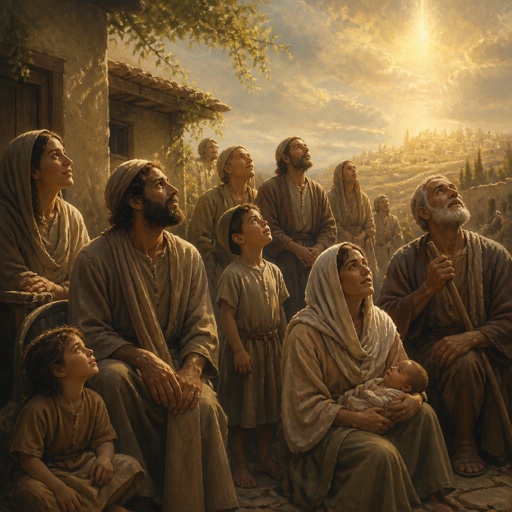
"Hearken, my beloved brethren, Hath not God chosen the poor of this world rich in faith, and heirs of the kingdom which he hath promised to them that love him?" - James 2:5

James 2:22 - "Seest thou how faith wrought with his works, and by works was faith made perfect?"

James 2:19 - "Thou believest that there is one God; thou doest well: the devils also believe, and tremble."

James 2:10 - "For whosoever shall keep the whole law, and yet offend in one point, he is guilty of all."

James 2:1 - "My brethren, have not the faith of our Lord Jesus Christ, the Lord of glory, with respect of persons."

James 2:13 - "For he shall have judgment without mercy, that hath shewed no mercy; and mercy rejoiceth against judgment."

Matthew 10:2-4…Matthew 10:2-4 New International Version 2 These are the names of the twelve apostles: first, Simon (who is called Peter) and his brother Andrew; James son of Zebedee, and his brother John; 3 Philip and Bartholomew; Thomas and Matthew the tax collector; James son of Alphaeus, and Thaddaeus; 4 Simon the Zealot and Judas Iscariot, who betrayed him.