The Dilemma of Divine Justice
“Righteous art thou, O LORD, when I plead with thee: yet let me talk with thee of thy judgments: Wherefore doth the way of the wicked prosper? wherefore are all they happy that deal very treacherously?” — Jeremiah 12:1
In Jeremiah 12:1, we find the prophet wrestling with a fundamental question that echoes through time— the struggle to reconcile God’s righteousness with the apparent prosperity of the wicked. The verse states, "Righteous art thou, O LORD, when I plead with thee: yet let me talk with thee of thy judgments: Wherefore doth the way of the wicked prosper? wherefore are all they happy that deal very treacherously?"
Jeremiah, known as the "weeping prophet," is expressing deep anguish over the state of his people and the seeming lack of divine justice. This passage illustrates not only Jeremiah’s deep faith but also his honest grappling with God’s ways, demonstrating that it is acceptable to approach God with our questions, our doubts, and our struggles.
To grasp the weight of this verse, we must consider the context. Jeremiah lived in a time of national crisis, a period filled with corruption and rampant injustice. The people of Judah had turned away from God, and yet, in the eyes of the prophet, it seemed that the wicked were thriving. This contradiction leaves Jeremiah with a heavy heart and a troubled spirit: how could a righteous God allow such injustice to go unchecked? Feeling the burden of his calling, he boldly approaches God with his plea, holding fast to the belief that God is righteous even when circumstances suggest otherwise.
The first part of Jeremiah’s statement, "Righteous art thou, O LORD, when I plead with thee," is a declaration of faith. In an era when many voices insist on questioning divine goodness and justice, Jeremiah stands firm on the character of God. He acknowledges God’s righteousness, emphasizing that God’s nature is not in question, even when his judgments are difficult to comprehend. This can serve as a profound reminder for us today. In moments when life seems unfair and chaos reigns, we must anchor ourselves in the truth of God’s character. God is just, loving, and merciful, regardless of our circumstances.
However, Jeremiah’s honesty shines in his desire to discuss divine judgments. "Yet let me talk with thee of thy judgments" reveals not just a petition but a conversation with God, an intimate dialogue about the divine ways. He invites God into his struggle, showcasing that prayer is not merely speaking at God but engaging Him in a relationship. This highlights a crucial aspect of our spiritual journeys—pursuing God even in our doubts.
The questions Jeremiah raises—"Wherefore doth the way of the wicked prosper?" and "wherefore are all they happy that deal very treacherously?"—challenge the idea of immediate recompense and the seeming absence of justice in the world. It is a query that resonates through generations, intriguing us as believers. Why do bad things happen to good people while bad people seem to enjoy life?
Bringing this into our own context, we observe the prosperity of those who defy God’s commandments. The allure of worldly success and the carefree lives of those who disregard God’s laws can dishearten the faithful. Yet, as believers, we learn that this is not the end of the story. While it may appear that the wicked thrive now, Scripture reassures us that ultimate justice belongs to God. In Psalms 37:1-2, we are reminded, "Fret not thyself because of evildoers, neither be thou envious against the workers of iniquity. For they shall soon be cut down like the grass, and wither as the green herb." These verses remind us of the transient nature of earthly success and how God’s ultimate judgment prevails.
In expressing his troubles to God, Jeremiah is engaging in an act of faith. He risks vulnerability because he believes in the possibility of divine justice and values the relationship he maintains with God. This teaches us an essential lesson: we, too, must bring our frustrations, our questions, and our cries before the Lord. God can handle our complaints. He desires relationship over ritual, honesty over empty words.
In conclusion, Jeremiah 12:1 allows us to ponder deeply the tension between divine justice and the present reality. As we grapple with our own inquiries about the prosperity of the unrighteous, let us approach God openly, knowing He is righteous and caring enough to welcome our questions. Let’s remember that earthly timelines do not reflect God’s ultimate plans. Our hope, ultimately, lies in the assurance that God is in control and will bring forth justice in His perfect timing.
Get our apps


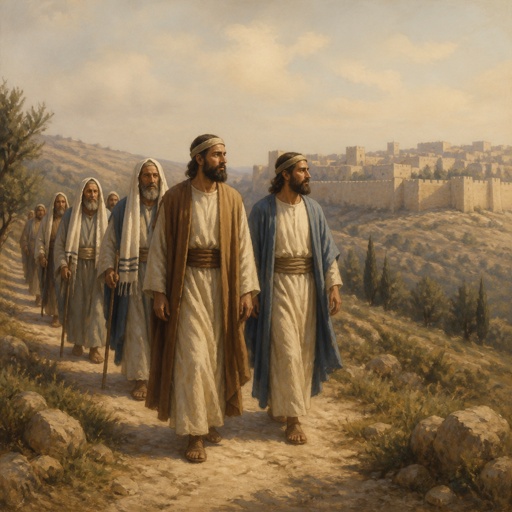
Artwork for Jeremiah 12:1

Jeremiah 12:1 - "Righteous art thou, O LORD, when I plead with thee: yet let me talk with thee of thy judgments: Wherefore doth the way of the wicked prosper? wherefore are all they happy that deal very treacherously?"

"Righteous art thou, O LORD, when I plead with thee: yet let me talk with thee of thy judgments: Wherefore doth the way of the wicked prosper? wherefore are all they happy that deal very treacherously?" - Jeremiah 12:1

1 Chronicles 12:10 - "Mishmannah the fourth, Jeremiah the fifth,"

1 Chronicles 12:13 - "Jeremiah the tenth, Machbanai the eleventh."

Nehemiah 12:1 - "Now these are the priests and the Levites that went up with Zerubbabel the son of Shealtiel, and Jeshua: Seraiah, Jeremiah, Ezra,"

"Jeremiah the tenth, Machbanai the eleventh." - 1 Chronicles 12:13

"Mishmannah the fourth, Jeremiah the fifth," - 1 Chronicles 12:10

Jeremiah 1:12 - "Then said the LORD unto me, Thou hast well seen: for I will hasten my word to perform it."

1 Chronicles 12:4 - "And Ismaiah the Gibeonite, a mighty man among the thirty, and over the thirty; and Jeremiah, and Jahaziel, and Johanan, and Josabad the Gederathite,"

Jeremiah 35:12 - "¶ Then came the word of the LORD unto Jeremiah, saying,"

Jeremiah 34:12 - "¶ Therefore the word of the LORD came to Jeremiah from the LORD, saying,"

"Then said the LORD unto me, Thou hast well seen: for I will hasten my word to perform it." - Jeremiah 1:12

"Then said the LORD unto me, Thou hast well seen: for I will hasten my word to perform it." - Jeremiah 1:12

"Then said the LORD unto me, Thou hast well seen: for I will hasten my word to perform it." - Jeremiah 1:12

Jeremiah 28:12 - "Then the word of the LORD came unto Jeremiah the prophet, after that Hananiah the prophet had broken the yoke from off the neck of the prophet Jeremiah, saying,"

Nehemiah 12:12 - "And in the days of Joiakim were priests, the chief of the fathers: of Seraiah, Meraiah; of Jeremiah, Hananiah;"

Jeremiah 37:12 - "Then Jeremiah went forth out of Jerusalem to go into the land of Benjamin, to separate himself thence in the midst of the people."

Jeremiah 38:12 - "And Ebed-melech the Ethiopian said unto Jeremiah, Put now these old cast clouts and rotten rags under thine armholes under the cords. And Jeremiah did so."

Nehemiah 12:34 - "Judah, and Benjamin, and Shemaiah, and Jeremiah,"

"¶ Then came the word of the LORD unto Jeremiah, saying," - Jeremiah 35:12

Jeremiah 15:12 - "Shall iron break the northern iron and the steel?"
"Now these are the priests and the Levites that went up with Zerubbabel the son of Shealtiel, and Jeshua: Seraiah, Jeremiah, Ezra," - Nehemiah 12:1

"¶ Therefore the word of the LORD came to Jeremiah from the LORD, saying," - Jeremiah 34:12

Jeremiah 1:1 - "The words of Jeremiah the son of Hilkiah, of the priests that were in Anathoth in the land of Benjamin:"

Jeremiah 17:12 - "¶ A glorious high throne from the beginning is the place of our sanctuary."

"Then said the LORD unto me, Thou hast well seen: for I will hasten my word to perform it." - Jeremiah 1:12

"Then said the LORD unto me, Thou hast well seen: for I will hasten my word to perform it." - Jeremiah 1:12

"Then said the LORD unto me, Thou hast well seen: for I will hasten my word to perform it." - Jeremiah 1:12

Jeremiah 26:12 - "¶ Then spake Jeremiah unto all the princes and to all the people, saying, The LORD sent me to prophesy against this house and against this city all the words that ye have heard."

"Then said the LORD unto me, Thou hast well seen: for I will hasten my word to perform it." - Jeremiah 1:12