Breaking Free: A Journey from Bondage to Faithfulness
“For of old time I have broken thy yoke, and burst thy bands; and thou saidst, I will not transgress; when upon every high hill and under every green tree thou wanderest, playing the harlot.” — Jeremiah 2:20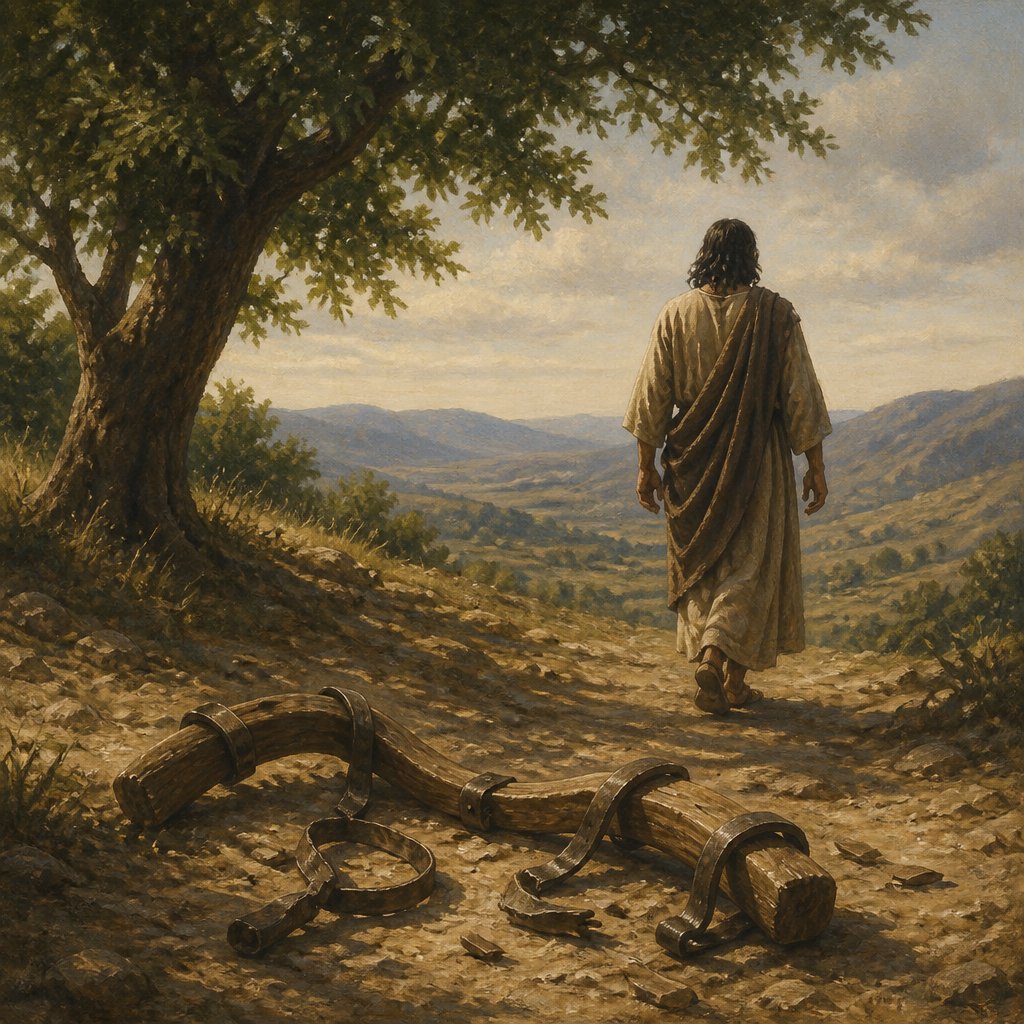
Jeremiah 2:20 (KJV) states, "For of old time I have broken thy yoke, and burst thy bands; and thou saidst, I will not transgress; when upon every high hill and under every green tree thou wanderest, playing the harlot."
As we delve into this verse from Jeremiah, we must first understand the context in which God speaks to His people. The Israelites had a tumultuous relationship with their Creator. They were chosen and set apart but continually turned away from His commandments to pursue their own desires. In this verse, God reminds His people of the mercy extended to them in breaking their yoke of slavery and bondage. The imagery of yokes and bands symbolizes their past afflictions in Egypt and their disobedience that leads them back into a metaphorical slavery of their own choice.
Here, God recalls the historical moments of deliverance, asserting, “I have broken thy yoke, and burst thy bands.” This signifies His power and willingness to free His people from the chains that bind them. Yet, the essence of sin lies not merely in the physical acts but in the heart’s inclination to stray from the path God has laid out. Despite the deliverance, God laments through the prophet Jeremiah, observing that the Israelites persist in saying, “I will not transgress.” This response serves as a blatant contradiction to their lifestyle.
The phrase “when upon every high hill and under every green tree thou wanderest, playing the harlot,” evokes images of idolatry and spiritual unfaithfulness. The high hills and the green trees were often places associated with idolatrous worship in the ancient Near East, places where people would go to seek favor from false gods. The metaphor of “playing the harlot” suggests a betrayal of trust, an infidelity not only to God but to the covenant relationship established between Him and His people.
So, how does this relate to us today? Each of us is on a journey filled with choices that shape our relationship with God. Similar to the Israelites, there are moments when we vow to steer clear of sin, yet our actions may not align with our intentions. We commit to our faith, promising not to stray, yet find ourselves wandering from the truth, enticed by the world’s allure. Despite our declarations, we too may wander to high hills and green trees – whether these are temptations of materialism, relationships, or fleeting pleasures.
In recognizing the voice of God in this verse, we find compassion. The emphasis on “I have broken thy yoke” is a reminder of His enduring love and commitment to our freedom. God seeks not to punish but to restore, leading us back to faithfulness. This passage encourages us to reflect on our lives and identify the moments we have allowed distractions to pull us away from deeper devotion. God knows our hearts; He understands the distractions and struggles we face. But He also calls us back to the path of righteousness.
In our spiritual wanderings, let us take a moment to pause and consider what we are truly committing to. Are we chasing after transient desires that separate us from God’s love? Are we still in need of the people, the spaces, and perhaps the habits that perpetuate our wandering?
The good news is that God’s desire is to transform our hearts. In the same way that He broke the chains for the Israelites, He invites us to experience His breaking power— releasing us from all that holds us back and binding us closer to Him. Today, let us reclaim our covenant with God, recognizing His sovereignty and grace, and commit once more to follow Him, not just with our words, but with our actions, choosing faithfulness over waywardness.
Get our apps


Artwork for Jeremiah 2:20

Jeremiah 2:20 - "¶ For of old time I have broken thy yoke, and burst thy bands; and thou saidst, I will not transgress; when upon every high hill and under every green tree thou wanderest, playing the harlot."
"¶ For of old time I have broken thy yoke, and burst thy bands; and thou saidst, I will not transgress; when upon every high hill and under every green tree thou wanderest, playing the harlot." - Jeremiah 2:20

Jeremiah 20:2 - "Then Pashur smote Jeremiah the prophet, and put him in the stocks that were in the high gate of Benjamin, which was by the house of the LORD."

"Then Pashur smote Jeremiah the prophet, and put him in the stocks that were in the high gate of Benjamin, which was by the house of the LORD." - Jeremiah 20:2

Jeremiah 20:4

Jeremiah 20:3 - "And it came to pass on the morrow, that Pashur brought forth Jeremiah out of the stocks. Then said Jeremiah unto him, The LORD hath not called thy name Pashur, but Magor-missabib."

Jeremiah 20:1 - "Now Pashur the son of Immer the priest, who was also chief governor in the house of the LORD, heard that Jeremiah prophesied these things."

Jeremiah 44:20 - "¶ Then Jeremiah said unto all the people, to the men, and to the women, and to all the people which had given him that answer, saying,"

Jeremiah 5:20 - "Declare this in the house of Jacob, and publish it in Judah, saying,"

Jeremiah 8:20 - "The harvest is past, the summer is ended, and we are not saved."

Jeremiah 16:20 - "Shall a man make gods unto himself, and they are no gods?"

Jeremiah 26:20 - "And there was also a man that prophesied in the name of the LORD, Urijah the son of Shemaiah of Kirjath-jearim, who prophesied against this city and against this land according to all the words of Jeremiah:"

Jeremiah 46:20 - "Egypt is like a very fair heifer, but destruction cometh; it cometh out of the north."

Jeremiah 48:20 - "Moab is confounded; for it is broken down: howl and cry; tell ye it in Arnon, that Moab is spoiled,"

Jeremiah 38:20 - "But Jeremiah said, They shall not deliver thee. Obey, I beseech thee, the voice of the LORD, which I speak unto thee: so it shall be well unto thee, and thy soul shall live."

Jeremiah 20:14 - "¶ Cursed be the day wherein I was born: let not the day wherein my mother bare me be blessed."

Jeremiah 20:16 - "And let that man be as the cities which the LORD overthrew, and repented not: and let him hear the cry in the morning, and the shouting at noontide;"

Jeremiah 20:13 - "Sing unto the LORD, praise ye the LORD: for he hath delivered the soul of the poor from the hand of evildoers."

"The harvest is past, the summer is ended, and we are not saved." - Jeremiah 8:20

Jeremiah 36:20 - "¶ And they went in to the king into the court, but they laid up the roll in the chamber of Elishama the scribe, and told all the words in the ears of the king."

Jeremiah 14:20 - "We acknowledge, O LORD, our wickedness, and the iniquity of our fathers: for we have sinned against thee."

Jeremiah 20:18 - "Wherefore came I forth out of the womb to see labour and sorrow, that my days should be consumed with shame?"

Jeremiah 30:20 - "Their children also shall be as aforetime, and their congregation shall be established before me, and I will punish all that oppress them."

Jeremiah 4:20 - "Destruction upon destruction is cried; for the whole land is spoiled: suddenly are my tents spoiled, and my curtains in a moment."

"Declare this in the house of Jacob, and publish it in Judah, saying," - Jeremiah 5:20

Jeremiah 29:20 - "¶ Hear ye therefore the word of the LORD, all ye of the captivity, whom I have sent from Jerusalem to Babylon:"

Jeremiah 51:20 - "Thou art my battle axe and weapons of war: for with thee will I break in pieces the nations, and with thee will I destroy kingdoms;"

Jeremiah 25:20 - "And all the mingled people, and all the kings of the land of Uz, and all the kings of the land of the Philistines, and Ashkelon, and Azzah, and Ekron, and the remnant of Ashdod,"

Jeremiah 13:20 - "Lift up your eyes, and behold them that come from the north: where is the flock that was given thee, thy beautiful flock?"

Jeremiah 33:20 - "Thus saith the LORD; If ye can break my covenant of the day, and my covenant of the night, and that there should not be day and night in their season;"